 The issue of Barbara Gordon regaining mobility and once again adopting the mantle of Batgirl has been the cause of much discussion on the interwebs since it was announced by DC recently. Earlier I highlighted longtime Gordon scribe Gail Simone's conversation with Oracle-advocate Jill Pantozzi, during which Simone said (in the context of explaining why the relaunch finally made her comfortable with "curing" Barbara):
The most persuasive argument to put Babs back in the boots has always been one that I would argue against vehemently for story reasons, but that was impossible to argue with ethically. And I have heard this question a million times…why is it that virtually every single hero with a grievous injury, or even a death, gets to come back whole, except Barbara Gordon? Why? Why was Batman's back broken, and he was barely in the chair long enough to keep the seat warm, and now it's never even mentioned?
Arms and legs get ripped off, and they grow back, somehow. Graves don't stay filled. But the one constant is that Barbara stays in that chair.
Role model or not, that is problematic and uncomfortable, and the excuses to not cure her, in a world of purple rays and magic and super-science, are often unconvincing or wholly meta-textual. And the longer it goes on, the more it has stretched credibility.
Simone's logic is compelling–why does everyone else in comics come back to life or have life-threatening injuries miraculously resolved, but Barbara Gordon doesn't. But it's her unspoken premise that I want to look into, because I think it's a fascinating area for discussion: in what sense can Barbara Gordon–a fictional character–be understood to "deserve" anything? And if there is such an understanding of having duties toward a fictional character, how do those duties compare with duties to fans (like Pantozzi) who derived tremendous satisfaction from having a character like Oracle in comics (not to mention the other fans, disabled or not, that will enjoy seeing Babs walk again)?
Before we discuss whether writers "owe" their characters anything, let's dispense with a more general question: do fictional characters "exist"? This is properly a metaphysical question–an ontological question, to be precise, as it deals with what exists or doesn't exist–and metaphysical aguments really don't excite me like ethical questions do. Let's just assume that fictional characters do exist in some way, similar to how abstract concepts like justice and the number 3 exist. Simply the fact that characters like Babs mean so very much to so many people suggests that they must exist in some form that makes them relevant for discussion.
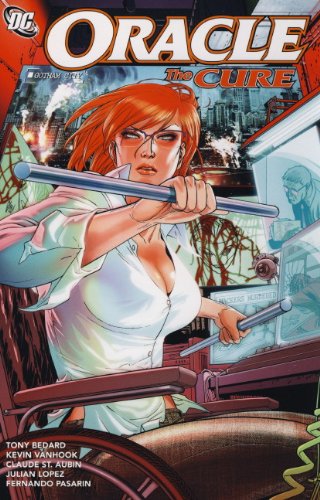 So assuming that Barbara Gordon does exist in some way, do writers (such as Ms. Simone) owe anything to her, such as the ability to walk again and serve justice as Batgirl? To answer that, we need to ask ourselves: why do we owe anything to anybody? The school of ethics that is most appropriate to asking about duty is deontology, in particular the deontological ethics of Immanuel Kant, who wrote that we have duties to other people by virtue of their dignity–an incalculable and incomparable worth–which they have based on their autonomy–the ability to follow laws that they set for themselves regardless of undue external or internal influence.
Because of their dignity, people deserve to be treated always as ends, not simply as means (which will be familiar to some as one of the formulae of Kant's categorical imperative). Without going into two much detail, this means that we can't use them coercively or deceptively for own own gain, and we must also try to help them achieve their own ends whenever we can. (The first type of duty is called a perfect duty, usually a demanding, "thou shalt not," while the second is an imperfect duty, which is less demanding and more of an attitude that must be sincerely adopted.)
So in order to have a duty toward someone, that someone must have dignity. While dignity is normally an uplifting concept, asserting the essential and equal worth of all persons regardess of sex, gender, race, age, class, ability, etc., it can be controversial when it comes to beings that we feel have intrinsic value but do not necessarily possess the Kantian ideal of autonomy: the mentally disabled, for instance, or animals, both of whom many (if not most) people feel should have rights and do possess some sort of dignity.
The issue with fictional characters like Barbara Gordon, however, is different. As written, Babs is superintelligent, a genius–up there with Batman and Mr. Terrific, if you ask me–so there's no dispute with the autonomy of the character in story. But does a fictional character have autonomy like a real-life person does? Clearly not–a character can only do what the creators describe her as doing (even out of story, like J.K. Rowling's revelation Dumbledore is gay). Barbara Gordon–like Batman, or Sherlock Holmes, or Harry Potter–does not make decisions for herself. Writers like Gail Simone and Chuck Dixon determine her actions, thoughts, and words, and artists like Ed Benes and Jesus Saiz describe them visually.
I know what you're thinking: "Well of course fictional characters don't think for themselves–duh!" But that's really the point, I think: if we have duties towards real people, even obvious duties like basic respect and concern, it is because they are real people, persons capable of autonomous thought, and brilliance, and wisdom, and intuition, and creativity, and humor. They can do great things and they can also screw up–but they can feel remorse and regret, and learn from their mistakes. They can make the world a better place, they can be heroes–all of their own volition.
But fictional characters cannot do any of that on their own–they are but puppets on the strings of their creators. In story, they can be brilliant, strong, heroic, tragic, or funny, but when we look behind the curtain, we see that it is their creators–comics writers and artists, actors and directors, animators and voice actors, whoever–that give them their characters. They are the only "will" that fictional characters have, and whatever dignity creators give them is only in the story, not inherent in the character herself or himself.
Listen, I'm passionate about fictional characters–anyone who knows me knows that I think of Batman, Nightwing, Oracle, Captain America, Daredevil, and many others like good friends. I believe that Bruce Wayne deserves to be the one and only Batman, that Dick Grayson deserves to have his own identity (whether that be Nightwing or another), and that Daredevil deserves to have a happy healthy relationship (please, Mr. Waid, at least give him that!). So I'm as guilty as anyone else of imputing a level of humanity into the characters themselves that their creators give them in story.
So, no matter how much they may mean to us, no matter how much we might care about them and identify with them, fictional characters do not have dignity like real people do, they don't have rights like real people do, and they aren't owed respect and concern like real people are. But there are real people here–the fans, the audience, the ones who are invested in the characters–and by respecting and caring for the characters, creators show respect and concern for the fans.
For instance, this is how I would interpret Ms. Simone's comments about Barbara Gordon above: fans have seen many other comic book characters return from the dead or from life-threatening injuries and illness, but they haven't seen Babs come back. This not only insults the fans' intelligence, but it's also unfair to them–they don't get to see one beloved character regain the use of her legs when other characters have recovered from much worse (even death).
Admittedly, Ms. Simone never explicitly says it is Barbara herself who deserves to walk, so she may have meant the fans all the time. Nonetheless, a lot of people (including myself) have imputed rights and dignity to fictional characters, so it was interesting to think about. It is a credit to comics creators (and, more generally, all fiction creators) that they inject so much life and depth into their characters, so much so that we come to care about them to that extent.
(By the way, I discuss some of the same topics in a chapter I wrote for the forthcoming Spider-Man and Philosophy, edited by J.J. Sanford. In that chapter, I discuss whether Peter Parker's decision to make a deal with Mephisto in One More Day was in character, and the responsibilites that creators either do or do not have to the fans to maintain consistency of character in their fictional characters over time.)


 Mark D. White
Leave a comment