Mark D. White

Writer, editor, teacher

  • Daredevil coverMy latest book, A Philosopher Reads… Marvel Comics' Daredevil: From the Beginning to Born Again, is now available — if you're curious, check out the introduction below (and also see my recent posts at Psychology Today drawn from the book).

    – — — —- —– —- — — –

    I don’t know about you, but I’ve always envied people who seemed to “have it all together.” We all know people like this, who somehow manage to integrate all the various aspects of their life, both external and internal, into a tidy, cohesive package. Of course, we can never know how smooth and successful their lives truly are; their outward appearance may be managed and polished like an Instagram influencer’s, while behind the curtain (or screen), their actual lives are a mess.

    Although some people manage their lives better than others, we all have complications that we struggle to reconcile. Even if we can balance the many external roles we fill—friend, family member, romantic partner, employee, community member—we also need to balance our internal lives, including our desires, impulses, and moral code, all of which may be multifaceted.

    This process of “getting your life together” can be difficult for anybody, and most of us have struggled with this to some extent at some point in our lives. Unfortunately, some people find it particularly difficult, especially with respect to their thoughts and feelings; such people may cycle through good times and bad times their entire life, some gradually improving over time, and others spiraling downwards into ever worse states of internal disarray.

    This is the point at which I introduce the subject of this book, a man who may appear on the outside to have made a successful life for himself, but on the inside, he “contains multitudes,” as Walt Whitman famously wrote in Leaves of Grass.

    Matthew Murdock is, famously, a man of contrasts. He was an only child, raised in poverty and growing up to become a successful lawyer—largely due to his single father, a boxer and part-time mob enforcer who pushed his son to study rather than fight. Matt was blinded by a freak accident that also heightened his other senses, granting him a range and depth of perception that sighted people can only dream of. He uses these senses, together with fighting skills acquired in violation of his father’s wishes, to fight crime as the costumed vigilante Daredevil—and, in the process, regularly violates laws he has sworn to uphold as a member of the bar.

    Beneath the surface, we discover even more fascinating conflicts. He is perpetually unsettled about who he is or should be: Matt Murdock or Daredevil, man or hero, lawyer or vigilante. He is obsessively concerned with whether he makes a positive contribution as Daredevil, or does “good” for the world, and assuming he does, he questions whether that good is his true motivation for doing it. He places a high value on rules but repeatedly finds himself in the position of breaking them—and even when he can justify doing this, he worries about the justification itself, and what it means that he had to find a justification at all. (Exhausting!) Most superheroes struggle from time to time with who they are and what they’re doing, but none as unrelentingly as Daredevil, and as soon as he comes to some resolution, something inevitably happens to make him doubt himself once again.

    All of these conflicts help to create one of the most dramatic characters in superhero comics. This is unfortunate for Matt Murdock, of course, but it’s great for the creators of his comics, who rank among the best in the industry, attracted to the character because of his complexity: outwardly charming yet inwardly tortured, one moment ecstatic and the next despondent. It’s also great for his fans and gives us a chance to explore the philosophy behind Matt’s internal conflicts, as well as what they mean for the man who suffers them.

    In this book, I’ll focus on the early years of Matt Murdock and Daredevil, from his first appearance in 1964’s Daredevil #1 to 1986’s Daredevil #233. The latter was the final issue of the classic “Born Again” storyline, which also marked the end of legendary comics creator Frank Miller’s time on the book. (I’ll also discuss the 1993-1994 miniseries The Man Without Fear, in which Miller expands on Daredevil’s origin with many of the concepts he introduced during his run on the monthly title.) As is true with many long-running comic book characters, the Matt Murdock we know today is not the Matt Murdock we met in 1964, but it is fairly close to the one that Frank Miller wrote. Although Miller is properly credited for crafting the modern version of Daredevil, he didn’t radically change or “reboot” the character. Rather, he refined and emphasized certain aspects of Matt Murdock that had been gradually introduced by his creative teams since the beginning. Miller made the characterization of Matt Murdock more consistent, which ironically allowed his internal contracts and conflicts to come to the surface more clearly—and dominate most of his stories ever since.

    Through this short book, we’ll explore the moral character and behavior of Matt Murdock, including his belief in the importance of rules, the role of promises in his life, and his sense of responsibility, each of which he tends to take farther than he should. We’ll also see how his penchant for violence grew over the years, as well as how far he’ll take it—and why. Then we’ll look more deeply into who Matt Murdock is—why he does the things he does, in terms of both motivation and the basic character traits that influence his choices (for better or worse). Finally, we’ll see how he gradually starts to come apart at the seams, the roots of which appear early on but intensify as the years go on, reaching a climax in “Born Again” as his personal dissolution gets a little push from someone else.

    Matt’s recovery from this final episode suggests ways for us to deal with the myriad internal conflicts we might have in our lives (even if they are less dramatic and colorful than Daredevil’s). Future stories in the comics—and possibly future books in this series—will reveal whether Matt manages to hold himself together in the long run. For now, though, we’ll learn how Matt Murdock became the Man without Fear we’ve come to know and love, and who continues to thrill us to this day in the comics, movies, and television series.

    Copyright © Mark D. White 2024

    – — — —- —– —- — — –

    See here for more on the book.

    Buy the book at Amazon, Barnes & Noble, or Bookshop,org.

  • Daredevil and antitrust covers (with space)
    Some of my hemming and hawing the last several posts about my pending projects is no more, as I am pleased to announce two books that will be coming out soon…

    A Philosopher Reads… Marvel Comics' Daredevil: From the Beginning to Born Again (Ockham Publishing, December 21)

    The third entry in my series A Philosophers Reads is a short volume (similar to the last one on Thor) covering Matt Murdock's early years as he develops into the Man without Fear we know and love, starting with the first issue and culminating in Frank Miller and David Mazzucchelli's epic "Born Again" storyline. In the process I discuss Matt's ethical framework, especially his devotion to rules and the law as he pursues justice both as an attorney and a costumed crimefighter (or, as some would put it, vigilante). In the process, I discuss the evolution of his attitudes toward violence, torture, and killing, as well as his identity issues, feelings of loneliness, and wild mood swings from euphoria to despair.

    You can find more details here and order from Amazon (paperback or Kindle).

    Rights versus Antitrust: Challenging the Ethics of Competition Law (Agenda Publishing, February 8)

    This is a book I've called my "white whale" because of the number of false starts and attempts I've made at it over the years! In it, I explain why the mainstream economic understanding of antitrust (as well as the traditional and neo-Brandeisian versions) neglects the importance of basic property rights and, as a result, holds business owners to expectations not applied to anyone else in a liberal society. I introduce all of the basic economic, philosophical, and legal concepts behind antitrust, assuming no background in any of these fields, to make an argument that the preeminent status granted antitrust and competition law around the world should be scrutinized and reconsidered.

    You can find more details here and pre-order the hardcover, softcover, or e-book from Agenda Publishing (in the UK), Columbia University Press (in the US), or Amazon.

    And coming next summer: The second edition of The Virtues of Captain America! (More on that next year.)

  • Blue 20230919_192129I meant to post an update at the end of August, but I decided to wait until I wrapped up the second edition of my Captain America book, which I finally submitted last week, and restarted the associated blog, which I did this week. (You can see the first "real" post here, and a little about the book on the "I'm back" post here.) Now I continue work on other projects, all of which I want to make significant progress on this academic year (while the situation at my job continues to deteriorate).

    I've long been questioning the purpose of these updates, as infrequent and brief as they've become. They may make more sense next year, however, when the books I finished this year start coming out.

    I hope everyone has a good rest of the year, and we'll see what I have to report at the end of it.

  • Sunrise picA quick update as another academic year closes…

    It was an eventful year, during which my department hired a fantastic new faculty member and the college searched for a new president (my role being much more significant in the former than the latter). At commencement yesterday, I was proud to watch one of my students, philosophy major and U.S. army veteran David Checchi, make the valedictory speech for the class of 2023. (You can watch and listen to his speech here.) Afterwards, we said goodbye to our long-serving and irreplaceable administrative assistant, who will be retiring June 1.

    On the writing front, I am relieved to say I got back in a good work habit in the last few months, finishing up two book projects (on which more soon) and starting or continuing work on others—one of which is the second edition of my Captain America book, which also makes me eager to resume the blog, especially after rereading the more recent stories.

    It's strange that these last few months have been some of my busiest in recent memory (in a good way) and I don't have more to say about them, but it's really the same old stuff—chairing, advising, teaching, and writing—which I have simply managed to balance more smoothly than in the past.

    Until next time, I wish everyone a joyous, relaxing, and productive summer (whatever those may mean to you)!

  • Park 12-24-2022
    Christmas Eve in the park near where I live…

    Another year's round-up, this one rather short… Perhaps that's simply because I'm becoming more focused? (No, I didn't think so either, sigh.)

    First, my job situation, which hasn't changed much: As I reported earlier (and despite what I said in my end-of-2021 post), I did remain as department chair, which at least is a familiar burden, but also a growing one, as the fiscal environment of public higher education continues to erode. On the bright side, it was terrific to return to (masked) in-person teaching this past semester; my students were impressively enthusiastic and engaged, especially compared to the general (and understandable) burnout, anxiety, and grief among students (and everyone else). I also gave my first invited talk in several years, on Batman and ethics at York College of Pennsylvania, where I'd last spoken in 2015—that too was a welcome return, in more ways than one.

    My primary published output this year was A Philosopher Reads… Marvel Comics' Thor: If They Be Worthy, for which I wrote a few Psychology Today posts and appeared on a handful of podcasts with friends both old and new. (See my webpage for the book for more.) In addition, my chapter "Panther Virtue: The Many Roles of T’Challa" was published this year in Black Panther and Philosophy, edited by Edwardo Pérez and Timothy E. Brown, and I wrote a chapter on punishment and resources for The Oxford Handbook of Punishment Theory and Philosophy, edited by Jesper Ryberg, to be published in the near future.

    As far as online writing is concerned, aside from a handful posts at Economics and Ethics and The Comics Professor, my main output was my continued work on The Virtues of Captain America Blog, which, after 4½ years and 460 posts covering over a thousand comics, is now on hiatus until next summer so I can focus on the revised and updated second edition of the book (plans for which I discussed last month on the Captain America Comic Book Fans podcast).

    Looking ahead: In addition to the Cap revision, I have several other projects to complete over the year (or two), some of which I've mentioned before (and others that I'm more reticent about). I've never been a good scheduler, but I can't afford not to be now; I am relieved, however, that the projects are conveniently spaced out in time, assuming I can work on writing one while reading ancd researching for another (as well as teaching, chairing, and so on).

    In the meantime, I wish all of you a happy New Year, whatever that means to you (and however you may find it), and I hope to have some news to report in a few months.

  • Sky 2022-08-09I'm writing this on a Monday, and the fall semester begins on Thursday, so I'm sure I'll get all my writing goals for the summer done by then.

    Ha.

    I wanted to check in before school starts, although I don't have much specific to report. Nothing was finished this summer, though progress was made on several projects—not the least of them being scheduling them out. As it happens, the commitments I've made are exceptionally well spaced out in time through the end of 2024, thanks to some patient editors, and it should leave time to do smaller things as they arise. ("Should," he writes with trembling fingers.)

    Besides this, there have been several new developments since I last reported:

    I hope you enjoy the withering embers of summer, in whatever way you can, and the impending crispness of fall, whatever form it takes for you.

    This blog's title is, of course, in tribute to this fine singer and actress, gone far too soon.

  • A Philosopher Reads... Marvel Comics' ThorWith the release of Thor: Love and Thunder quickly approaching, I'm pleased to share the introduction to my recent book, A Philosopher Reads… Marvel Comics' Thor: If They Be Worthy, for your enjoyment.

    – — — —- —– —- — — –

    Who among us has not doubted our worth or worthiness at some point in our lives? Maybe it was about our worth as a friend, family member, or romantic partner, and maybe it was as a student, employee, or volunteer. Maybe it was just an issue with our self-esteem or self-worth in general, leading us to feel inadequate in many areas of our lives. Whatever the context or degree, most of us, at one time or another, have felt we were not living up to a standard, whether set by others or by ourselves, and however reasonable (or not). When you don’t feel worthy, it can be nearly impossible to do anything, to interact with other people, and to perform the most basic tasks, even picking up a pencil, a book, or… a hammer.

    Consider Thor, the Asgardian God of Thunder and son of Odin the All-Father. (Yes, I know he’s not the only Thor—I’m getting to that.) Thor must be judged worthy in order to lift his mighty hammer Mjolnir and command his full powers. Granted, his alternative is not too shabby: In the early comics, the Odinson would otherwise be Donald Blake, handsome and successful doctor, beloved by his nurse Jane Foster. In later years, other than brief periods in other mortal forms, he would remain his enormous Asgardian self, with his beloved hammer in his hand—and the worthiness it implied.

    Being judged worthy by Mjolnir is, of course, very important to him, and it’s not hard to see why, especially when we realize this goal was… ahem… hammered into him from a very early age. In general, everyone appreciates some occasional external validation, even when things seem to be going fairly well for them. Often, it’s difficult to tell why people feel bad about themselves, especially when things look great for them from the outside. You may have just received a promotion at work, had your first child, or climbed your first mountain, and people would assume you’re on top of the world (literally, if you just climbed a mountain). But none of that matters if you don’t feel worthy, or if you see yourself as inferior, lacking in some way, or maybe even a loser. This is only compounded if you rely on someone else—or something else—to validate your worth for you, another entity with a mind of its own that makes judgments based on standards that may be irrelevant, unreasonable, or impossible.

    Now imagine being Thor. After untold centuries of defending Asgard and the other realms from Frost Giants, Dark Elves, and the occasional Fire Demon, you suddenly find yourself judged unworthy by your beloved hammer. You’re unable to lift it, or even budge it, and then you discover someone else was able to lift it and has taken your place as the new Thor. (Never mind that Thor is actually his name—we’ll get to that too.) On occasion, other people have been able to lift the hammer momentarily, most notably Captain America, but even he didn’t “become the new Thor” when he did it. (As you may know, Cap prefers a shield anyway.) One notable exception is Beta Ray Bill, an alien from the planet Korbin who fought Thor and picked up Mjolnir, transforming into a larger, armored version of himself. Normally, whenever someone other than Thor manages to lift the hammer, it’s merely an affirmation of their worthiness. But this time, when the Odinson was found unworthy, a new Thor appeared after she lifted the hammer, sending the original into an emotional and philosophical tailspin—one we will explore in this book.

    What about this new Thor? Don’t think we’ve forgotten about her—she’s a big part of this book as well. After months of secrecy and false leads, she was revealed to be none other than Jane Foster, originally Blake’s nurse and love interest, who had since become a doctor herself and remained in Thor’s life as a valued colleague and confidante. While the Odinson was struggling with unworthiness, Jane was undergoing chemotherapy to fight cancer, only to have her progress stalled each time she transformed into the Mighty Thor.

    Why did Mjolnir regard Jane as worthy and the Odinson as unworthy? Had something about the Odinson changed, or did Mjolnir “change its mind” about what it regarded as worthy? Does the Odinson become worthy again—and, if so, how? More generally, who (or what) is Mjolnir to be judging worthiness anyway? Who is the appropriate judge of worthiness, others or oneself? And most important, what does it mean to be worthy—and how might it be related to unworthiness?

    All these questions and more are raised in the seven years of Marvel Comics about Thor written by Jason Aaron and illustrated by a cadre of magnificent artists such as Russell Dauterman and Esad Ribić. In this book, we will follow the saga of these two Thors, as told by Aaron and his artistic collaborators, thinking about the philosophical concept of worthiness as we go.

    We will start with how worthiness was understood in the early comics, which matches many of our basic intuitions about what makes a person worthy, but also leaves many questions that will be answered as we go on. When Aaron’s run begins, we will see Thor begin to have doubts about his own worthiness as well as the worthiness of gods in general. This will raise the topic of what being a “god” means to an Asgardian and how this version of godhood can translate to our world. After the Odinson is declared unworthy, we will follow Jane Foster’s tenure as Thor, exploring how and why Mjolnir regards her as worthy, as well as the ways her worthiness may be different from that of her predecessor. As she fights to assert herself as the new Thor on Earth as well as on Asgard—Odin is not a fan, to put it mildly—the original Thor is left to deal with his own unworthiness, which gives us the chance to discuss how one experiences and deals with such feelings and begins to combat them. Finally, we will come to a deeper understanding of worthiness alongside the Odinson, and watch as he rejoins Jane to fight beside her before she… well, let’s leave something for later, shall we?

    I’m excited that you’ve chosen to join me on this philosophical journey through one of the most fascinating and exciting storylines in a half-century of Thor comics. (And that includes the ones about the frog.) Jason Aaron and his artistic partners have given us a unique way to explore many dimensions of worthiness by observing how Thor Odinson and Jane Foster each deal with the burdens of being the God of Thunder, as well as why they were chosen—or, in the Odinson’s case, rejected—as being worthy of the honor. I wrote this book to be enjoyed by anyone, whether you’re new to Thor or philosophy, or you’re a longtime fan of either (or both). Regardless, when you reach the end of the book, I hope that, not only will you feel entertained and have a deeper appreciation for the stories of Thor, but you will have new ways to think about any issues you may have about your own worth, value, or self-esteem.

    Copyright © Mark D. White 2022

    – — — —- —– —- — — –

    See here for more on the book, including the table of contents, reviews, and related podcasts.

    Buy the book at Amazon, Barnes & Noble, or IndieBound.

  • Morning 2022-06-13With the academic year wrapped up and a long overdue handbook chapter completed, the time has come to switch gears, which also provides an opportunity to post a brief update, also long overdue.

    It was a tough semester with a lot of campus drama, most of it unnecessary but none of it surprising. I did, however, change my mind about what I wrote at the end of 2021, for both professional and personal reasons, and offered to continue as department chair for a least a little while longer (which my colleagues all too eagerly took me up on).

    With the handbook chapter finally done and the summer laid out ahead of me, I can resume work full-time on my introductory ethics textbook using superhero examples, as well as background reading/re-reading for future titles in the A Philosopher Readsseries, which is now actually a series after the publication in April of the second book, A Philosopher Reads… Marvel Comics' Thor: If They Be Worthy. There is already one review online from Armond Boudreaux at A Clash of Heroes, as well as two podcasts I guested on, the first of which is with my old friends Leon and Alen at Seize the Moment:

    (Clearly we're all having a miserable time.)

    The second is with my new friend, Thor super-fan Ryan Does, at Across the Bifrost:

    I have one more podcast for the book planned at this time, and as the new movie approaches I'm sure I'll have more to share.

    In other superhero-related news:

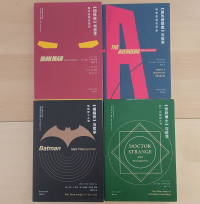
    • Chinese translationsSpeaking of Doctor Strange and Philosophy, I learned recently that the Chinese translation has been published, which makes four of my volumes in the Blackwell Philosophy and Popular Culture series that have been translated in Chinese, which blows my mind.

    – — — —- —– —- — — –

    That's it for this update; we'll see how much I have to report by summer's end.

    If you have a chance, I hope you enjoy the next several months, whatever that means for you, and in the meantime I'll see you on Twitter and Instagram, where I post lots of photos like the one at the top of this post, taken yesterday morning from the landing at the top of my back stairs. Here's another, from this morning, just because you made it this far:

    Morning 2022-06-14

  • Bat catBeing online so much finally paid off: I saw the announcement of the IMAX preview of The Batman just it was announced about a month ago, and was able to snag tickets for me and my son before it sold out (apparently within minutes). Last night we saw it, and we both walked out of the theater speechless.

    In short: This is the Batman movie I'd been waiting for.

    When I write and talk about Batman, I focus almost exclusively on the comics. Don't get me wrong: I love that he's represented in so many types of media, and everyone has their favorite, but mine has always been the version in the comics. Notwithstanding the craft, talent, and hard work put into the films, I have rarely warmed to them. I have always said that in my ideal Batman film, you would rarely see Batman himself—you'd see the shadow, the silhouette, and people reacting to him, but rarely would you see Batman (and never in the light). Batman has such a mystique about him that it's difficult to capture his ethereal nature on film, even for the best directors, actors, writers, costumers, and cinematographers. Less is more, basically, and they should leave the rest to the audience's imagination.

    The Batman came much closer to that ideal that any screen adaptation of the Dark Knight to date, and that's just one reason I enjoyed this film so very much.

    WARNING: There may be mild spoilers going forward, although I don't discuss any plot points or details.

    The Batman was sumptuously photographed, with so many breathtaking shots that I wished I could have lingered on (and surely will when the Blu-ray is released). The subtle score was gorgeous, especially when it took the place of sound effects, giving those dramatic scenes the feel of a silent film accompanied by music. In this movie, Batman is very much a creature of the shadows; most of the film is shot at night or in darkened spaces, and Batman is rarely seen in direct light, maintaining that ethereal quality I prefer to see. But at the same time, when we see his face, he is undeniably human, primarily due to the focus on his eyes, which was surprising effective. (I was also surprised how well the "half cowl" worked in retaining the classic silhouette while preserving mobility, and thankfully avoiding the bulky rubber cowls of films past. Was it inspired by Daredevil's cowl on the Netflix Disney+ show, I wonder?)

    There are several aspects of Batman that I particularly appreciate in the comics that were also represented here. This Batman is more detective than superhero, working closely with Detective Jim Gordon on a series of grisly murders accompanied by cryptic messages from the enigmatic Riddler (with occasional input from Alfred). From the beginning, we also see many instances of members of the Gotham City Police Department reacting in different ways to Batman's presence at crime scenes, in the tradition of the Gotham Central comic, combined with the corruption in the police force, well known from Batman: Year One. We can tell that Gordon and Batman already have some history together from the enormous trust Gordon has for the Caped Crusader, whom he repeatedly has to defend to his fellow police. Even when helping to investigate a crime scene or observing a medical examination of a murder victim, this Batman is still and silent, watching and only occasionally contributing an insight, as if he appreciates Gordon's indulgence and doesn't want to overstep and risk this valuable relationship.

    In general, Pattinson's Batman—and even his Bruce Wayne, whom we see much less than in other films—is for the most part still and silent, which makes the action scenes all the more striking in contrast (as well as the handful of laughs, mostly from other characters at his expense). There also seemed to be less action than earlier films, which will surely disappoint some viewers (understandably): Most of the movie was a battle of wits between Batman and Riddler, with occasional action scenes and fights primarily between our hero and flunkies or mob toughs, until the final act that ramps up the action quotient very dramatically. This is not a typical superhero film; in pacing and tone, I would compare it more to the Daredevil show, or maybe Logan.

    Pattinson's Batman/Bruce Wayne is a tortured soul, which he doesn't even bother to hide when he attends a public function as Wayne. Maybe he will later, but this Bruce Wayne has not yet adopted the millionaire playboy persona to travel among high society; for now he couldn't care less, clearly obsessed (as Alfred notes) with fighting crime or, as he puts it, pursuing vengeance. Thankfully, this concept of vengeance does not involve killing, which he prevents another character from doing, giving the standard explanation of "you don't want to turn into them." (He also makes his dislike of guns clear in another scene.)

    Speaking of vengeance, in what was perhaps the most surprising part of the film (in the best way), Batman has an epiphany at the end regarding his mission that is set up marvelously well, using a minor character that shows up only a handful of times throughout the film but plays an integral role in tying the whole thing together. (At nearly three hours of very steady but slightly drawn-out pacing, this was very useful.) Here, this young Batman discovers a positive aspect of what he does that can complement the negative aspect of fighting crime, and could serve to add a different tone to the next installment (although I hope it doesn't change the tone entirely).

    Finally, the performances were excellent across the board. Robert Pattinson wisely chose to underplay both Batman and Bruce Wayne, using his face (which we see more of, even as Batman, than before) to show the tragedy that motivates him and the steely resolve that carries him on, despite discouraging odds. Zoë Kravitz was magnificent as Selina Kyle, portraying the self-determination and instinct for survival that allows her to prosper in any situation, both amongst the criminal element and alongside the Dark Knight (with whom she has undeniable playful chemistry, reflecting the best of their relationship in the comics). Gregory Wright was delightfully gruff as Jim Gordon; Andy Serkis's Alfred was not seen enough, but his few scenes were effective and heartfelt (even without the gentle snark often seen in the character); and Paul Dano was a terrifically unhinged Riddler (though he reminded me more of James Gordon Jr.), especially in the later part of the movie when he was not in his, ahem, questionable outfit. (Speaking as a huge Colin Farrell fan, I don't know why he played the Penguin as Robert DeNiro, but the character worked well in a role that sets him up well for future appearances.)

    I went into this movie more curious than anything, but I walked out astonished, and I'm very eager to see what Matt Reeves and company do with Batman next (especially if it involves the character teased at the very end, which I hope they continue to tease for a while longer).

  • Captain america iron man 2 coverCaptain America is in a weird spot these days, and it has nothing to do with the Red Skull or Hydra. (At least, not that we know.) Since Ta-Nehisi Coates' run on Captain America ended in July 2020, the Sentinel of Liberty has been without an ongoing monthly title. (UPDATE: This changes in April, as revealed here.) Instead, he has been featured in miniseries with assorted friends, starting with The United States of Captain America, in which he worked with Sam Wilson, Bucky Barnes, and even that scamp John Walker, as well as a number of people across the country fighting in Cap's name. (It was an excellent series that I hope to write about soon.)

    Currently, the Captain America/Iron Man miniseries features Cap alongside his fellow Avenger and frequent sparring partner in their first extended team-up since their three-issue story in #633-635 of Cap's team-up book in 2012 (included in the Captain America and the Avengers trade paperback). In it, they have teamed up in pursuit of Veronica Eden, an old acquaintance of Tony's who is trying to take over Hydra. Also after her is Fifty-One, a former member of the Fifty-State Initiative, an idea that Tony implemented after the Civil War, which placed a trained and government-sanctioned superhero team in every state (chronicled in the Avengers: The Initiative series). To complicate matters further, the rest of Fifty-One's team, made up for former Initiative members, is after him at the same time, which prompts some reflection on Tony's part about the Initiative itself.

    Through it all, Cap and Tony engage in casual conversations that are quickly turn rather deep, revealing a little-seen aspect of a friendship that has weathered more than its share of disagreement (to say the least!).

    At the start of issue #2, Cap and Tony confer with the former… Initiants (?)… who are actually calling themselves the Paladins, after this guy, I guess? (Odd choice.) After letting them go after Fifty-One by themselves (while planning to follow up with them later), our two heroes visit Tony's new pad to chat. Our host maintains the humorous, self-deprecating tone he's had since the first issue of the series, which seems like an effective defense mechanism when talking to the Living Legend of World War II, but as we'll see later, Cap doesn't allow it to go unquestioned.

    Capim2a

    I have to laugh at Tony's statement below, because this has happened so many times to him in one way or another. But it's Cap's response that I find more interesting, both existentialist in his emphasis of self-creation and authenticity, as well as Stoic in his recommending acceptance of events outside your control (both of which are reminiscent of the Serenity Prayer).

    Capim2c

    Next, Cap questions the wisdom of Yoda, again from the Stoic (and, later, Kantian) point of view that all we can do is try, acting on our best intentions, and whether we succeed or not is out of our hands, determined by the interaction of our efforts with the external world.

    Capim2c

    Let me put in a good word for Tony, though: What he (and Yoda) may have meant is that, from a motivational point of view, we shouldn't intend to try to succeed at something, because that openly acknowledges the possibility of failure. That possibility is always there, of course, but we need to put it out of our minds to maximize the chances of success. This also applies to making a promise, whether to yourself or someone else: Declaring "I'll try to do better" is not an effective as "I'll do better." Both acknowledge the possibility of failing to follow through on the promise, but the language of "try" makes this possibility explicit, and therefore can suggest a less wholehearted intention. (Wedding vows can be seen the same way: You can promise to love each other "til death do you part" while implicitly acknowledging that this may not happen, because it's only the intent that counts.)

    I just love the next panel—all too often, Cap pokes fun at his habit of speechifying, and here he simply embraces it, but not without a touch of self-awareness that he can sometimes be a bit over the top.

    Capim2d

    After they catch up with the Paladins at a decommissioned SHIELD bunker where Eden and Fifty-One are holed up, Cap proves himself extraordinarily perceptive, seeing through Tony's armor that he's upset, this time about the failure of his Fifty-State Initiative, which ironically ended up creating the same problem that led to the Civil War in the first place.

    Capim2e

    Cap raises a practical issue about the Initiative, that the hero business is driven by demand, not supply…

    Capim2f

    …and then Tony goes and makes a completely unwarranted crack about my home state and I lose any sympathy I may have developed for him. (You were so close, Tony, so close.)

    Cap acknowledges that Tony's idea behind the Initiative was sound; after all, Cap often recognizes that superheroes are too concentrated in New York City and on several occasions he has toured the country to see the rest of America and help people wherever they need it. Instead, his issues with his Initiative focused on how it was implemented, reflecting his opposition to registration itself during the Civil War.

    Capim2f

    I'm curious, though: Tony says Cap hated the Initiative, and it makes sense why he would think that, but I don't remember this being shown in the comics. After all, Cap was "dead" for most of the time the Initiative existed, and while he and Tony discussed the general principles behind the Civil War after his return (mainly in the Avengers Prime miniseries), I don't remember them discussing the Initiative specifically, which was all but forgotten after the Siege on Asgard ended Norman Osborn's "Dark Reign" and launched "The Heroic Age" with Steve Rogers running the show.

    As they fight Eden's goons, Cap continues to try to make Tony feel better, but Tony deflects the praise with self-deprecating comments.

    Capim2f

    Cap isn't having it, and calls him out on it, but Tony continues, in a strangely humble-bragging way.

    Capim2i

    But Cap doesn't relent, telling Tony he knows who he really is, not just inside his Iron Man armor, but the emotional armor he wears… around his heart.

    Capim2i

    This exchange ends with Tony profoundly uncomfortable, as many of us are when "confronted" with sincere compliments, and he confronts Cap in turn in an attempt to change the subject.

    Capim2i

    All joking aside, this can seem weird, especially if you're used to seeing Captain America and Iron Man throw down over ideological differences (as I have certainly emphasized myself). But most of the time they have worked together over the years, Cap and Tony have been good friends, if uneasy ones at times, and I really appreciate that this miniseries has shown them reconnecting on this level as they work a case together, delving deep into both of their characters in a way that is better shown in their interactions than by looking at each character in isolation.