I hadn't planned to write any more about the DC relaunch–every month I drop a couple more titles, and I fear it won't be long before I'm buying little more than the Batman and Green Lantern families of books. (Even Earth 2 is sounding more like a new Tangent Earth: the names are the same but most else is different.) But then I read something from Marvel that I truly enjoyed, and part of the reason I enjoyed it is also the reason the DC relaunch has left me flat.
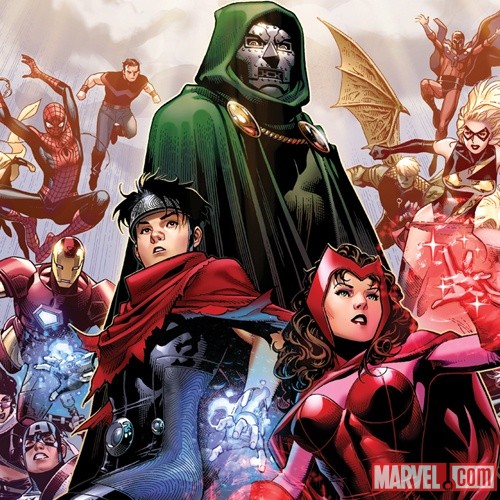
 The book is Avengers: The Children's Crusade, a nine-issue bimonthy series by Allan Heinberg and Jim Chueng, the creators of the Young Avengers series. It was recently collected in hardcover (very soon after the last issue hit the stands), and I spent a leisurely afternoon and evening last week reading it–with pleasure. The series recounts the efforts of Young Avengers Wiccan and Speed to find Wanda Maximoff, the Scarlet Witch, whom they believe to be their mother. They are aided in this by Magneto (Wanda's father), and along the way they have run-ins with the Avengers and the X-Men. (This series is a prelude to a certain event, Avengers vs. X-Men, that you may have heard of, despite Marvel's famous promotional subtlety.)
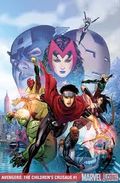 Besides being exceptionally well-written and superbly rendered, the series is steeped in Marvel history–much of which is succinctly recapped along the way for the benefit of the new reader. The rest is inessential to following the story, but adds immeasurably to the enjoyment of it. I don't think it's revealing too much to say the series touches on the relationship between Wanda, her brother Pietro (Quicksilver), and their father Magneto; Wanda's relationship with the Vision (which bore two sons, an epic tale in itself); the three mutants' relationships with the X-Men, the Avengers, and society in general; the Avengers Disassembled and House of M storylines, as well as more recent Avengers, X-Men, and Young Avengers stories. (And many of the Young Avengers' histories are wrapped up in Avengers lore as well, of course.)
Rather than weighing the series down, this tremendously rich and intertwined Marvel history provided essential background to the story, motivation and recognizability to all the characters involved, and emotional resonance to the events therein. These are all things that the DC Universe no longer has, since they erased most of their history, and have been evasive regarding which elements of it remain.
 When I read the DC New 52 titles, even the more entertaining ones, I find myself numb to them. I don't know the characters anymore; I don't know what they've been through, how events affected them, and how it affects their behavior. The names are familiar, the costumes are similar (with a lot of redundant seams and armor-plating), and the powers are the same for the most part–but who are they? Without background and history, I have no context in which to understand their actions or care about them as characters. They're mere ciphers in familiar guises, frauds who play on our loyalties while betraying our treasured memories.
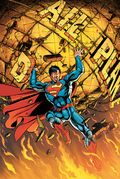
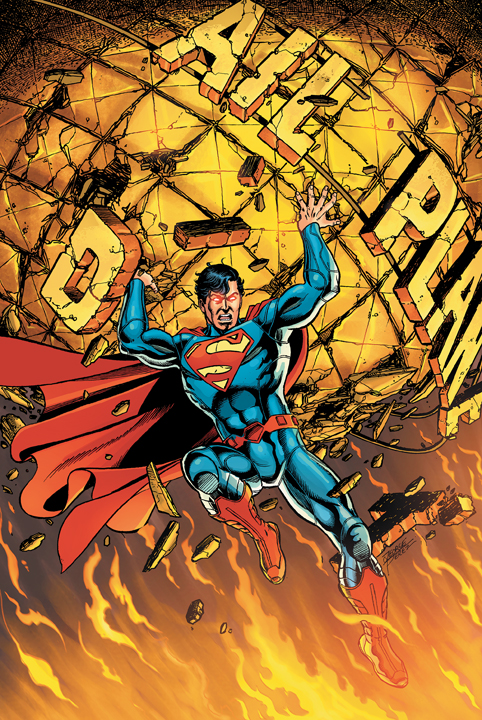
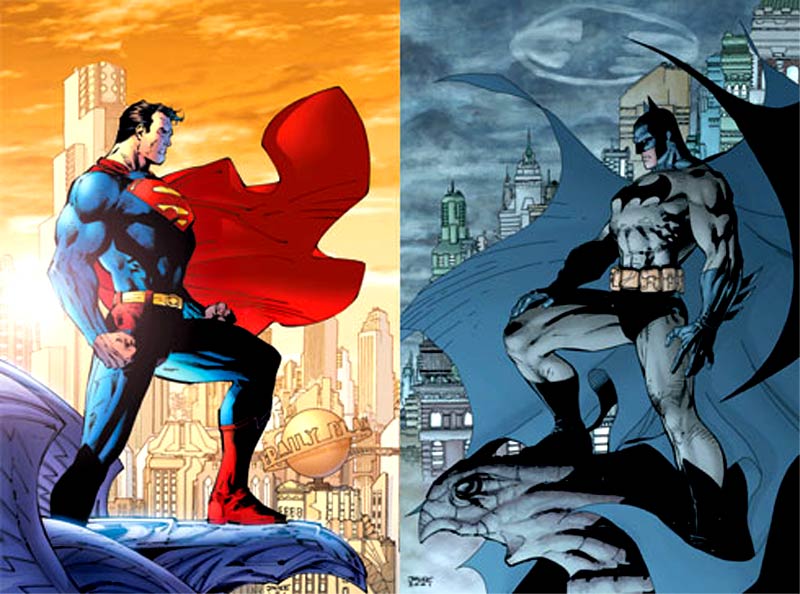
This problem is obvious in cases like Superman and Wonder Woman, who have been reinvented to a large degree. (Don't even get me started on Green Arrow.) Superman–perhaps the easiest DC superhero to define in terms of his character before the relaunch–now (ironically) seems completely alien to me. I can't say if any of his current behavior is out of character because I don't know what his character is anymore. Wonder Woman has always been harder to nail down in terms of her underlying character (an observation usually made to excuse low sales, but cause and effect are difficult to parse out), but now DC seems hellbent on upending everything we know about her origins, perhaps in the hopes that this will make her easier to define. (And that's being charitable.)
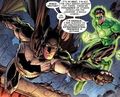 But the problem exists even for characters such as Batman and Green Lantern, who were left relatively untouched by Barry Allen's jog at the end of Flashpoint. (When I say Green Lantern I'm thinking primarily of Hal Jordan, but it applies to any of them.) We still don't know how much, or what parts, of their past history remains canon and still informs their personal character. DC dismisses these concerns, repeatedly saying that which stories remain in the New 52 continuity will be revealed as they become relevant. But they are relevant now: they are relevant to every character in every story, because they tell us who they are and what they've been through, and give us some basis to identify them as characters rather than simply talking heads in masks and capes.
To know who Batman is now, we need to know whether Jason Todd died, whether Bane broke his back, whether Darkseid "killed" him, and so on. To know who Hal Jordan is now, we need to know if he ever became Parallax, died, and became the Spectre, as well as the status of the more recent events of the Sinestro Corps War, Blackest Night, and Brightest Day. And then we have the various crises, deaths, and resurrections through the DCU, which inform the histories of all the characters in it.
If DC wants to leave all these details vague, or let them slip out little by little to tease the readers, that's their choice. But as long as we don't know what these characters have gone through, other than the broadest details, we don't know them as characters–we can't sympathize with them, we can't understand their behavior, and we have no connection to them. We will come to know them over time, as we do any new characters, and there's nothing wrong with that–unless we're supposed to retain our old loyalties and keep buying the books based on the "0ld" characters we used to know but who are now so much flotsam in the time stream.
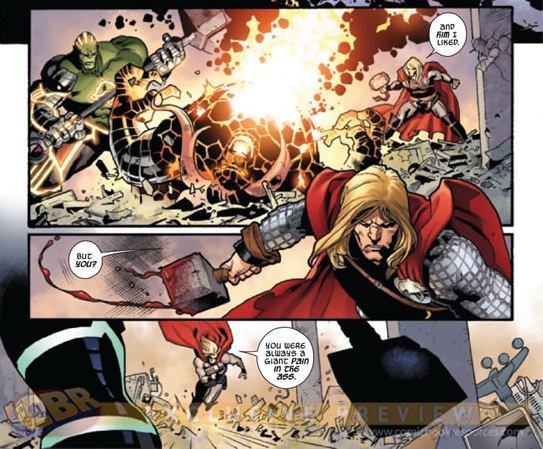
 Contrast this with Marvel, whose characters are more precisely defined than most of DC's (even before the relaunch). Captain America is noble, Iron Man is cocky and brilliant, Thor is chivalrous, Namor is regal and pompous, Daredevil is idealistic and compassionate, Spider-Man is naively pure, Hank Pym is insecure, and so on. We know who these people are, and when they say or do anything that seems "not like them," fan cry out–and justifiably so! Through decades of stories, even though crafted by a series of writers, these heroes' basic character traits have been defined so well (though not with perfect consistency) that any thing said or done out of the ordinary is immediately called out as out-of-character. Take Thor's calling the Hulk a "pain in the ass" in Fear Itself #5, for instance, which was widely derided by fans as something Thor simply would not say. The Thor they know, the Thor that has been written for so long even by so many, is so consistent in his speech, mannerisms, and behavior that this one phrase seemed horribly out of place. Could anyone justifiably call anything Superman says in the New DC Universe out of place? On what grounds could they say it?
 Some may argue that Marvel's characters are too simplistic–especially compared to someone like Batman–but any such "simplicity" is based on well-established regularities of behavior that give them their stable, underlying character traits and that make them familiar to us. We know Spidey, we know Cap, we know Iron Man–and we know when they do something out of character. This is true of all serial fiction–ongoing TV series, movie franchises, book series–in which characters develop over time and establish clearly defined traits. New writers in these media have a responsibility to the fans to maintain the basic elements of the characters by writing them consistently with their past characterizations. And if they want the characters to change and grow–as they should, to an extent–they must do so organically and in a way that makes sense in the story, not present abrupt changes in character that make the fans doubt the writer knows about the character at all. (My chapter on "Brand New Day" in the forthcoming book Spider-Man and Philosophy presents this argument in the context of Peter Parker's deal with Mephisto, which was widely regarded as a bow to editorial fiat that flew in the face of Peter's basic goodness.)
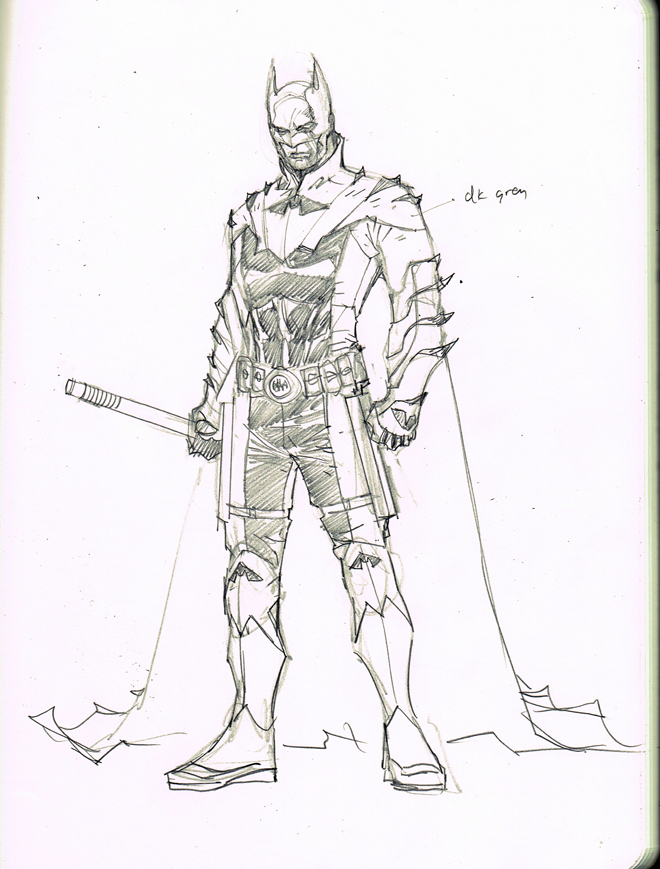
 I don't know the new Superman, the new Wonder Woman–or even the "new" Batman, even though he seems little changed from before the relaunch. There's no way I can know them. These "characters" have no definite history yet, and therefore no character to recognize. I suspect the powers-that-be at DC thought they could have their cake and eat it too, relying (as I said above) on longtime readers' loyalty to the characters they loved to keep them tethered to the books, while the creators crafted new characters beneath the surface to try to draw in the mythical "new reader." But speaking as a longtime fan, I don't think it's working on either front; and in the words of a fellow mourner, "I have no interest in the Emperor's new clothes when I can clearly see the Emperor's mucky behind."
 Following the huge success of their revision of Wonder Woman's origins–first making her the daughter of the Greek god of philanderers, Zeus, and then "interpreting" Hippolyta and Amazons as rapists and baby-murderers–DC Comics announced at Emerald City Comicon today that they will soon reveal that Batman's deceased parents, Thomas and Martha Wayne, were Nazi sympathizers during World War II. Asked about the change, representives of the firm of Didio, Johns, and Lee explained that "they simply didn't think Batman was angry enough."
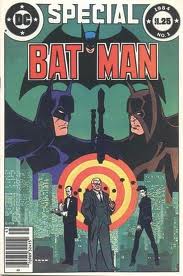 When they hinted that a young Jim Gordon may have been the one to shoot the Waynes, a fan stood up to point out the similarity of the new origin to that of the Wrath from 1984's Batman Special #1. In response, Didio threw up his hands and shouted, "Who remembers that? It's the New 52, baby! Everything's fair game now!" before high-fiving Johns and Lee.





 available at


 Mark D. White