 So here we are, in early October–New York Comic Con is several days away–and I realized I had written a lot about the new DCU before anybody had actually read the books, but I had yet to comment on it after reading September's big batch of #1's. Rather than give a book-by-book review, I'll just share some thoughts on the enterprise as a whole. I make no claims to originality, nor to any special insight–I just wanted to give at least one "postgame" wrap-up after I commented so much pregame.
Simply put, I hope some readers, new and old, embrace the new DCU as theirs, because it certainly isn't mine.
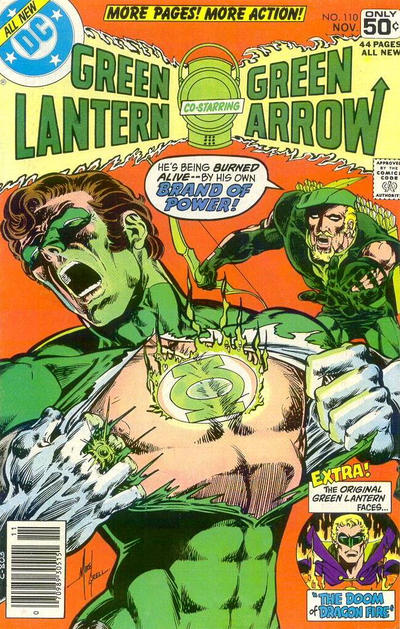
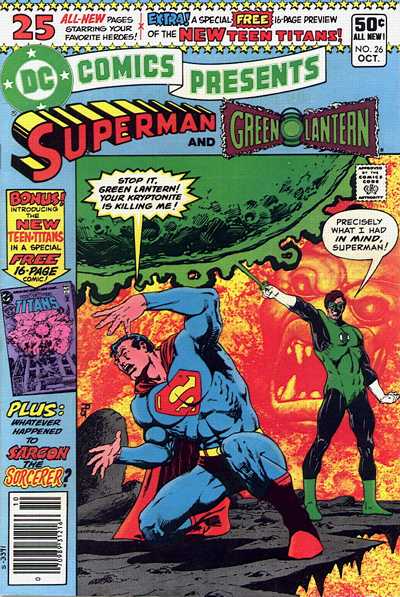
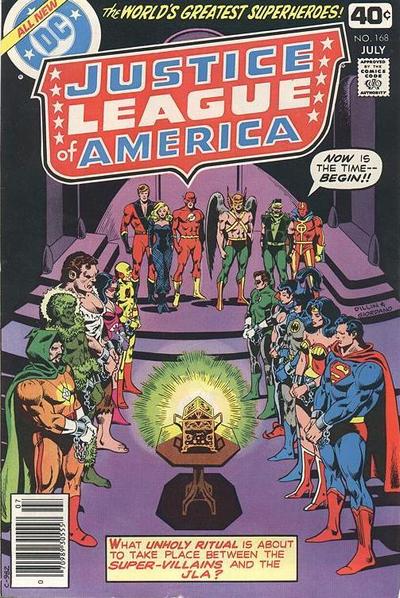 My love of DC superheroes started with Adam West's Batman and the Super Friends and soon spread to comics. The first comic book I remember reading was Green Lantern/Green Arrow #110 (November 1978), which introduced me not only to Hal and Ollie, but also to Alan Scott–and started my love for Earth-2. Soon I was plucking comics at random off the spinner rack at Betty Jay's soda shop in my small Ohio hometown, including Justice League of America #168 (July 1979), containing the pivotal mindwipe storyline that begat Identity Crisis (and featured a very buff Ralph Dibny on the cover), and an innocuous-looking DC Comics Presents #26 (October 1980), featuring Superman and Green Lantern, and also a special preview of New Teen Titans, which started a legendary run on comics that I was lucky to have read from the beginning (and now look forward to rereading in the beautiful Omnibus hardcovers).
 Soon I was riding my bike up to City News, a newsstand/cigar shop in the same town, which carried the full DC and Marvel lines. (I didn't buy any Marvel books at the time, which was more an economic decision than an aesthetic one–I loved the idea of a shared universe and wanted to read the entire line from a company, and what can I say, I loved the DC heroes "first.") I lived for the annual JLA/JSA crossovers, and my favorite titles soon became All-Star Squadron and later, by subscription, Infinity Inc. The Earth-2 heroes were the "other" to me, and by implication cooler than the "normal" Earth-1 characters.
And then came Crisis on Infinite Earths, the first major reboot/relaunch of the DCU (unless you count the introduction of the Earth-1 Flash, Green Lantern, Atom, and Hawkman in the 1960s, which some do). I never regarded the idea of multiple Earths, with independent yet overlapping timelines and histories, to be complicated, but as the same time I thrilled at the idea–soon to be realized with the post-COIE Justice League–of having heroes from various Earths on the same team. (To me, Dr. Fate and Batman on the same team equalled awesome.)
 The changes after COIE were just as selective as those following Flashpoint, although some of the former were dictated by the logic of merging the various Earths. Specifically, "duplicate" heroes, such as Superman, Batman and Robin, Wonder Woman, Green Arrow and Speedy, and Aquaman, who existed in roughy identical forms on Earth-1 and Earth-2, had to be collapsed into one (always the younger, Earth-1 version). But the changes went even further: Superman and Wonder Woman were given hard reboots, while Batman and Green Lantern were left mostly unchanged. (Sound familiar?) And since Barry Allen died during COIE, Wally West stepped up as the new Flash, but the world somehow remembered Barry's death (but not Supergirl's).
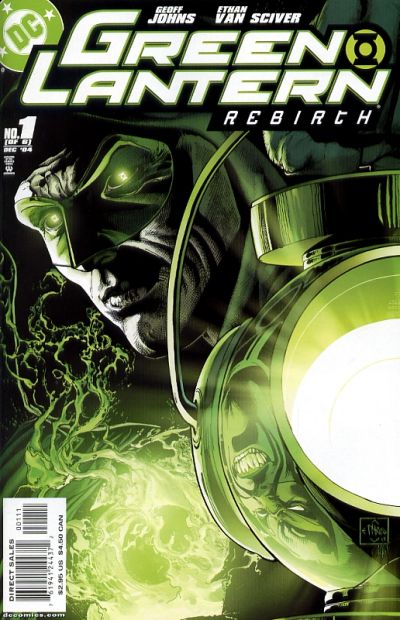 For reasons that I do not recall (but probably having something to do with getting my first guitar in high school), I dropped out of comics around the time Watchmen and The Dark Knight Returns wrapped up. (Maybe I wanted to leave at a high point!) I didn't walk into a comics shop again until 2004, just in time for Hal Jordan and Jason Todd to come back from the dead–and for Sue Dibny and Ted Kord to replace them–and also for the huge ramp-up to Infinite Crisis, the successor to Crisis on Infinite Earths. I missed everything in between, including the deaths of Superman and Jason Todd, Batman's back problems, Hal Jordan's breakdown possession, and all the events like Zero Hour, likely the most thorough line-wide retcon other than COIE and Flashpoint (and the one which most closely resembles the revised "five-year" timeline of the new DCU). But through the magic of trade paperbacks and online comic book shops, eventually I caught up with what I had missed.
Admittedly, I was much much younger when COIE happened, but I don't remember having the same sense of loss, abandonment, and betrayal as I do now. (Who, me, overdramatic? Never!) Most of the changes after COIE reconciled the five most significant Earths (1, 2, 4, S, and X), the key word here being "reconcile." Redundancies were eliminated, with some minor casualties (such as Helena Wayne and Lyta Trevor), but most of the histories of the two main Earths, 1 and 2, were retained–with the notable exception of those of Superman and Wonder Woman. But even those hard reboots didn't seem so drastic to me–Superman was slightly depowered, his supporting cast changed a bit, and he no longer had a past as Superboy, and Diana no longer had a past with the Justice League (or anybody, for that matter). But their underlying characters were unchanged, or at least so it seemed to me at the time. Most importantly, they were still recognizable as essentially the same characters that they were prior to COIE.
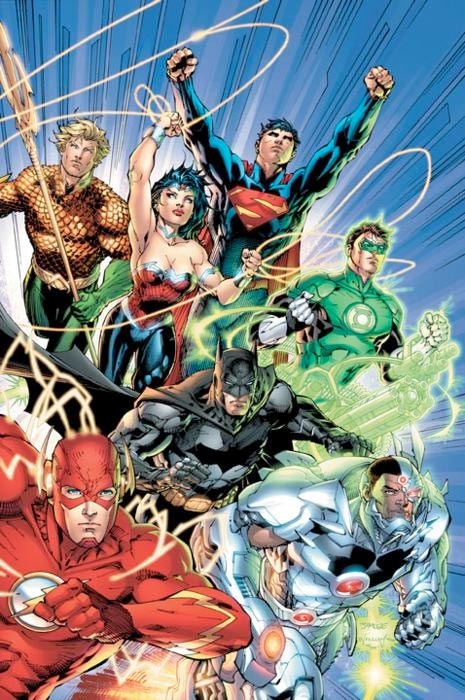 But despite what the now-ubiquitous Purple Glowy Woman said at the end of Flashpoint about reconciling the DCU with the Vertigo and Wildstorm universes, the post-Flashpoint DCU is more about selective reinvention than reconciliation. Once again, Batman and Green Lantern are relatively untouched, while Superman and Wonder Woman are rebooted–along with most of the rest of the DCU. The extent of the changes vary, of course: Barry Allen is in the same job he had before Flashpoint but is no longer married to Iris (and apparently no longer has other speedsters to run with), Carter Hall is a different sort of Hawkman altogether, Ronnie Raymond and Jason Rusch are now brand-new Firestorms, Jamie Reyes is the first Blue Beetle, and Ollie Queen is just a blonde–and bland–archer with a half-assed goatee and no personality to speak of. The full changes to Wonder Woman have yet to be seen (other than the recent revelation of her parentage), but the new Superman is a travesty, edginess replacing nobility and cynicism replacing hope. The histories of the Justice League and Teen Titans, traditionally bedrock institutions in the DCU, are completely up in the air; thankfully, the Legion is little changed from its reintroduction during Brad Meltzer's and Geoff John's JLA/JSA crossover. (I did mourn the JSA most of all, but its planned resurrection on a new Earth-2 is a bright light in an otherwise dim new universe.)
This is why it doesn't feel like my DCU anymore–because it isn't. It's completely new, and in a different way than the post-COIE universe was. Rather than reconciling and retaining most of several alternate histories, Flashpoint replaced a single history with another, with elements retained (seemingly) at random. Like "One Year Later" but on a grander scale, I enjoy being teased with which elements remain the same and which are changed or lost. But now that game is being played with nearly the entire DCU–and frankly, I'm tired of waiting, guessing, being pleasantly surprised and horribly disappointed within the same 20-page story. The treasured history of my DCU, which survived largely intact through several major upheavals since 1978, is gone. RIP.
Am I just being selfish? Do I want to keep my DCU and prevent others from having their new one? Is this like fans wanting to keep Kyle or Wally when Hal and Barry returned? The difference is that those characters all co-existed in some form. But unless the post-Flashpoint world is revealed at some point to be an alternate universe co-existing with the pre-Flashpoint one, the new DCU has replaced the old one, and my DCU is gone. I don't begrudge anyone else the new DCU, and I hope for the sake of the medium that fans continue to embrace it after the novelty of 52 new #1's fades. But I cannot maintain my enthusiasm–this is truly a new DCU, and I simply liked the old one better. And through trades and back issues, the old DCU will say alive for me, while I selectively follow the new one–for there is fantastic work being done. But it's not the same.
—–
 Funny–I had always wanted to write a personal history of my life with comics, but I hadn't expected to write it in the context of a DCnU post. (And there is more to tell, to be sure–later.) But it is appropriate, I suppose, since most of my comics-reading life has been within the DCU. Only in 2006 did I start reading Marvel in earnest, having been enticed by Brubaker and Lark's Daredevil (having loved their collaboration on Gotham Central) and the moral and political complexities of Civil War. Now I count Captain America, Iron Man, Thor, and of course Daredevil among my favorite characters in comics, alongside Batman, Nightwing, and Green Lantern (Hal Jordan).
Many have noted the similarity of the new DCU with Marvel's Heroes Reborn period, in which a group of heroes were shunted to a pocket universe and "modernized," only to be returned to the 616 universe a year later in their traditional forms. Other than that blip (and scattered others, such as "One More Day"), Marvel seems to understand the value of stability, choosing to tell new stories with their existing characters rather than throw the baby out with the bathwater and start their characters from scratch, alienating loyal readers (like me) in hopes of attracting new ones.
DC must recognize this to some extent; after all, they kept their most fascinating character, Batman/Bruce Wayne, largely untouched. Countless stories can be told if you build on the foundation of a great character. And Superman is another great character, embodying strength, hope, and heroism, and showing us that humanity in its highest form is more than just DNA. His superpowers amazed us, but his heart connected him to us. Without that, he is not Superman, but rather just another strongman in a cape (and kneepads).
Characters can change and they can grow, but ideally this happens organically and gradually–in the same way that people change and grow in the real world–not suddenly and discontinuously, by editorial fiat. If this is done well, you have a rich, storied character on which a legacy can be built. For the most part, Marvel seems to realize this. DC seems to have forgotten it, but I hope they will remember it soon, but the sake of new readers as well as old ones.

 , which dismissed nonwelfarist policymaking as insufficiently welfarist. (I happily note that the paper's authors do criticize these statements in the discussion section of the paper.) But I do want to discuss briefly the results reported in the Cognition study, and explain why I have mixed feelings about it.
 Mark D. White