Mark D. White

Writer, editor, teacher

  • Mark D. White

    The latest blow to the Affordable Care Act came yesterday from a U.S. appeals cout in Atlanta–let me merely repeat what The Wall Street Journal quoted from the opinion today, which makes the case exceptionally well:

    [The individual mandate] is "breathtaking in its expansive scope," the court wrote. "The government's position amounts to an argument that the mere fact of an individual's existence substantially affects interstate commerce, and therefore Congress may regulate them at every point of their life. This theory affords no limiting principles in which to confine Congress's enumerated power."

    In other words, if the government can impose this kind of "economic mandate"—if it can force individuals to enter contracts with private companies "from birth to death"—there are no longer limits on what it cannot do. "These types of purchasing decisions are legion," Judges Hall and Dubina write.

    "Every day," they continue, "Americans decide what products to buy, where to invest or save, and how to pay for future contingencies such as their retirement, their children's education, and their health care. The government contends that embedded in the Commerce Clause is the power to override these ordinary decisions and redirect those funds to other purposes."

    The final sentence–emphasis mine–says it all.

    See also Ilya Shapiro's commentary on this latest development here.

  • Wow, I didn't realize that I hadn't accounted for my "progress" for three weeks… I can't blame it all on a root canal now, can I? (But I'll certainly try.) Let's see…

    Other than that, I chiefly worked on editing Avengers and Philosophy and dealing with department chair business. Not a very academic summer in terms of writing, to be sure, but I do have several conference presentations scheduled for November and January, so I will be returning to it soon, and I have many thoughts along those lines. This summer does makes me wonder, though, if my writing life has taken a turn toward the "popular"–not that that would be a bad thing, by any means, but it would be a major shift in how I see myself as a scholar/writer/editor/blogger/whatever. Time will tell…

  • In today's New York Times, food writer Mark Bittman continues his call for regulation of food choices through a comprehensive scheme of taxes and subsidies. While he takes pains to point out the savings in health care costs this would bring forth, he does not hide his desire to engage in social engineering, reorienting the eating habits of an entire nation toward his preferred vision, whether we like it or not.

    Though experts increasingly recommend a diet high in plants and low in animal products and processed foods, ours is quite the opposite, and there’s little disagreement that changing it could improve our health and save tens of millions of lives.

    And — not inconsequential during the current struggle over deficits and spending — a sane diet could save tens if not hundreds of billions of dollars in health care costs.

    Yet the food industry appears incapable of marketing healthier foods. And whether its leaders are confused or just stalling doesn’t matter, because the fixes are not really their problem. Their mission is not public health but profit, so they’ll continue to sell the health-damaging food that’s most profitable, until the market or another force skews things otherwise. That “other force” should be the federal government, fulfilling its role as an agent of the public good and establishing a bold national fix.

    And why are the products that the food industry sells profitable? Because people like them and judge them to be a good value for the price. Are a lot of these products crap? Of course they are. Should free persons be able to put crap in their bodies if they choose? Of course they should–and they should bear the consequences, i.e., the resulting costs to their health.

    I'll set aside the enormous political philosophy issues raised by his statement that the role of government is to be "an agent of the public good" (although I am slightly encouraged that he did not say "the agent"), and focus instead on the low-hanging fruit. Simply put, eating crap is not a public health problem; it only becomes one if and when the goverment assumes responsibility for health care costs. But this policy choices should not be used as political cover for essentially paternalistic regulations.

    And it should come as no surprise what Bittman's policy recommendations are:

    Rather than subsidizing the production of unhealthful foods, we should turn the tables and tax things like soda, French fries, doughnuts and hyperprocessed snacks. The resulting income should be earmarked for a program that encourages a sound diet for Americans by making healthy food more affordable and widely available.

    He even says that "we have experts who can figure out how 'bad' a food should be to qualify, and what the rate should be." Sure, that should be easy; after all, it worked for centrally planned economies for years. Oh, wait…

    That said, I have no doubt there are plenty of eager regulators salivating about this right now–Bittman even says that "it’s fun — inspiring, even — to think about implementing a program like this" (emphasis mine). Let's imagine what they're saying: "Hey, I know–we could come up with a formula based on the fat, carbohydrates, protein and salt content on foods to arrive at exactly the right taxes or subsidies to manipulate diets perfectly! That should be easy–and people will thank us for it–it's for their own good, after all."

    And even better, these taxes and subsidies would be applied to producers rather than consumers–the effect on prices will be the same, but consumer won't notice them ("mwa-ha-ha"):

    “Excise taxes have the benefit of being incorporated into the shelf price, and that’s where consumers make their purchasing decisions,” says Lisa Powell, a senior research scientist at the Institute for Health Research and Policy at the University of Illinois at Chicago. “And, as per-unit taxes, they avoid volume discounts and are ultimately more effective in raising prices, so they have greater impact.”

    Nudge nudge, wink wink… we get it, believe me, we get it.

    To be fair, I do agree with Mr. Bittman that corporate welfare to the food industry should stop, but on philosophical grounds more than practical or nutritional ones:

    Currently, instead of taxing sodas and other unhealthful food, we subsidize them (with, I might note, tax dollars!). Direct subsidies to farmers for crops like corn (used, for example, to make now-ubiquitous high-fructose corn syrup) and soybeans (vegetable oil) keep the prices of many unhealthful foods and beverages artificially low. There are indirect subsidies as well, because prices of junk foods don’t reflect the costs of repairing our health and the environment.

    He goes too far with the last point, though: the absence of an externality-reducing tax is not (qualitatively speaking) the same as a subsidy; and again, there is no such thing as "our health," bur rather each person's health, especially since "social contagion" theories of obesity have been widely discredited of late.

    Trust me, I would like it if people would make better food choices–but it doesn't matter what I like, except insofar as it regards my own food choices. It's not up to me what people eat, it's not up to Mr. Bittman, and (ideally) it's not up to the government. If you want to stuff another deep-fried Ding Dong down your gullet, more power to you–but you should have to pay the bill when it comes too.

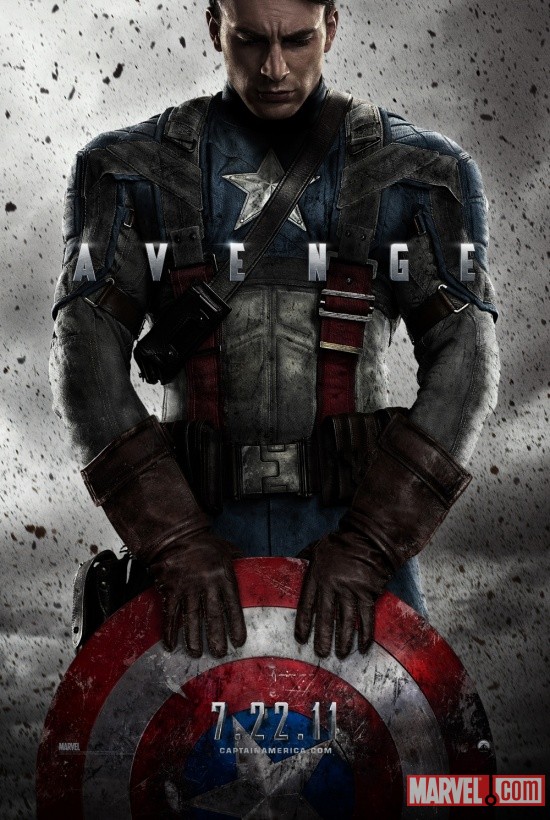
  • Cap poster I just got back from seeing Captain America: First Avenger, and it was, in a word, amazing.

    If you're read my tribute to Captain America at The Good Men Project, you know how inspired I am by him–and if you know me personally, it won't surprise you that I was fighting back tears through the entire movie. That was my Captain America up on that screen; the movie was pitch-perfect in capturing all of his virtues: honor, courage, humility, and heroism. If you've seen the preview footage of the basic training grenade scene, that's just the tip of the iceberg–get ready for much more.

    Now I'll get into some details, so mild spoilers after the jump…

    (more…)

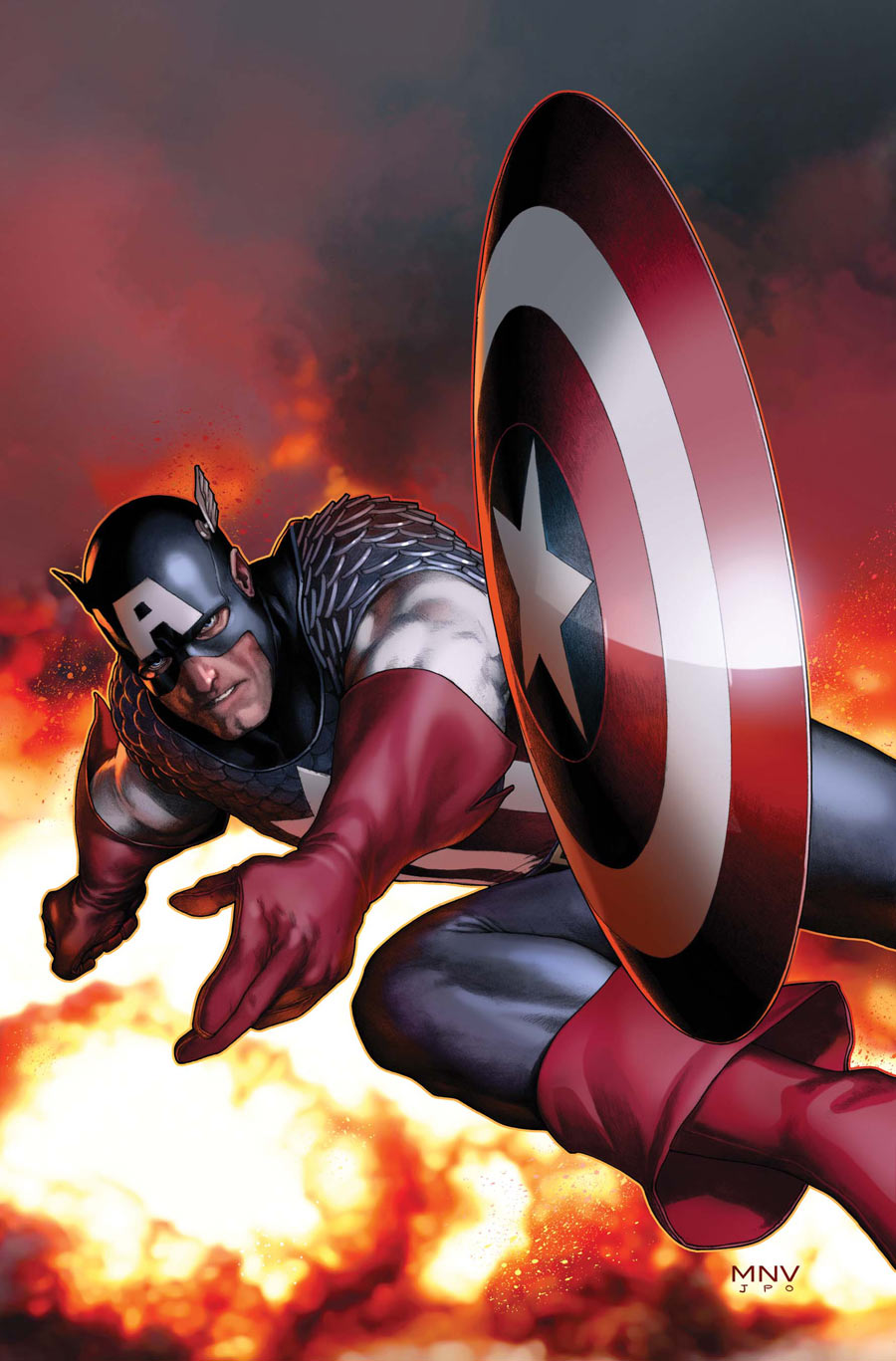
  • Cap2 The last two of three pieces I wrote on Captain America this week are up today: I discuss why I find Cap personally inspiring at The Good Men Project, and ask if his ethics are too antiquated for the modern day at Psychology Today.

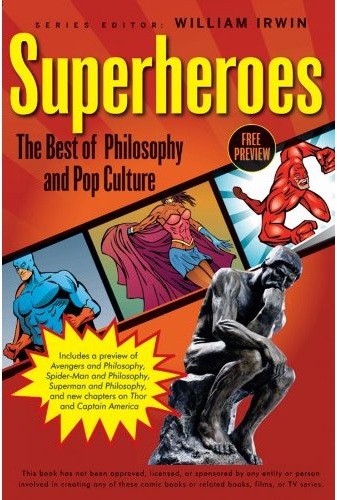
    And don't forgot yesterday's op-ed in the San Diego Union-Tribune (reprinted in this morning's Washington Times), as well as my chapter on Cap and modesty in the free (FREE!) Wiley ebook, Superheroes: The Best of Philosophy and Pop Culture.

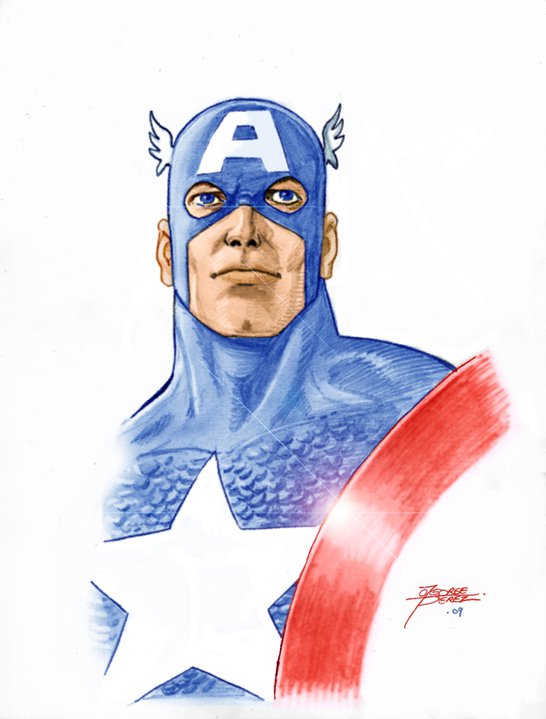
  • Cap perez This morning, to commemorate the inital showing of Captain America: The First Avenger at San Deigo Comic-Con, the San Diego Union-Tribune graciously printed an op-ed I wrote titled "Captain America reminds nation of shared values," in which I argue that Cap can help Americans see the values and virtues that they hold in common–our core principles–rather than the policy differences that separate us.

    [UPDATE: The Washington Times also printed the op-ed on Friday.]

    While you're at it, check out this commentary on my op-ed from The Displaced Plainsman, as well as my chapter on Captain America and modesty in the free e-book Superheroes: The Best of Philosophy and Pop Culture. (And, of course, the lovely George Perez portrait of Cap to the right!)

    I hope to have two more Captain America pieces online tomorrow–stay tuned!

  • DD1 While this week is mostly about getting ready for the release of Captain America: The First Avenger on Friday, today is all about Daredevil #1 by Mark Waid, Paolo Rivera, Marco Martin, and their amazing friends.

    I'm actually surprised how much I loved this book. Like many people, I'm a big fan of the Miller, Bendis, and Brubaker runs on Daredevil, which often matched Matt's personality to Hell's Kitchen itself, doing as much to define grim and gritty, noirish comics as the last 35 years of Batman have. (To be fair, the humor in Miller's Daredevil is too often forgotten.) It was taken too far during Shadowland, which by implication had to be the last straw, a "Born Again" on steroids; I don't know how Matt could have gotten any darker than he did during that period.

    Starting today, we truly have a Matt Murdock turning a corner in his life, deciding that he's through with despair. The last page of Daredevil #1 makes this explicit; I don't want to spoil it, so please read it for yourself. All throughout the book we see a confident, charming, and even slightly cocky and lightly sarcastic Matt–and even when he seems to go far with this, he has a reason (such as during the wedding scene familiar from the previews). I don't laugh outloud at comics very often (with the exception of Gail Simone's Secret Six, of course), and I can't remember the last time I laughed while reading a Daredevil comic, but I was chuckling and grinning the entire time I was reading Daredevil #1, which felt fantastic.

    It's also that most elusive of comic books, the Holy Grail of the current market: a great jumping-on point for new readers. It doesn't erase complicated continuity or "modernize" any aspects of the characters or visuals; it simply is an approachable and enjoyable story in which all crucial background for the characters and story is sprinkled throughout (plus a one-page origin recap written by Fred Van Lente to start things off). Even Matt's repeated denials of being Daredevil to people who know better are supplemented with just enough detail from Bendis' run to explain the humor.

    And while the art on Daredevil has tended toward the realistic and gritty as well, especially with the amazing work of Alex Maleev and David Lark during the Bendis and Brubaker runs, Rivera and Martin could not be more different. Reminding me of Dave Gibbons in its simplicity and clarity, but with innovative layouts all their own, these two incredible artists make Matt and his perception of the world around him jump of the page. And while it's obvious to focus on the way Rivera depicts Matt's radar sense or the way Martin highlights the sounds and smells of New York City that capture Matt's attention, they also do a wonderful job on the rest of the book. Along with colorists Javier Rodriguez and Muntsa Vicente, they give the cast, surroundings, and situations a refreshing burst of life, color, and–dare I say it–joy.

    Just as Matt starts to rediscover joy, so do the readers of Daredevil. Waid, Rivera, and Martin are off to a fantastic start–if any of DC's New 52 relaunches are carried off half this well, I'll be very happy indeed.

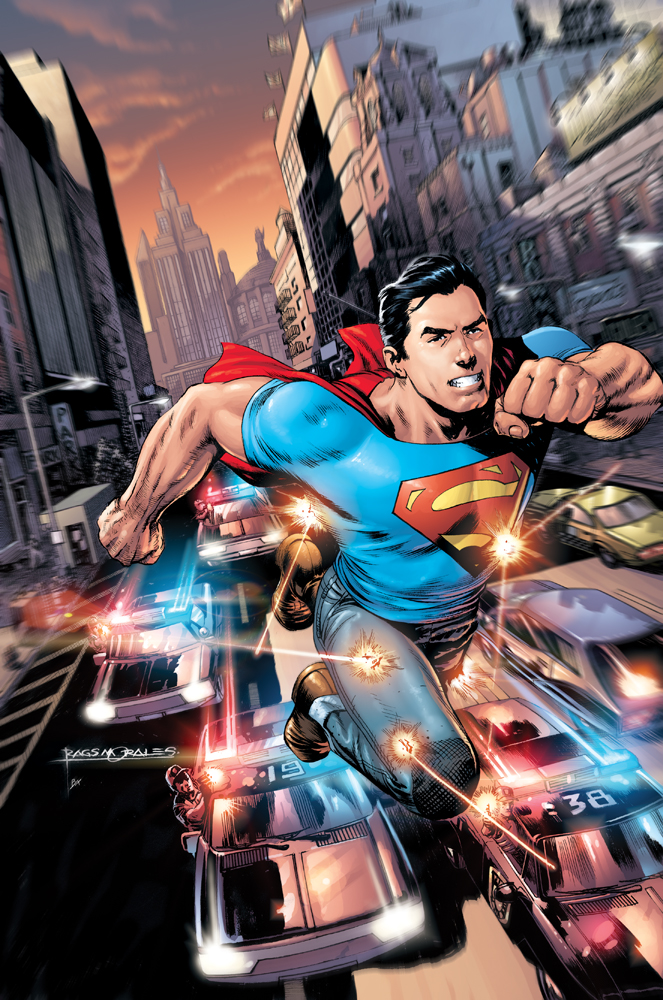
  • Action 1 From DC's The Source we get press-friendly news about Superman's new status come September, including his very own "One More Day"-style marriage annulment (starring Barry Allen in the role of Mephisto, I'm sure), news that his alien nature will be emphasized over the quest for humanity (at least in Action Comics, which tells stories of his early days as Superman), and this wonderful nugget:

    Timeless and modern, classic and contemporary, but younger, brasher and more brooding, this is Superman. The New Man of Tomorrow.

    I wonder how "brash and brooding" (never mind "more" brooding–he wasn't brooding in the first place!) is going to sit alongside "noble and heroic." Oh wait–I think I know. (And remember, Supergirl will reportedly be much worse.) Tomorrow ain't looking so bright, my friends… but we do have collars and knee pads, "these are a few of my favorite things." (Ha!)

    Ironic that we have to turn to Marvel, the home of brash and brooding, to find a prominent example of "old-fashioned" nobility among superheroes: Steve Rogers, once again Captain America. (If you have not checked out Brubaker and McNiven's new Captain America #1, out last Wednesday, be sure you do.) Even though I'm a lifelong DC fan at heart, I'm starting to say "Make Mine Marvel" a lot more often these days…

    ———-

    By the way, be sure to check out my chapter on Captain America and modesty in the new free Kindle book, Superheroes: The Best of Philosophy and Pop Culture, just released by Wiley (see more here). Also in it: a new chapter on mercy and punishment in Asgard, my original chapter on whether Batman should kill the Joker, and much more…

    And did I mention this is my 100th post at the new Comics Professor site? Please, no gifts–no, really–but spread the word far and wide…

  • Superheroes ebook Wiley just released their free Kindle book, Superheroes: The Best of Philosophy and Pop Culture, featuring one chapter from each of the superhero-themed books in the Blackwell Philosophy and Pop Culture series, including the forthcoming titles on Superman and the Avengers, as well as two new and exclusive chapters, written by yours truly, on Captain America and Thor.

    Here are the contents:

    PART ONE: Superheroes Exclusives

    1: Lord Odin Have Mercy: Justice and Punishment in Asgard—Mark D. White

    2: Captain America and the Virtue of Modesty—Mark D. White

    PART TWO: DC Superheroes

    3: Is Superman an American Icon?—Andrew Terjesen (from Superman and Philosophy—edited by Mark D. White)

    4: The Blackest Night for Aristotle’s Account of Emotions—Jason Southworth (from Green Lantern and Philosophy edited by Jane Dryden and Mark D. White)

    5: Why Doesn’t Batman Kill the Joker? —Mark D. White (from Batman and Philosophy, edited by Mark D. White and Robert Arp)

    6: Can We Steer This Rudderless World? Kant, Rorschach, Retributivism, and Honor—Jacob M. Held (from Watchmen and Philosophy, edited by Mark D. White)

    PART THREE: Marvel Superheroes

    7: Forgivers Assemble! —Daniel P. Malloy (from Avengers and Philosophy, edited by Mark D. White)

    8: Does Peter Parker Have a Good Life? —Neil Mussett (from Spider-Man and Philosophy, edited by Jonathan J. Sanford)

    9: The Stark Madness of Technology—George A. Dunn (from Iron Man and Philosophy, edited by Mark D. White)

    10: Amnesia, Personal Identity, and the Many Lives of Wolverine—Jason Southworth (from X-Men and Philosophy, edited by Rebecca Housel and J. Jeremy Wisnewski)