Mark D. White

Writer, editor, teacher

  • This was a difficult year's-end review to write. 2019 was not a good year for me, neither professionally nor personally, and although I did have a good number of things come out, based on past efforts, I produced very little new material over the last twelve months.

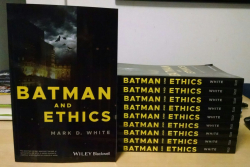
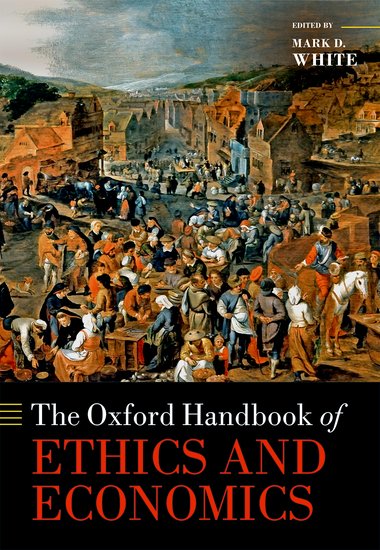
    I had two books published this year, Batman and Ethics (Wiley Blackwell) and my edited volume The Oxford Handbook of Ethics and Economics (Oxford University Press), and five articles and book chapters:

    The final piece above was written this year, as was a book review for a journal and a very short piece on nudge for an online site (both forthcoming next year, perhaps). In terms of blogs, I wrote my usual complement of posts for Psychology Today, including a post based on my Batman book originally posted at The Comics Professor, and kept up with my Virtues of Captain America blog (although my backlog is not what it used to be). Finally, I wrote a nudge paper for a special journal issue that didn't work for the reviewers and a few chapters for the antitrust book I worked on in the spring but set aside (twice), and I finished the background reading for the first of two superhero books I am writing for Ockham Publishing (who published my Civil War book in 2016).

    Looking ahead to next year, I plan to write the superhero book mentioned above (and start background work on the second), finalize plans for an academic trade book on economics and ethics (and write an invited handbook chapter on same), and continue to work on the antitrust book (which I've begun to refer to as my "white whale").

  • Batman and Ethics cover finalBatman is celebrating his 80th anniversary this year, and while he has served admirably as the protector of Gotham City, there is one mystery that the world’s greatest detective has never been able to solve: his own moral inconsistency. Many focus on his all-too-human motivation and lack of superpowers to explain why he’s more relatable than other superheroes, but most of us also share his struggle to reconcile the various elements of his moral code, which serves to make him a different sort of role model from most of his costumed colleagues as well.

    Let’s start with Batman’s mission, the guiding principle of his life, sworn over his parents’ graves after their untimely deaths at the hands of a mugger: to save the lives of the people of Gotham, chiefly by fighting the scourge of crime. This is broadly consequentialist in its ethics, striving to do as much good as he can, both as the costumed crimefighter Batman and as wealthy philanthropist Bruce Wayne. At the same time, he breaks many common-sense moral rules in the process—he practices violence, often to the point of inflicting torture, and generally ignores the law when it is inconvenient—all of which would fly in the face of deontological ethics, which focuses on the right and wrong of actions rather than their consequences.

    None of these actions, however, is the cause of his moral distress or inconsistency, because Batman justifies them all by how they help him further his mission. To him, the end does justify the means in such cases, which may be disagreeable to some (especially deontologists), but it is not morally inconsistent within Batman’s consequentialist mindset. If he believes that beating a reluctant informant senseless will help him save an innocent life, then he will do it (and he does it a lot).

    For Batman, this reasoning justifies a lot of behavior that many others feel is wrong, but even the Caped Crusader draws the line at one wrongful act: killing. Countless times in the comics, Batman has refused to kill even his most homicidal foes, including the Joker, and even risks his own life to save theirs (yes, including the Joker). In other words, Batman will do almost anything to further his mission to save the lives of the citizens of Gotham, but to paraphrase the philosopher Meat Loaf, he won’t do that—he will not take a life, even to save many others.

    This is the central moral conflict in Batman’s life: He refuses to perform the one wrongful act that would most significantly advance his mission and further his idea of the good. Here, his deontological convictions about means—perhaps his only one—run into his underlying consequentialist ends.

    What accounts for his refusal to kill? Most of Batman’s explanations in the comics focus on the effects that killing would have on his moral character. For example, he worries that crossing that particular line will make him like the people he fights (as if their shared predilection for violence and lawbreaking weren’t enough). This concern is a key feature of virtue ethics, yet another school of moral philosophy, but Batman’s skewed version of it reflects an obsession with maintaining a virtuous self-image at the expense of the mission he has adopted as his version of the good life, and in the end, it furthers neither.

    We could debate whether or not Batman should kill the Joker and his other murderous enemies until Bat-cow comes home. (Yes, there is a Bat-cow.) Certainly, comics fans have been doing this since before the first poisoned fish with a Joker grin popped up in Gotham Harbor. More important, however, Batman has long been debating this as well, both to himself and with his friends and fellow heroes, making much the same arguments I outlined above. He is keenly aware of this essential moral conflict, which is much harder to dismiss than using violence or breaking the law to further his mission. In this case, Batman has to explain what makes his concern with his virtue more important than his mission, or what makes the life he would take more important than the lives his foes would take.

    Batman’s ongoing struggles with moral inconsistency provide us with a point of reference to consider our own. Most of us have a concept of the good we want to further, whether it’s saving lives as first responders, curing disease as medical researchers, or pursuing justice as policymakers or activists. At the same time, we all have moral lines we refuse to cross, such as those at the borders of lying, cheating, or stealing, and we also have ideas of who we want to be as people that includes but also supersedes all of these considerations.

    All of this moral “material” is incredibly difficult, if not impossible, to reconcile and make consistent, especially when we have to marshal it in the face of hard choices. As many philosophers acknowledge, a faculty of judgment is necessary to combine, prioritize, and balance all of these moral criteria to make an actual decision. Philosophy professors teach the basic elements of ethics to our students, but as Immanuel Kant wrote in the Critique of Pure Reason, “judgment is a peculiar talent which can be practiced only, and cannot be taught.” Judgment is developed through experience over time (and many mistakes), and it is also be learned through example—and not necessarily by those who exercise it well. It is more important to see the process of judgment than its results, and fiction can be just as valuable to this end as the stories of real people, if the characters portrayed in it are sufficient complex.

    Batman is indeed complex. Over his eighty years, he has developed into a fascinating character with a multifaceted ethics, and because of this he can not only entertain us but also inspire us. His struggle to reconcile his conflicted moral code, likely as impossible a task as eradicating crime in Gotham City, is yet one more reason he is considered so relatable to millions of fans around the world. His moral and psychological extremes may not qualify him as a role model similar to Superman or Wonder Woman, but his awareness of his own conflicts, especially regarding trying to be moral in several different ways at the same time, is certainly worthy of admiration and emulation. Among superheroes, no one lives a more thoroughly examined life than Batman.

    – — — —- —– —- — — –

    See here for more on my book Batman and Ethics, which you can buy at Amazon, Barnes and Noble, or IndieBound.

  • Modified cap 100Thanks to Vince Skolny for the title of this post!

    Today's post on Captain America #176—the pivotal issue that bridges the "Secret Empire" and "Nomad" storylines—marks the 100th post at the Virtues of Captain America blog. The blog launched on July 9, 2018, just under eleven months ago, with Avengers #4, and I've regularly posted twice a week (occasionally thrice).

    Before we get to the more substantive thoughts, please allow me to indulge in a bit of personal satisfaction in this. I always imagine and plan grand ongoing projects, but I've had very little success actually starting them, much less sticking with them very long. (I tend to write my books in a few months, although the research periods have been longer, especially with the Cap and Batman books, in which 40-50 years of comics had to be read or re-read. "Nice work if you can get it," I know.) Being aware of this, I wrote about fifty posts before I even bought the WordPress site or mentioned the project online, just to make sure I would maintain interest long enough to make it worthwhile. Now, nearly a year later, with a hundred posts online and over forty more in the can, I see no end in sight, and there are a lot more comics to cover: Today's post is an August 1974 issue, and the prepared posts go through the end of 1977. (What year is it now? I don't even know anymore.)

    The motivating premise of the Virtues of Captain America blog was that almost every substantial appearance of Captain America in a Marvel comic since his defrosting in 1964—those in which he does more than simply appear in a large group scene or shout "Avengers Assemble!"—explicitly reflects some aspect of the his moral character (as described in my book of the same name), because the character of Captain America is defined by his ethics to a greater degree than is any other superhero. That claim was tested in these first 100 posts, as a significant number of his earliest appearances, both in his own titles and Avengers, certainly showed general heroism but few specific virtues. On the whole, though, I think I've been able to draw enough ethical content of interest out of even the "thinnest" issues to make their blog posts worthwhile (albeit not dedicated posts to those single issues), while having fun with them all. The blog is currently in the middle of Steve Englehart's groundbreaking run, which is generating longer and more substantive posts, and this trend will only accelerate when I get to the runs by Roger Stern, J.M. DeMatteis, Mark Gruenwald, and Mark Waid, just to name a few.

    Cap thinking aloneBecause I did cover several comics at a time in many posts, I have discussed more than 100 issues so far. In fact, if my count is correct, I've covered 242 comics: 119 issues of Tales of Suspense and Captain America, 99 issues of Avengers, and 24 other comics in which Cap appeared, spanning just over a decade, from March 1964 through August 1974. Out of these first 242 comics, I cited only 41 in my book, which suggests that, even though nearly every appearance of Cap contains some reflection of his moral character, many of these are mere passing references that didn't merit mention in a book that relied on the most prominent and definitive strongest statements. (Or maybe the book should have been a lot longer.)

    As the comics I cover gradually have more material of ethical interest, I have also found that I have to synopsize the stories more than I expected, if only to provide sufficient context for the panels and quotes I want to discuss. I don't mind that, and I have enjoyed doing that in the books, especially when the focus is on Cap's behavior through an entire story, but I didn't expect to do it as much at the blog. Even more enjoyable have been the posts in which I can indulge in a little comics history, which you'll see a lot more when coverage of Roy Thomas's Invaders run starts soon, a masterclass in retroactive continuity in the classic sense as gaps and inconsistencies in comics history are explained and forgotten characters revived for new readers. (We already got a taste of this in the post on Captain America #155, written by Steve Englehart based on a Roy Thomas idea, which explained the 1950s appearances of Cap and Bucky even though, according to 1964's Avengers #4, they were "killed" before the end of World War II; we see a bit also in the post on Giant-Size Avengers #1, which previews the two men who served as Captain America in the late 1940s, explained in What If? #4 in 1977.)

    – — — —- —– —- — — –

    Cap you missed the point sonAs work on the Virtues of Captain America blog progresses, I sometimes think, "I really ought to consolidate some of these posts and write something covering a larger number of comics, possibly centered around one aspect of his ethical behavior"… until I realize I already did that when I wrote the damn book. There are, of course, great comics that came out after I finished the book, such as Captain America vol. 7 #14, from which the images in this tweet from @widowsmaximoff are drawn. (I managed to slip in issue #10 from that run at the last minute during production of the book, but #14 came out too late.) Perhaps I may write some overarching posts once I get to comics from 2014 and on, but until then, I stand by the book as far as a summary of Cap's moral character is concerned. (That is, unless Wiley wants an updated second edition.

    <clears throat>

    I said, unless Wiley wants an updated second edition.

    <crickets>

    Oh well.

    But that got me thinking: What would it be like to write a book that way, first blogging about individual issues and then consolidating the ideas from them into a book? As it is, I take copious notes on comics in preparation for a book, so this would just involve making my notes public and presentable. It seems like much more work—but then again, I already spend a lot of time retyping, coding, and sorting the notes, so the blogging about the issues may not be that much additional work (depending, of course, on how much content and polish I put into each post).

    One advantage to doing the book before the blog, though, is that I can write each blog post with the knowledge of the complete scope and history of the character. When I write about Cap's 60s and 70s comics, I know what's coming, and I can put the early stories in the context of what comes later—something I couldn't do as well if I blogged as I read (even if I have some knowledge of the entire run). It might work for the Fantastic Four, because I've read the entire run, and might have worked for Batman, because I'd read most everything before I started re-reading for the book, but not for Iron Man, Thor, or Daredevil, to whom I am just as devoted but about whom my reading is less complete. Also, the blog-first method would probably not work well with respect to a publishing deadline (absent a very strict and manageable blogging routine on my part, ha), so it would be best to try with a project I would plan to self-publish—especially if it turns out that, at the end of the day, I don't want to write the book anymore!

    I joke, but that's a serious consideration (complementing what I said earlier about finding it difficult to sustain interest over a long period of time). Part of the appeal of writing a book for me is discovery. Although I usually have some idea of what I'm going to say, books always end up significantly different than imagined or planned. Writing a book when I know exactly what it's going to say feels like an exercise in transcription (although in actuality the focus simply changes from figuring out what to write to figuring out how to write it well, which is no less important a task). Obviously, consolidating the themes of hundreds of blog posts is still work, but if nothing new comes from seeing the forest over the trees, I don't know if I'd be motivated to take this huge step. But it's an interesting thought nonetheless, and I might consider it for a "passion project" that is for me—and up to me—alone, even if other people like it too.

    Kind of like the Virtues of Captain America blog itself.

    – — — —- —– —- — — –

    Anyway… here's to the next 100 posts! Thank you to all who have been reading, whether you've been there from the first or have just found the blog recently. If you have any ideas how to improve the site, either in terms of content or appearance, please feel free to let me know in the comments below. (I would like to spruce the site up, but my talents, assuming I have any, definitely lie elsewhere!)

    And if I see you around, as Cap says…

    Cap coffee

    (Oh Thor… and you wonder why you're not worthy anymore.)

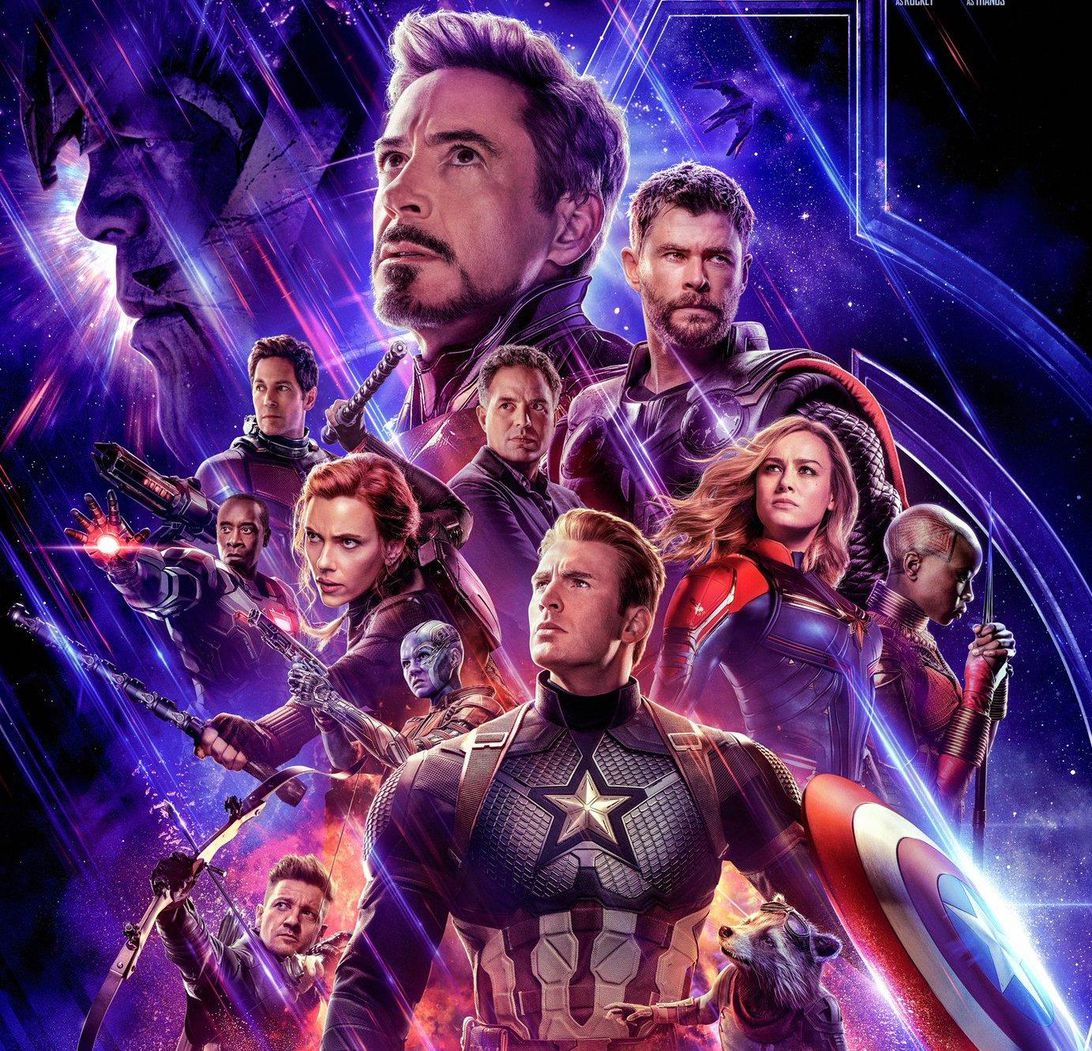
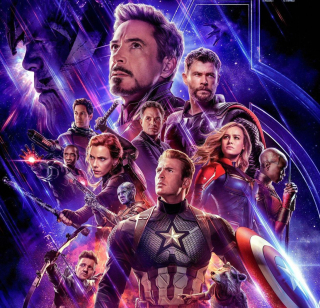
  • Avengers endgameWell that was something!

    After rewatching Avengers: Infinity War Thursday night, I saw Avengers: Endgame Friday morning by myself—well, me and the hundred other people in the sold-out small theater, but you knew what I meant—and then again with my kids in a much larger (but still sold out) IMAX theater. I grouse a lot about the modern movie experience, what with the ubiquitous cellphones and incessant chattering, and I've been going to the movies less and less the last several years because of it, but this was an occasion that demanded and justified the full social experience. The Friday audience was quiet, applauding only at the end of the movie, but the Saturday crowd was into it, cheering at every character introduction and revelation throughout the entire film. As many comic book fans of a certain age have noted, we were ostracized for our hobby as kids (and perhaps even more so as adults), so it's immensely gratifying to arrive in the year 2019 where we can sit in a theater with several hundred people, only a fraction of whom have likely every read a comic book, and cheer together to the exploits of the heroes of our childhood (and adulthood).

    What about the movie itself? Again, I'm afraid I don't have much to say that probably hasn't already been said, and if you're looking for dispassionate criticism and analysis, look elsewhere my friend. I'm writing as an unabashed fan here.

    Avengers: Endgame is a magnificent film, filling every last one of its 181 minutes without a lull, with excellent pacing and balance between its many subplots and storylines, and hitting every last emotional note it needed to. I'm frankly astonished at the magnitude of this movie and how well it put a bow on the unprecedented 22-film story that is the Marvel Cinematic Universe—so well, in fact, that I had a distinct feeling of loss at the end, not just for any events in the film itself, but for this initial stage of the franchise itself.

    There isn't much more I can say without giving away story details, so this is where I warn…

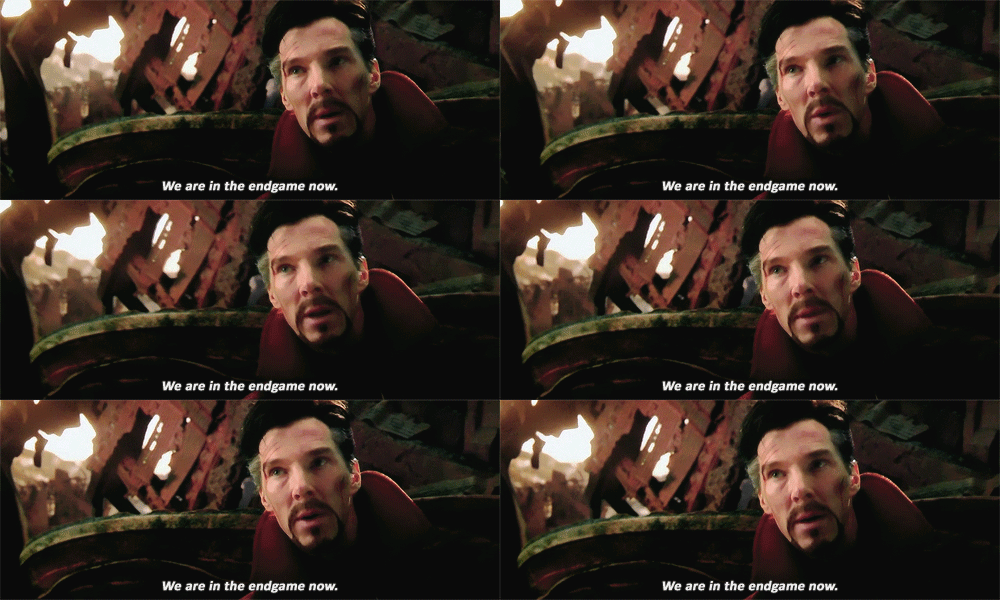
    THERE BE SPOILERS AFTER THIS GLORIOUS GIF OF GONEMMENEMMENEMMENON!
    Endgame gif

    (Did you remember that he said that in Infinity War? I have to admit I did not, until I rewatched it Thursday night, after which I felt really stupid for forgetting it. Of course you remembered it, because you're all very smart.)

    Here are my thoughts, with varying significance and coherence, starting with the six original Avengers themselves.

    Captain America. As you might guess, my favorite moments were those centered on Captain America, who received a fantastic send-off. Before he "retired," he managed to poke a little fun at his catchphrase "I can do this all day" as well as his fan-favorite rear end, and also wield the mighty Mjolnir (as he has several times in the comics), which brought perhaps the loudest round of cheers in the Saturday showing. (And I have to wonder how much Nick Spencer paid the Russos to have Cap say those two little words. They used it well, but geez guys, give us some warning next time!)

    Most interesting, compared to the comics, was that Cap retired at all. A constant theme, which I highlight often at my The Virtues of Captain America blog as well as the book of the same name, is that he continually feels the contrasting pulls of duty and love (or "mission" versus "life") and reliably picks the former. As much as he feels he's done enough and deserves happiness, he always returns to the shield, without fail. Of course, given the realities of comic book publishing where established characters rarely change too much, this is understandable, but Evans's retirement gave the filmmakers the opportunity to have their Cap make the other choice—while leaving a world with a very capable successor in Sam Wilson. (This makes me wonder if the announced Disney streaming series featuring Falcon and the Winter Soldier was just a ruse, or if it was always meant to be about Sam as Cap and Bucky helping him.)

    Iron Man. Despite the tremendous moments that Cap had in this film, the emotional center was definitely Tony Stark, which was appropriate given that it was Iron Man, as played by Robert Downey Jr., that got this entire party started in 2008. For the same reason, it made sense that he would die while dealing Thanos the final blow (or snap). (I like to think that, as he usually does in the comics, he uploaded a version of his consciousness into a computer so he can be the AI in a successor's armor, whether that successor is Pepper, which is doubtful, or someone like Riri Williams, Ironheart from the comics, who did have an AI version of Tony in her helmet for a while.)

    Speaking of Pepper, it was amazing to see her in the armor, even if (as I suspect) just for this one time. We all knew it was coming after the earlier scene with little Morgan, but to actually see it… that elicited another huge cheer from the Saturday crowd (as did the collection of the MCU's incredible collection of female heroes protecting Peter and the gauntlet at the end). And seeing her fighting back-to-back with Tony… that, together with the stakes of the situation, made me forgive the fact that, as Rescue in the comics, Pepper's armor had no weaponry.

    (And Tony's final words to his daughter, "I love you three thousand"… I'm tearing up again as I type it.)

    Black Widow and Hawkeye. Black Widow made the ultimate sacrifice, of course, to Hawkeye's objections. (I'm sure he felt he should be the one to die, given the fact that he had racked up quite a few murders in the preceding five years, but would good ol' Frank have done the same thing?) But, I suspect she will be back, depending on how Cap "returned" the Soul Stone in his reverse-time-heist before getting hitched and living out his days as Married Old Man Steve. If the goal was to restore the original timelines, did he just give the stone back to the Red Skull—I really want to see that conversation—or did he just prevent Nat from sacrificing herself in the first place? And if he gave it back, could he somehow have saved Nat? (If only Evans didn't want to retire, I would ask for a streaming series on Cap's trips in the past to restore the Stones. Hear that, Feige?)

    The Hulk. The newly chill Hulk was wonderful (calling back to Bruce's efforts at maintaining inner peace when Nat found him the first Avengers movie), especially with the kids who wanted their picture with him, with Scott when he saw he'd lost his taco, and especially when revisiting the Battle of New York and having to fake his old raging self. It also made his sadness and grief more apparent after losing Natasha, when he did show his anger a little more.

    Thor. And of course, "the Odinson abides." This was the one part I think they took a little too far, though it provided some great laughs, especially with Rocket (who would imagined those two would make such a great pair, in both Infinity War and Engame), and a touching moment with his mother. I was sorry we didn't see him interact with Jane, though, which leads to my next comment…

    Playing with time. What better way to pay tribute to the entire 22-film series than revisit some key scenes from the earlier films to the process of finding the Infinity Stones in the past? That was simply brilliant. Both times I saw it I tried to figure out which scenes which pulled from the earlier films, such as the famous shot of the six Avengers standing back-to-back in a circle during the Battle of New York, and which ones were new, such as the elevator scene in New York (calling back to Captain America: Winter Soldier even though it was set during Avengers) and the subsequent lobby scene with Alexander Pierce (also from Winter Soldier), which featured a key move from Loki (who managed to play an integral role despite dying early in Infinity War). I have to assume the quick shot of Jane Foster was old and Natalie Portman didn't shoot any new footage—otherwise, I think someone would have interacted with her. What's more, I found it very clever of the Russos to use the time travel device (plot device, that is) to bring in the Ancient One as well as the younger Howard Stark, Jarvis, and best of all, Peggy Carter.

    There's so much more I could mention, such as the emotional reunion of Peter Parker with Tony Stark, the return of the Wakandans, Valkyrie on her magnificent flying steed, Janet van Dyne (!) at the end, and Captain Marvel's limited but effective role (my favorite scene of hers being when she met Peter, showing that she doesn't have to be fierce all the time). My one complaint: I wish they would have done more to show the return of half the life in the universe than Clint getting a call from his wife and Scott seeing more birds outside. I realize the movie was long enough as it is, but just a 30-second montage of people hugging returned loved ones around the world (and on other words) would have been nice to show the enormity of what our heroes accomplished (before Thanos arrived and blowed them up but good).

    That ending. The funeral scene, with the slow pan over the entire cast of the Marvel Cinematic Universe, was poignant in its intimacy as well as breathtaking in its scope, showing the scale of that universe with all the sub-franchises contained in it, and everyone paying tribute to the hero that started it all. as well as, I like to think, the actor—very much still alive—that played him so well.

    That other ending. Even though, in spirit, the series began and ended with Tony Stark, as a Cap fan I appreciated that the final shot of the film showed Steve and Peggy dancing (I assume in the late 1940s), picking up not long after where they left off when Cap made the ultimate sacrifice himself in his first film. That gave the movie, which was incredibly heavy emotionally, an optimistic conclusion, showing that true love and lasting happiness is indeed possible… if you have Pym particles and a time machine. (If anyone knows where I can get these things, let me know!)

    That other other ending. The cast credits, ending with tributes to the six that started it all, really drove home that this is the end of an era, even if it is also the beginning of a new one. It really hit me, especially on my second viewing, that this was the last time we'll see some of these characters on the big screen, and what they, along with everyone else involved in these films, have accomplished. Twenty-two interlinking movies in twelve years, most of them standing fairly well on their own and each mini-franchise possessing its own unique aesthetic, but all feeding to a large narrative… just like the Marvel Universe of the comics.

    And that, perhaps more than even the faithful renditions of the characters and the Easter eggs for the diehards, is what makes the MCU gratifying to comics fans: The movies feel like the comics. With both, we can revel in the continuity of the large-scale narrative at the same time that we appreciate each individual story, scene, and line. Not all of the movies need to be equally good, and you don't have to like every character as much as your favorites, but you can still enjoy most if not all of the movies on their own and the series as a whole. (For my part, I regard all 22 movies as at least good, with most of them very good and a few of them excellent.)

    What's even better than that? As I mentioned at the beginning, my childhood obsession is now a cultural phenomenon. And when an entire large theater erupts in cheers, five minutes into the movie, at the first appearance of Captain Marvel—a character introduced into the mainstream consciousness in her first movie just a few months ago—you know that something amazing has happened. I'm thrilled to have been there to experience it… and I can't wait to see what happens next.
  • Batman booksIt's been a strange year so far in terms of work (both writing and school), so the true updates in this post will be few, and instead I'll focus on things coming out in the near future.

    My main project since the beginning of the year has been my antitrust book, but I did not make as much progress on it as I'd hoped, so after some hiccups (and thanks to the patience of my editor), I will be taking the summer to finish it. (Speaking of antitrust, I had the pleasure recently of attending a talk by Jonathan B. Baker, whose new book, The Antitrust Paradigm, I'm eagerly awaiting.) I did, however, manage to write an invited essay for a new law-and-economics journal (tentatively out this fall) and a short book review for another journal, and I have started working on an invited symposium paper on nudge (specifically, proposed ethical guidelines for their use) for a political science journal.

    The academic trade book proposal I mentioned in my last post—which would have collected and elaborated on my thoughts about adultery based on my Psychology Today posts on the topic—didn't get picked up, but I plan to write something longer on the topic nonetheless. As far another book in the works, I'll save that until the end…

    ~  ~  ~  ~  ~

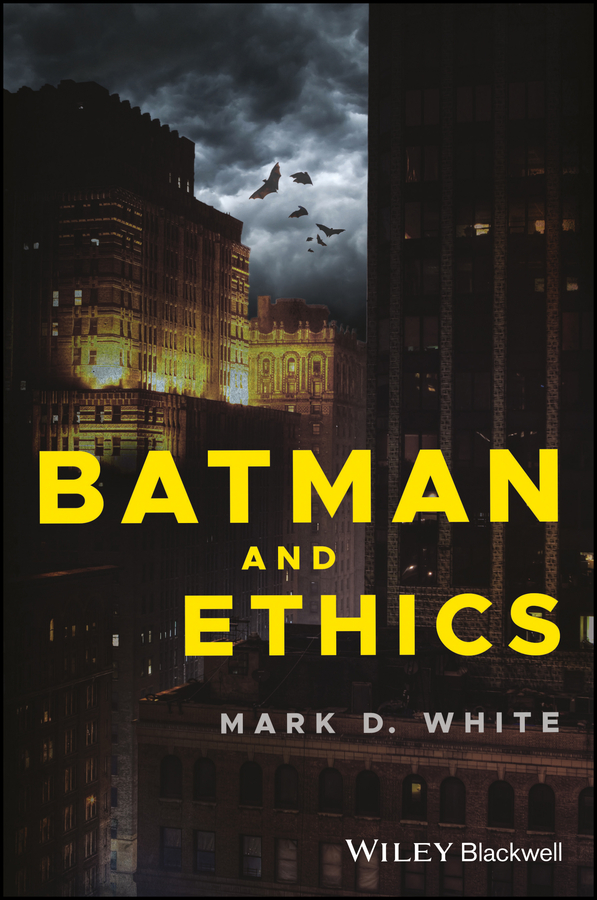
    I have a few things coming out this year, one of which (as you can see above) showed up on my doorstep the morning of the day before Easter: Batman and Ethics, which is available now as an ebook and will be released in US in paperback in early May (the 6th or the 13th, depending on what site you're looking at), earlier some other places (26 April in the UK, apparently). There is now a dedicated page for it here, which explains what I'm on about, and includes a quote from an early review by Armond Boudreaux at his great blog A Clash of Heroes.

    OUP handbook coverAlthough I do not yet have a copy in my hands, this summer will see the release of The Oxford Handbook of Ethics and Economics, involving several dozen brilliant scholars over 27 chapters (including mine, “With All Due Respect: A Kantian Approach to Economics"), all of which I was honored to edit. I also have a dedicated page for this here, and my introduction is available at SSRN.

    I also have several chapters coming out this spring in other people's books:

    Also out since my last post is “On the Relationship Between Economics and Ethics,” in Annals of the Fondazione Luigi Einaudi (available at SSRN), followed in the same issue by a response from John B. Davis, who contributed to the Oxford handbook as well. (Speaking of contributors to the Oxford handbook, Virgil Storr and Ginny Choi have a book coming this summer titled Do Markets Corrupt Our Morals? that I strongly encourage you to check out, and which may or may not carry a blurb from yours truly.)

    Avengers and philosophy chineseI also had my customary posts at Psychology Today and my ongoing efforts at my blog The Virtues of Captain America, which is steadily approaching its 100th post. And finally, appropriate given the impending release of Avengers: Endgame, I recently found the Chinese edition of The Avengers and Philosophy, which I didn't think was due until 2020 but seems to have appeared early. (Keeping my eye open for the planned Chinese edition of Iron Man and Philosophy too.)

    ~  ~  ~  ~  ~

    Going forward, while I wrap up the antitrust book and the nudge paper, I will be starting the "arduous" task of re-reading and note-taking for my next superhero-and-ethics book, a long-term project with no firm completion date (on agreement with the publisher). This will be a true labor of love, and my dream project since I started doing this sort of thing. I'm keeping the details tight to my vest for the time being, but if I do my job right, it should be fantastic.

  • 2018 fancyI'm feeling rather ambivalent about my life these days (see here) — which is not unusual for me the last ten years or so, but still. I have, however, come to some realizations of late that may suggest a corner is about to be turned. We'll get to that in due time… in the meantime, let's see what I managed to do this year nonetheless (in addition to my duties as a mild-mannered professor for a metropolitan university).

    In terms of things that were published this year (but finished earlier), I had one new edited book out this year, Doctor Strange and Philosophy, which included one chapter I wrote, and one journal article that was posted online in 2016 (and written much earlier) but was not slotted into an issue until this year (this month, actually). (A chapter on nudge that I wrote even earlier, that I thought would be in a book published this year, will be out next year.)

    Much of what I actually did this year (which involved more editing than writing) will appear in 2019:

    • I did most of my work on The Oxford Handbook of Ethics and Economics, including writing the introduction and my chapter, editing the other 26 chapters, and overseeing the review of copyedits and proofs (the last one still ongoing). This should be out next summer.
    • Even though it was written in 2017, I wrapped up work on Batman and Ethics this year, including making final revisions, reviewing copyedits and proofs, and compiling the index. This should be out next April.

    I did write several shorter pieces that should be out next year as well…

    …as well as several shorter pieces that appeared this year (as well as the normal assortment of blog posts at Psychology Today and several at The Comics Professor):

    • “How to Live a More Authentic Life in Both Markets and Morals,” a commentary on William Irwin's The Free Market Existentialist (in Reason Papers, 40(1), Summer 2018, pp. 59-63)
    • “Restoring Social Responsibility to Inner Freedom, with Help from Immanuel Kant” and "Inner Freedom Is Consistent with Family (and Social Ties in General)," as part of the conversation on inner and outer freedom at Cato Unbound (October 2018)

    Finally, I wrote a review of Eugene Heath and Byron Kaldis (eds), Wealth, Commerce & Philosophy: Foundational Thinkers and Business Ethics, which should appear eventually in the Journal of the History of Economic Thought.

    Cap blog
    On a different tack, this past summer I launched The Virtues of Captain America blog, which just celebrated its 50th post this month, and will keep me busy for many years to come (seeing that the 50th post brought us into the 1970s, and the 100th, which I will be writing soon, will only find me in 1974).

    — — — — —

    Looking forward, I've begun a book on antitrust, which I hope to finish next spring and should be out next fall from Rowman and Littlefield International. I'm also crafting a proposal for a short academic trade on a topic I've discussed a bit at Psychology Today, which, if accepted by the press I've discussed it with, I would write next summer. Besides that, I have a couple other academic projects in mind, but no firm plans beyond some preliminary discussions with presses.

    Those projects notwithstanding, in the coming year I hope to devote myself more to writing about superheroes, not just on the Cap blog but new projects as well. Yes, I realize I said much the same thing last year, but I'm even more convinced now that this is the way to go for me, given additional feedback I've gotten from fans and friends over the past year, as well as my experience at San Diego Comic-Con this past summer. I'm hesitant to leave academic writing entirely, because it seems to be a part of my professional identity with which I have a strange push-pull relationship. I've never felt like a "serious academic," and I'm increasingly uncertain I ever could be one, but at the same time I feel I "should" keep trying to be one, even though my particular talents, such as they are, seem to be of more value elsewhere. (Let's not go down that particular rabbit-hole just yet, but my latest Psychology Today post alludes to it.)

    I'll leave you with something that's been a balm to my soul lately… let's hope for a brighter year ahead!


  • Autumn leavesThis will be a short update because I haven't done much since my last one, given the hectic start to the fall semester. (I know, likely excuse.) I do, however, have a lot to accomplish in the coming months, so I'm posting this as a way to clear the deck, so to speak, in preparation for the busy months to come.

    I did very little actual writing in the past two months. In the first couple weeks, I finished the book chapter on Batman to the volume editor's satisfaction, and polished up a book manuscript for final submission. Later, I contributed a response to William Irwin's post on inner and outer freedom at Cato Unbound for the October issue (and a further comment should be posted soon). In terms of blogging, I posted three new pieces to Psychology Today: "How Do You Develop a Work Routine That's Not Routine?", "Can Fantasizing About Love Ever Be Enough?", and its follow-up, "What If the Fantasy of Love Is All That You Can Have?" And I continued to stockpile posts for The Virtues of Captain America blog, in an attempt to maintain about a six-month backlog while posting twice a week.

    Handbook coverThe most time-consuming tasks (outside of college work) dealt with production on two books coming out this year. I reviewed the copyedits for one sole-authored book, and also coordinated the review of copyedits for The Oxford Handbook of Ethics and Economics, liaising with over two dozen contributors as well as the copyeditor. I've been told to expect page proofs for both books in December, a fact I'm trying to use to inspire diligence in writing before then.

    Speaking of which… as I mentioned in the last post, I have two conference presentations in early January to prepare for (both of which I've begun), one on a Kantian view of the market and state for an Association for Social Economics session at the ASSA meetings, and the other a commentary on Leo Zaibert's fantastic new book Rethinking Punishment for the Eastern APA meetings.

    New to this update are two new commitments. The first is a monograph tentatively titled The Problems with Antitrust, under contract with Rowman & Littlefield International (to be included in my series On Ethics and Economics), in which I will expand on previously published criticisms of the moral foundations and implications of antitrust (such as this article). I promised to have this done by the end of February, after which I turn to the second, a presentation for the PPE Society meetings in late March on the ethics of the economics of the family, on which I touched in this article as well as my chapter for the handbook (generally on Kant and economics), but have never explored at length.

    There are a couple more conferences in the spring I'm considering attending and possibly presenting at, which is a big change from recent years when I backed off from conference travel. (Don't ask me why… I haven't figured it out yet.)

    — — — — —

    Unfortunately, my plan to devote a certain amount of time each day to writing never got off the ground, partially because I didn't have a significant writing project (with most of the last two months being spent reviewing copyedits and occasionally writing short pieces for various websites or blogs), and also due to campus responsibilities and various personal matters. Now that I do have such projects (especially the book), and administrative duties at school have lessened (being heaviest through September and October), perhaps I can develop a routine… or rather, I need to develop a routine, and stick to it (a problem I addressed in the first Psychology Today post mentioned above).

    As the wise men said…

  • AugustI visited campus yesterday for a New Faculty Luncheon, which gave me a chance to catch up with my fellow chairs and various administrators and staff, and whenever someone asked me how my summer was, I answered, "uneven." (More accurate than my standard "ehh, OK," and leads to just as many follow-up questions.)

    My summer was definitely bifurcated. As I reported in my last regular update, the first half was mainly spent wrapping up The Oxford Handbook of Ethics and Economics. Then I attended San Diego Comic-Con, a fantastic experience recounted here. I returned from that trip completely drained, as expected, and I wisely did not plan or expect any significant activity for the first few days afterwards. Afterwards, I did plan to start work on a book chapter I promised to the book's editor by the end of August: a relatively short piece based on material from my upcoming book Batman and Ethics, but written with a different focus for a different audience.

    Unfortunately, that "few days" turned into a month of near inactivity, and I didn't make significant progress on writing the chapter until two weeks ago (after struggling with its organization during the time prior). About the only other thing I can remember doing during that time was write posts for my The Virtues of Captain America blog, which I launched before going to Comic-Con and now has sixteen live posts (a new one every Monday and Friday) and over fifty more ready to go (to ensure I can maintain that twice-a-week schedule into the semester). That's worthy work, to be sure, but I felt uneasy leaving the book chapter to so late in the summer, especially when I had so much time in the weeks after Comic-Con.

    Today I completed the first draft of the chapter to my satisfaction and emailed it to the editor—at the end of the day on the last Friday before the semester starts. (And that week one of work emergencies, computer failures, car repairs, and family illness.) And next week, I need to go through the Batman and Ethics manuscript a final time, making a handful of small revisions recommended by reviewers, before delivering it to the publisher next Friday, as well as attend to the first week of the semester. (Yes, I am nuts, but I also never miss a production deadline.) And in September I start my fall writing, which includes a paper to present at the ASSA meetings in early January, a commentary on a book to be presented at the APA Eastern meetings a few days later, and (hopefully) a short academic book, the proposal of which is currently under review (and about which I hope to get news soon), and which I hoped to finish by the end of January (a month we have off at my university).

    That's a lot, and starting in September I do want to try committing to a certain amount of time writing every day. (It's what all the kids are doing these days, right?) I've tried to stick to a writing schedule many times, but even when I can stay offline I just stare at the screen in despair. I'm hoping it works better this time, as least in maintaining momentum. My two main problems with writing are starting and continuing, and writing every day should at least help with the latter!

    I do wish I'd taken a few days off after Comic-Con to go somewhere and unwind, as I'd planned. By "planned" I meant I mentioned it to several friends, with about as much commitment as Milton threatening revenge every time someone took his stapler or moved his desk. (Well, maybe less, considering how the movie ended.) As a result, I am going into the semester feeling rather drained, but thinking over summers past, that's par for the course. Not good, I know, but not unexpected, and there's something woefully comforting in that.

    If you're an academic or a student, I hope your semester starts well; and if you're a writer, may the words flow as quickly as the coffee that fuels them (or the hearty libations that follow). For everyone else, have a great fall, and I'll see all of you near the end of the year, if not sooner.

    — — — — —

    I'll leave you with a song that represents chill to me, something I'm trying to grab a bit of in these waning moments of the Sunday of summer.

  • Sdcc picI just returned from my first San Diego Comic-Con (SDCC). I attended the New York version in 2011, but I had never ventured out west for the "big" one until my good friend E. Paul Zehr (author of Creating Captain America, Becoming Batman, and others) invited me to join him in a session on Captain America, and then arranged a reprise, with Travis Langley (author of Batman and Psychology and editor and lead writer for the Pop Culture Psychology series from Sterling), of the "An Evening with Batman's Brain" event held a couple years ago at the University of Victoria (covered here). So I owe a huge debt of gratitude to Paul for making this experience possible (and taking me to Old Town for some amazing Mexican food!).

    Before I begin, let me warn you: I did not jump into the con with both feet, spending morning noon and night there. I get sensory overload fairly quickly, and SDCC is basically Las Vegas for pop culture fans. So there may be less activity here than some might expect, but I hope it's entertaining nonetheless, especially for those who have never been.

    One more warning: There will be pictures of me, but always with much prettier people. (And Paul.)

    WEDNESDAY

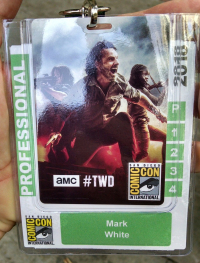
    SDCC badge 2018After a happily uneventful flight from Newark Liberty Airport (captured very well in a recent issue of Ms. Marvel), I arrived in sunny San Diego and made my way to the hotel room, then took the shuttle to the convention center to get my badge. (Note it says "PROFESSIONAL." Still can't get over that.) That process—which went smoothly, thanks to the helpful SDCC staff—gave me my first taste of the con crowds, which were much less intense over the entire weekend than I feared.

    Let me stop here and say that I had more than a little anxiety about this trip in the last couple weeks before I left. I found my one visit to the New York con overwhelming, and even though that's a smaller affair, it's just as dense with people. I've been following news of SDCC online for years, and read countless horror stories about the crush of people and the paucity of food and water, and as a result I was expecting to be in a reenactment of The Walking Dead (rather than just seeing reenactments of The Walking Dead). But I was pleased and relieved to find that the con was very manageable, with food and drink plentiful (if predictably overpriced) both inside and outside the convention center, and the crowds, while intense in number at times, were very good-natured. Everyone's there to have a good time—just like at academic conferences. <wink>

    The con didn't actually open until that evening, so I walked back to the hotel, changed, and then hopped the shuttle back for the opening "preview night," where I had an interview with Mark Niu with CGTN planned. (Mark very generously moved up our scheduled time to accommodate my East Coast metabolism, which had been up very early back in New Jersey, three time zone away.) Some of it was filmed in front of the Alex Ross exhibit, which in a strange way made me feel right at home, because so much of his work hangs on my walls!

    There are also several print versions online, including Mark's original blog post about the interview, a transcript, and a later article summarizing my interview and the one he did with Paul later in the con.

    After that I walked around the con floor for a bit, taking it all in while the crowd was less intense (but no less enthusiastic). I got my first brush with greatness when Rob Liefeld (co-creator of Deadpool and all-around comics legend) rushed past me, albeit too quickly to get a picture or even say hi. (If you're reading this, Rob… hi!)

    THURSDAY

    Portal deckLet me take this chance to mention my regular morning haunt while in San Diego: Portal Coffee, at 1495 Pacific Highway, with a beautiful deck, friendly staff (hi Ellie!), and the best espresso I have ever had. They had only been open a week when I got there, and I'm sure they'll be a huge success, so it was cool to be there "from the beginning."

    I didn't go to the con on Thursday, knowing that Friday and Saturday would be very intense, with a panel appearance each day. (I know my limits.) So I just sampled the local food and coffee and liaised with Wiley Blackwell about the launch of my latest book, Batman and Ethics, which I was planning to announce at the Batman panel Friday evening (but which I let slip in the interview Wednesday evening, oops).

    FRIDAY

    I spent the morning preparing the blog post linked above for the book, and then ventured to the convention center after lunch to spend some time in Artists' Alley and the exhibits before the Batman session that evening. You really get a feeling for the range of artistic expression in comics from walking up and down the aisles in Artists' Alley, where artists from every genre of comics and illustrated fiction have booths set up to meet their fans and sell their work. The highlight for me was meeting Jim Cheung, superstar artist from Young Avengers (which he created with Allan Heinberg), Marvel Two-in-One, and now Justice League. (Check out Young Avengers: The Children's Crusade for a showcase of his work and a terrific story overall, thoroughly embedded in Marvel continuity.)

    Sdcc batman panelI walked around the rest of the floor, especially parts I hadn't seen Wednesday evening, but left when I started to feel a little dizzy (crowds, noise, etc.), so I went upstairs to what I call the "decompression zone," the bright, open seating area between all the meeting rooms, and had some food and water and just relaxed. Eventually I made my way to the room hosting the Batman panel, where I reconnected with Travis and met Michael Uslan (author of The Boy Who Loved Batman and producer of all of the Batman films since 1989), Victor Dandridge (Vantage:Inhouse Productions), and Lee Meriwether (Catwoman and Miss America), who is simply the most charming and lovely woman you could ever meet.

    (And oh yeah, Paul too.)

    Victor did a fantastic job moderating the panel, which showcased a wide range of perspectives and opinions on issues such as: Does Batman count as a superhero? Should Batman kill? Can Batman ever be happy—and should he be? The last one was inspired by the recent Batman-Catwoman wedding storyline in the comics, and Lee stole the show when Michael asked her directly, "could Catwoman make Batman happy?", to which she responded by giving him a sly look and asking, "what do you think?" Even better, in the session wrap-up when we all explained why we loved Batman, she told the story of growing up, buying comics with her pennies as a small girl and listening to her mom read them to her. You could have heard a pin drop in that hall of nearly 300. (And I had to follow her! Impossible.)

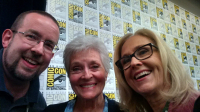
    Sdcc lee and erinAfter the session, when we had a few minutes to meet with audience members before the next session, a woman came up to tell me how much she appreciated my comments, and it took me a few seconds to realize it was none other than—are you sitting down?—Erin Gray, star of Buck Rogers and Silver Spoons. Talk about having your mind blown… it still doesn't seem real to me. Luckily, after helping Lee down from the podium, I had the chance to take the picture to the right with both legendary actresses.

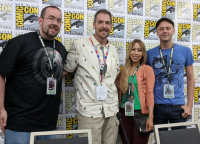
    Batman beards sdcc 2018Paul, Travis, and I stayed for the next session, featuring psychologist Andrea Letamendi (Under the Mask) and Loren Lester, the voice of Dick Grayson from Batman: The Animated Series, discussing the psychological roots of the character and how Lester worked that into his portrayal, especially as Dick Grayson transitioned from Robin to Nightwing (both of whom he sometimes had to voice in the same episode). I had never met Andrea, who would also moderate the Captain America panel the next day, but had a chance to introduce myself after her session. Later, we met up with some friends at a nearby hotel for drinks, food, and laughs, where the Three Beards were captured for posterity. (Compare to two years ago in Victoria.)

    SATURDAY

    Mack sdccFriday, especially the second half, was such an overwhelming experience—in a good way—that I'm surprised I was ready for the Captain America panel late the next morning. But I was, and was amazed and thrilled to meet the incomparable David Mack (with me at the right), who was the subject of a spotlight panel which was held in the same room in the slot before my panel. Despite the astonishingly innovative nature of his work, including on titles such as Daredevil, covers for Alias and Jessica Jones (plus titles and art for the Netflix series), and his upcoming project Cover with Brian Michael Bendis, plus amazing celebrity portraits, Mack is a really down-to-earth and cool guy—which I am happy to find of most of the amazing creators I meet, but it still surprises me.

    Soon thereafter, the rest of the Cap panel showed up: Daniel Wilson, author of The Clockwork Dynasty and Robopocalypse (and a PhD in robotics), Paul, and our moderator Andrea, as well as Kate McClancy from the Comics Arts Conference (sponsor of the session) providing the introduction. (Writer G. Willow Wilson, co-creator of Kamala Khan/Ms. Marvel and the recently announced writer of Wonder Woman, had to withdraw at the last minute due to other circumstances.) It was a more tightly focused panel than the Batman one, and with Andrea's help, it turned into a great conversation Sdcc cap panelbetween me, Daniel, and Paul, each of us building on each other's comments about the ethics of Cap himself as well as the moral issues around the prospect of creating superhumans (and how soon it might happen). There was also time for audience questions at the end of the panel, as well as connecting with audience members afterwards, which is my favorite part of these panels.

    WHEW!

    I took it easy the rest of the day Saturday (after Paul and I lunched at Kansas City Barbeque, where the bar scene from Top Gun was filmed), and my flight left early Sunday morning (although intrepid weather at home made it uncertain the plane was going to make it all the way there, resulting in a holding pattern over Chicago and a unexpected side-trip around Buffalo). But I did get home, and today I am feeling slightly jet lagged and decidedly ungrateful for the New Jersey humidity. But I'm very happy for the experience, for which I once again thank Paul Zehr—I wouldn't have experienced any of this without him.

    I am definitely going to try to participate in SDCC (and other cons) more in the future (despite my initial trepidation, which seemed silly by the end of the weekend), whether under the auspices of the Comics Arts Conference or the main conferences. Speaking of the CAC, I had the pleasure of chatting with one of its founders, Randy Duncan, outside the Cap panel about our mutual love of comics—a very warm and welcoming man whom I could have talked to all weekend.

    Sdcc batman backdrop And lest I forget, SDCC gave him a terrific place to announce Batman and Ethics, the final cover for which I received just in time to slide it into the backdrop for the Batman panel, alongside the great books written by Paul, Travis, and Michael Uslan, as well as the luminous Lee Meriwether in the arms of Cesar Romero as the Joker. (For more details on Batman and Ethics, see my blog post at The Comics Professor

    Batman and Ethics cover

  • Batman and Ethics cover finalThe news is out! As announced in the "Batman's Brain" panel at San Diego Comic-Con and in an interview with CGTN America, the superhero-and-philosophy book I've been teasing for the last few months is titled Batman and Ethics and will be published by Wiley Blackwell next spring!

    Following the same approach I used in The Virtues of Captain America, Batman and Ethics breaks down the Dark Knight's moral code by looking at his actions and words over four decades of comics, from the early 1970s to 2011. By restricting myself to a period of (only) the comics in which I believe the character was portrayed fairly consistently, starting with Denny O'Neil and Neal Adams' legendary work and ending just before the New 52 relaunch, I try to show that Batman's moral behavior shows a deeply conflicted hero, one who tries to save lives and serve justice in several different ways but has trouble finding an acceptable balance between them—or even within any one goal. Instead, his actions and words reflect a mix of utilitarianism and deontology (with just a touch of virtue ethics) that reveals the value of each while demonstrating how difficult it is to pursue them at the same time.

    The first half of the book covers the nature of his mission while the second half discusses what he will do—and will not do—to further it. In the process, I talk about issues such as:

    1) Why does Batman refuse to kill even his most murderous villains even though that would contribute significantly to his self-professed goal of saving lives? (I discussed this in the first chapter of my 2008 co-edited book Batman and Philosophy, but I go much deeper into it here, including an extended ride on everyone's favorite trolley!)

    2) How does Batman reconcile his widespread use of violence and torture with his mission—especially given that he often wields these tools against people who are not even suspected of committing crimes—and how do these actions compare with killing, which he refuses to do?

    3) How does Batman choose which crimes to investigate or which criminals to pursue, and why does he give some a pass (such as a certain feline foe of whom he's famously fond)?

    4) How can we explain Batman's often tenuous relationship with the Gotham City Police Department and his close friendship with Commissioner James Gordon—and how does all of this affect the pursuit and conduct of criminal justice in Gotham overall?

    5) Why does Batman continue to train young boys to be his sidekicks when even he admits it's… problematic?

    6) Is being Batman the best way Bruce Wayne can serve his mission of saving Gotham—and even if not, is it within his rights to do so? (And speaking of which, is it OK that he focuses so much on Gotham to the exclusion of the rest of the world?)

    7) More generally, is Batman of value—to Gotham, to the world, and to Wayne himself?

    Do these tough challenges suggest that Batman is any less of a hero or a good person? Not at all! If anything, it shows that he tries too hard to do too much along too many dimensions, setting himself up for failure to succeed at any one of them. But that's part of what makes Batman a fascinating character: he pushes himself harder than anyone can, holds himself to impossible standards, and beats himself up when he fails to live up to them.

    It's also part of what him relatable, because most of us are morally conflicted in the same way. We all want to do what's good and we also want to do what's right, but we don't always have a clear idea what either of those means, much less how to settle conflicts between them. By looking at Batman's moral inconsistency, then, we might get a better picture of our own, and see how we might work on improving it.

    Watch this space for more news about Batman and Ethics as the release date approaches!