Mark D. White

Writer, editor, teacher

  • BeachIt being the last day of June and all, I thought this might be a good time for a brief update…

    I'm working on three projects currently, trying to do a bit of work on each one every day, especially the first and main one.

    1) The superhero-and-philosophy book I'm writing this summer (hopefully to be finished by the end of August): A third of the summer in and I'm a little short of a third of my target word count, but that's fine; I got off to a slow start and had quite a few bad days in which I did nothing at all, so assuming things go at a reasonable pace for now on, there's a good chance I'll finish on time. I do need my comics, trade paperbacks, and hardcovers nearby, so no writing in coffee shops until the time comes to revise and edit.

    2) Doctor Strange and Philosophy, which I'm editing this summer: This is looking very good in terms of both content and timeline (and I can edit chapters in coffee shops, so yay!). I've seen all but one draft chapter and have seen or received second drafts on most (and even third drafts on a couple). There's a nice balance of comics and the movies (live-action and animated) in the source material, and an impressive range of philosophical ideas discussed!

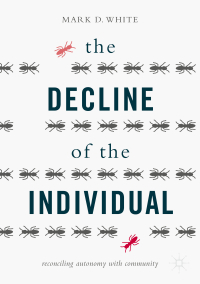
    White_86888445_2ndpass3) The Decline of the Individual: I'm currently reviewing page proofs, not having seen copyedits or a style sheet, so they're rough. I will have plenty to say about this rushed production process when it's over, but for now… hey, check out the spiffy cover to the right! Apparently it will be out on August 16, come high or high water (or my repeated pleas to slow things down).

    Also, I have a series of three new posts at Psychology Today: "Defining Success for Yourself," "Are You Working for the Right Reasons?", and "How to Succeed in Life… Ideally, on Your Own Terms." Also, YourTango began "reprinting" some of my Psychology Today posts; you can find them at my profile page.

    I'm hoping to make significant progress on the three projects over this long holiday weekend — whatever you're doing, I hope you enjoy it as well!

  • GroundhogA short update before I burrow in my home office (or dining table, or couch) for the summer…

    May was not only the end of the academic year, with all the attendant end-of-year activities, but also a time to wrap up other sundry responsibilities before starting my next book. These activities included writing my own chapter for Doctor Strange and Philosophy and editing several chapters by much smarter people; finalizing details for The Oxford Handbook of Ethics and Economics, which I’ll be working on for the next year or so; writing recommendation letters, referee reports, and comments on friends’ manuscripts; end-of-year paperwork for the college; and best of all, attending and participating in yesterday’s commencement exercises. (There’s a nice photo gallery here with many of the usual culprits.)

    Below you can see me with my invaluable staff, for whom I’m endlessly grateful…

    Me florinda joan May 2017 (500px)

    …and also some of our philosophy graduates, of whom I’m very proud.

    Graduates 2017 (500px)

    It was also wonderful to hear our college valedictorian, Palwasha Syar, spend most of her speech paying tribute to the women at CSI, both students and faculty, who helped her achieve this singular honor. (Until her speech is online, see the short video below — she’s truly an amazing person with an inspiring story.)

    Finally, it was terrific to hear my colleague Barbara Montero give the faculty address at commencement and, later in the day, receive the college’s award for scholarship at our awards ceremony. It was a fine day from beginning to end (and the rain held back too!).

    — — — — —

    Now that May is almost done…

    sigh

    …June soon begins, as with it, a new book.

    As I said in my last update from earlier this month, I hope this book will go more smoothly than my last one. I’ve been reviewing my outline and notes, which have been prepared for a while (back when I hoped to write this book — get this — simultaneously with the last one). It is another book on superheroes and philosophy, so most of it will be written at home rather than in coffee shops, so I have the source material close at hand (i.e., boxes of comics and shelves of trade paperbacks). And I’ve already begun the book journal, an activity that has helped me keep earlier projects in perspective (but which I did not do until the final stages of my last book, to my detriment).

    Hopefully, I will be able to devote the bulk of my free time this summer to this book. There will be other things to do, such as editing the rest of the chapters for Doctor Strange and Philosophy and writing a few Psychology Today posts; and undoubtedly other things will come up, such as production on The Decline of the Individual and keeping my eye on course enrollments for the fall. But I’m optimistic about handling these things while writing the book this summer.

    (Did I say that? Was that me? Weird.)

    By the way, as you can tell from the link, The Decline of the Individual is listed on Amazon already — it is due for release at the end of October, even if it may say otherwise. No cover yet, alas.

    If I don’t post here for a while, I’m always on Twitter (though perhaps a little less this summer)… whatever you’re up to this summer, do it well and have fun!

  • Old man writingLike a butterfly from its cocoon?

    No…

    Like a phoenix from the ashes?

    No…

    Like a tired old man rising from his dining room table?

    Nailed it.

    At 2:32 PM yesterday (four days after my April 30 deadline), I emailed the manuscript for my latest book, The Decline of the Individual: Reconciling Autonomy with Community, to my editor at Palgrave Macmillan. As their marketing wizards somehow gleaned, this is the third book in my "triptych" on the individual and society, following The Manipulation of Choice (on nudge) and The Illusion of Well-Being (on happiness policy), all written for popular readers. When I started the first book, I had no idea that I would generalize the argument in the second, much less broaden it even more in the third… but that's what I did.

    In short, this book discusses what I see as the decline in respect for the individual in recent years, based on developments in psychology, neuroscience, economics, sociology, technology, business, politics, and law. All of these fields have, in different ways, contributed to doubts about individuals' cognitive competence and moral competence, which have led to a devaluation of the individual as considered by government, business, and ourselves, and the elevation in its place of the pursuit of collective interests without the traditional safeguards for the rights and dignity of individuals. To counter this, I suggest a conception of the person as "individual in essence, social in orientation," based on Kant's ethics (and introduced in my scholarly book Kantian Ethics and Economics). This way of thinking about individuals reinforces their cognitive and moral competency and replaces the specter of "radical individualism" with a more nuanced combination of individuality and sociality, all intended to restore the appropriate balance between individual and social interests which has been upset in a recent years.

    Ha, I said "in short," didn't I?

    It is a very difficult book to summarize in just a few words. It has been very hard these past months to explain to family, friends, and colleagues what this book is about, especially compared to its predecessors. With this one, I couldn't just say "it criticizes nudges" or "it questions happiness policy" — "it examines the decline of the individual" is a little more vague.

    This book was also much harder to write and took much more out of me, and I've tried to figure out why.

    1) In general, it was a harder argument to wrap my head around and organize in a way that is (hopefully) clear to the reader. It took a long time to feel I had a good handle on the flow of the book, especially because I do draw on a wide range of ideas that don't fit naturally with each other. Also, I hadn't written this argument elsewhere before, whereas with the last two books I had the chance to rehearse their general arguments in earlier works (albeit for different audiences). Parts of it existed in various forms in other books, articles, and blog posts of mine, but not together in anything resembling this book.

    2) I wrote most of this book during the academic semester, whereas I only wrote, at the most, initial bits of my earlier books then. Granted, I didn't teach this semester, but I still chaired my department, which involves a lot of paperwork, meetings, and email, not to mention the occasional crisis. It was a relatively light semester in terms of meetings, and my extraordinary department staff was tremendously helpful with paperwork and crises, but nonetheless it did seem especially difficult to write most of this book (particularly this book) during the semester.

    3) The writing process itself with this book was different. When I write books, especially those for popular audiences, usually I draft the book straight through from beginning to end, to maintain a narrative flow and consistent tone. The writing itself takes longer because I'm inserting quotes and references, and polishing prose as I go, but when it's done it's pretty much done. With this book, however, I wrote the basic argument first, with little attention paid to language and almost no quotes or cites. On the second pass, I smoother out the language and inserted many quotes and references, which added 50% more words to the manuscript, and on the third pass I further massaged the language (and added a few more last-minute quotes and references).

    This was a strange way to work, and I'm not sure I would do it again. In general, I'm not a "get the words down and make them pretty later" kind of writer, but with this book I came closer to that method than with previous books. The more I think about it, though, the more I realize that I had to do this one the way I did. Because I didn't have the entire plan of the argument settled from day one, I had to explore that aspect of the book first, constructing the framework and making sure it stood on its own before I could install the plumbing, electricity, and so on. When I got to the second stage, I went deep into the various fields I draw on to flesh out each section and chapter, which may have been too much to do in the first stage when I was trying to focus on the basic structure of the entire argument. Finally, the multiple passes enabled me to tie the material from the different areas together better than I might have been able to if I'd followed my normal linear approach.

    4) I also used my time differently with this book. With my previous ones, I would spend most of my free time on the current project, working on it around classes, meetings, or time with the kids. But as I explained in my last update, for the first two and a half months I worked on this book, I devoted about two hours each morning to it, and then would do other things (or sometimes nothing) the rest of the day. It wasn't until April that I devoted all my free time to the book, taking advantage of a week and a half of spring break in the middle and a lighter-than-usual meeting schedule the rest of the month. It did help to be immersed in the book for the final month, as I had been with the earlier books; I never really felt I was writing a book until then, but merely working on a book, if that makes sense. I say that in full realization that many writers are forced to work that way and they manage to produce fantastic work; for that they have my eternal admiration and respect, because I found it very difficult to re-engage with the book each time I returned to it after so long.

    5) Finally, I didn't start a book journal until the end of March when I started the second stage (major editing). It definitely would have helped me stayed engaged if I made an effort to reflect on my daily progress, especially when I spent so little time (relatively speaking) on the book each day with so much time in between.

    —–

    So what's next? Even though I cleared my plate at the end of March to devote April to finishing the book, I did put off a lot of things that came in the last month (making time only for things that needed to be done right away, such as writing letters of recommendation and editing timely blog posts). That means I have some things to catch up on, such as writing referee reports, working on edited books, and end-of-the-semester work at school, before I start my next book in June, a return to superheroes and philosophy, which I plan to write this summer in my usual fashion. The comics have been read, the notes have been taken and organized, and the outline has been drawn up and fleshed out, so all that remains is to think of the words and put them in the right order.

    Piece of cake… right?


  • Bear hibernatingThe couple months since my last update have been uneventful personally (although, of course, not for the world in general). In fact, the last two months have been fairly routine for me, definitely in the negative sense of the word (but unfortunately without the benefits of routine in the positive sense, which I've not been able to capture). Because I plan to hunker down and put my nose to the grindstone until the end of April, as I explain below, I thought this was a good time to provide an update on what I've been doing.

    These two last months…

    Most significantly, I finished a rough draft for my book on the individual for Palgrave. I put in the same one or two hours in the morning nearly every day as I did in January, and then spent the rest of the days on other things (including those listed above). Over the last couple weeks I tried to get all my other outstanding commitments off my plate so that, starting today, I can devote most all of my time (aside from college and kids) to finishing the book by the end of April. The ideas are all in the draft, but they need to be smoothed out, reorganized, and supported with examples, quotes, and citations. (I've never written a book this way, but it's been an interesting experiment.) Also, I have not been keeping a book journal, probably because progress has been so slow, gradual, and generally satisfactory; now that the pressure is on, however, I plan to start one.

    Next time you hear from me here, the book should be finished. Have a great April, and I'll see you on the other side!

  • JanuaryIn the midst of the state of the country (and the world) at the moment, it seems a bit indulgent to blog about my activities over the month. But the work must continue.

    Since returning from the ASSA conference early this month (an experience recounted in my last post), I've actually been managed to be rather productive:

    • I've made significant progress on my book for Palgrave on the decline of the individual, mainly in chunks of one or two hours early each morning. It can be odd finishing my daily work on it as early as 8 AM and then not thinking about it again until the next morning; I've never written a book before that wasn't my primary focus throughout the day. It will be interesting to see if this changes as the book progresses (and as the deadline gets closer!).
    • I assembled the chapters and contributors for Doctor Strange and Philosophy, quite a task with three times as many submissions as I could accept.
    • I'm close to a complete list of chapters and contributors for my handbook of ethics and economics for Oxford.
    • I have been in touch with both Palgrave and Rowman & Littlefield International regarding my respective series for each (on which I've been lax), and I think we have some ideas almost ready to go.
    • I continued to discuss other book ideas with publishers, with mixed results. (Ah well.)
    • I revised my chapter “Dignity on the Line: The Kantian Ethics and Economics of Work,” for Fair Work: Ethics, Social Policy, Globalization, edited by Kory Schaff, the first release in my "On Ethics and Economics" series at Rowman & Littlefield International.
    • I went into Manhattan to film some interview footage for a documentary set for broadcast in October; I'll have more info on that later this year, I hope. (The last time I went there to film documentary footage it never aired, so I'm a bit superstitious now!)
    • Finally, I seemed to write an extraordinary number of referee reports, reviews of book manuscripts and grant applications, and letters of recommendation, more than I normally write in an entire year. (Good thing the spring semester just started yesterday!)

    Surprisingly, for all my self-flagellation about scheduling and routine, I managed to get a lot of things done this past month without them, besides making sure I did a solid bit of work on my book on the individual every morning. The key to my productivity this month seems to have been making a reasonable to-do list for each day and then ticking as many things off it as I could. I make the list first thing in the morning (and sometimes the night before), and that saves me from sitting around wondering what to do next, especially after the morning writing is done. So simple… and it justifies my addiction to buying cool notebooks and journals.

    In other news…

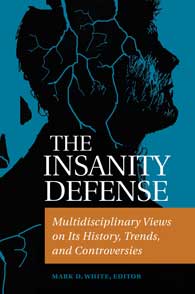
    • Insanity defenseMy edited book The Insanity Defense: Multidisciplinary Views on Its History, Trends, and Controversies came out this month. It is the culmination of a lot of work, most of it very pleasant, especially reading and editing the twelve fantastic chapters by brilliant contributors from law, philosophy, psychiatry, and neuroscience.
    • I had the honor of being interviewed by my good friend Carol Borden for The Cultural Gutter, in a piece titled "On the Heroic Breed," in which I talk about my favorite superheroes, the process behind my books on superheroes and philosophy, and the relevance and value of superheroes to us in the world today.
    • Finally, I got rear-ended by a car carrier (hauling two layers of salvaged cars) on Route 78 on a very cold and icy day. No injuries to report, but my car is headed once again to the body shop next week. In related news, I have definitely lost my love of driving.

    I didn't work on everything I wanted to this month, though. I didn't make any progress on my current superhero-and-philosophy project, but there were plenty of other things to do that were more urgent, and that book is not due until later this year. I also didn't touch my guitar, which I had been playing regularly before the holidays; and fiction still remains to be written. But at least I'm in a better state of mind regarding personal life and work issues than at the end of last year (as relayed at the end of this post), and that's no small thing. (Busyness may be a distraction, but distractions can be valuable.)

    My state of mind regarding the recent events in the United States under our new president, however, is a different story. If you're anything like me, you know full well what's going on. Personally, I find myself glued to Twitter like never before (other than my morning writing sessions, during which I can occasionally ignore the rest of the world for a while). It's heartbreaking to see the values for which I love my country eroded more each day, but at the same time it's exhilarating to watch protests develop in real time rather than hearing about them later.

    I have to believe things will get better, not because of any faith in this president, his administration, or Congress, but because the people will continue to stand up in resistance, will demand to be heard, and will not accept the destruction of what this country stands for. I have to believe that.

  • My ASSA experience this year in Chicago was less hectic but no less enjoyable than conferences past, this one more focused on reconnecting with distant friends and colleagues and re-establishing ties than hearing or presenting research. I did not present a paper this year, and I went to fewer sessions than usual, but I still felt immersed in the conference experience in a way that felt comfortable and inspired future work. (More about the latter point toward the end of the post.)

    THURSDAY

    I arrived at the Swissôtel in Chicago in the early afternoon, luckily before something happened that delayed shuttles from the airports that made a lot of conference attendants late to get in. After grabbing an early dinner and buying some provisions, I went to the opening plenary of the Association for Social Economics and met up with several of my longtime colleagues of the association, particularly Quentin Wodon, the incoming president, and this year's featured speaker, Kaushik Basu. Delivering his first scholarly talk since leaving the World Bank, Basu gave a fascinating talk on labor market discrimination and faced probing questions from a near-capacity audience in one of the ballrooms at the Swissôtel. I left before the reception started, so missed reconnecting with other ASE colleagues that evening, but would see them often over the next several days.

    FRIDAY

    After a brisk walk (1°F) to get some breakfast, I attended the first regular meeting of the ASE program. I missed the next one to visit the book exhibits, meeting with editors at several presses to touch base on ongoing and future projects (or to confirm or set up meetings for later in the conference). In particular, my Oxford University Press editor Adam Swallow was very pleased with my progress on my handbook of ethics and economics, and later at the booth we took this snap to commemorate my co-edited book with Jennifer Baker, Economics and the Virtues, which barely missed being displayed at last year's conference.

    //platform.twitter.com/widgets.js

    After a quick lunch and coffee, I headed back to the Swissôtel and relaxed in my hotel room for a couple hours before the annual business meeting for the ASE, at which we met two of the new editors of the Review of Social Economy, and also heard incoming president-elect George DeMartino's plans for next year's ASE-ASSA program (soon to be announced). The evening ended at the annual Taylor & Francis editors' dinner, where I indulged in delicious Italian food with many old friends—always a fine time.

    SATURDAY

    The second full day of the conference began with the ASE presidential breakfast, where our awards are given out, including the Ludwig Mai Service Award to my longtime friend and co-blogger, Jonathan Wight. The presidential address was delivered by outgoing president Giuseppe Fontana on the topic of financialization, and a wonderful breakfast was enjoyed by all (courtesy of program director Bob LeJeunesse, who is always careful to note humbly that "I didn't cook the food").

    After the breakfast, Jonathan and I took some to catch up and make some plan to reinvigorate the Economics and Ethics blog, which has survived the last year or so due to his efforts alone. Before we knew it it was lunchtime, which meant it was time for another annual tradition, lunch with a longtime friend and editor (although we've never worked together). After lunch I attended a session of the International Network for Economic Method on ethics and economics at the Sheraton, after which I dashed back to the Swissôtel for the Review of Social Economy editorial board meeting.

    SUNDAY

    The final day began with another annual tradition, breakfast with my Stanford University editor Margo Beth Fleming, during which we somehow managed not to discuss my follow-up to Kantian Ethics and Economics but did somehow find time to engage in intense sartorial debate. Full of pancakes and bacon, I rushed to the Forum for Social Economics editorial board meeting, but had to leave early to catch the shuttle to the airport.

    OVERALL

    At the end of last year's ASSA post, I wrote:

    At the end of December I was completely exhausted, physically and emotionally, and seriously considered withdrawing from this meeting altogether. As you can guess, I'm glad I didn't. Not only was it a great meeting intellectually and professionally, but it was also a wonderful time socially—and for a classic introvert who dreads walking into the jam-packed hotel on the first day, and for an academic who has never felt like one, it was a surprise that I felt very much in my element throughout the three-and-a-half days.

    Even if I wasn't that tired leading up to this year's meetings, I was certainly despondent, and I did nearly cancel the trip. And once again I am very glad I did not, for many of the same reasons, especially the great friendships I enjoy with my ASE members. Although I didn't attend as many sessions as in previous years, simply being in the intellectual atmosphere of the ASSA meetings did invigorate the academic side of me. I returned from Chicago with several pages of a legal pad filled with ideas for future projects, authored books as well as edited books for my two book series at Palgrave and Rowman & Littlefield International. Whereas before the meetings I was planning to focus almost exclusively on popular writing from here on out, I now think I will maintain my current fairly even balance between popular and scholarly work.

    Of course, last year I also wrote, "Let's just hope that, come next December, I remember how much I enjoyed this ASSA when I fret and dither about attending." Someone please remind me to revisit this post later this year!

  • 2016 in reviewAs I've done the last couple years, I'm summarizing the year's activities and looking ahead to the next year, along with some general impressions and reflections. If you've read my occasional personal updates this year, you know it's been a strange year, with a very productive and exciting first half, followed by a lackluster halftime show and a second half full of fumbles and missed field goals. (I didn't post a personal update since September, but nothing much changed.)

    BOOKS

    In 2016 I had three books out (all resulting from work done last year):

    I also finished work on another edited volume coming out early next year, The Insanity Defense: Multidisciplinary Views on Its History, Trends, and Controversies, from Praeger.

    Finally, I have four book projects in various stages of progress:

    • Two sole-authored books: one on the decline of the individual (for Palgrave) and another on a superhero and philosophy (for Wiley Blackwell), both in early drafting stage (the planning for which accounted for the most of the last couple months of the year).
    • Two edited books: a handbook of ethics and economics (for Oxford) and Doctor Strange and Philosophy (for Wiley Blackwell), both being assembled as we speak.

    Several other book projects are being discussed with various publishers, only one of which is academic in nature, consistent with plans to focus more on popular writing in the future.

    ARTICLES AND CHAPTERS

    I had eight papers/book chapters published (in print or online ahead of print) this year, the first five on them based on work from earlier and the last three revised this year:

    Three more articles/chapters — the first revised this year, the other two written this year — were accepted this year and await publication:

    • “Judging the Efficacy and Ethics of Positive Psychology for Government Policymaking,” forthcoming in The Routledge International Handbook of Critical Positive Psychology, edited by Tim Lomas, Nick Brown, and Francisco Jose Eiroá-Orosa (Routledge)
    • “Nudging Debt: On the Ethics of Behavioral Paternalism in Personal Finance,” forthcoming in Journal of Financial Counseling and Planning
    • “‘What I Had to Do’: The Ethics of Wonder Woman’s Execution of Maxwell Lord,” forthcoming in Wonder Woman and Philosophy, edited by Jacob M. Held (Wiley Blackwell)

    I wrote three more articles/chapters this year, the first under revision and the others under review:

    • “Preferences All the Way Down: Questioning the Revolutionary Nature of Behavioral Economics and the Path to Nudge,” under revision for a special issue of Oeconomia
    • “Dignity on the Line: The Kantian Ethics and Economics of Work,” submitted for Fair Work: Ethics, Social Policy, Globalization, edited by Kory Schaff (Rowman & Littlefield International)
    • "Nudging — Ethical and Political Dimensions of Choice Architectures," submitted for the Handbook of Behavioural Change and Public Policy, edited by Holger Strassheim and Silke Beck (Edward Elgar)

    All in all, I wrote five new articles/chapters this year (and revised four others), a slight decline from last year, but consistent with my plan to scale back on short pieces and devote more attention to books, although this would mean more if I'd actually made substantial progress on a sole-authored book this year. (To be fair, it was a relatively chaotic fall semester at work.)

    ONLINE WORK

    In addition to a dozen blog posts at Psychology Today and a handful (if that) for Economics and Ethics and The Comics Professor, I wrote several pieces for other online venues this year:

    Also, I was interviewed three times by my friend Skye Cleary for the Blog of the American Philosophical Association: first about Batman v Superman, next about Captain America: Civil War and my book, and the last simply about me.

    Finally, I contributed a short piece on superheroes, ethics, and economics to Perspectives, the print publication of King’s College London Economics & Finance Society, titled “What Can Superheroes Teach Us about Ethics and Economics? Homo economicus, deontology, and virtue ethics, explained through Iron Man and Captain America" (issue 5, 2016), although it's not online yet.

    This year, I also participated in a number of podcasts, three of them dealing with superheroes and one devoted to a recent academic book:

    • NerdSync Podcast, March 31, discussing the philosophy of Civil War (and my book)
    • The Tom Woods Show, April 1, with Jennifer A. Baker discussing economics and the virtues (and our co-edited book on the topic)
    • NerdSync Podcast, May 27, discussing the Captain America: Civil War film and the Civil War II and Captain America comics (some of which was used in a NerdSync video on June 1)
    • The Fantasticast, June 4, discussing Marvel Two-in-One #4 (1974), featuring the Thing and Captain America

    I really enjoyed doing all of these, and I've been thinking since of doing some podcasting of my own in the future.

    PRESENTATIONS/LECTURES

    As with writing, the bulk of my talks — all of them, as it turns out — were given early in the year, and they were fewer than in recent years:

    • “Kant on Modern Finance: Are We Treating People Simply as Means?”, presented at the Association for Social Economics/Allied Social Science Associations (ASSA) meetings, January
    • Panelist at “An Evening with Batman’s Brain,” public event with E. Paul Zehr and Travis Langley at University of Victoria, March
    • “What Superheroes Can Teach Us about Liberty and Security,” public lecture at Northwood University, March

    I also commented on a paper at the Central Division meetings of the American Philosophical Association (APA) in March and sat on a dissertation defense at the law school at the University of Toronto in May. As detailed in my last update, I was scheduled to speak at the “Designing Moral Technologies” conference at the Universität Zürich in July, but I cancelled for health reasons.

    I am currently committed to give only two talks in 2017, both of them at the Central APA meetings in March; going forward, I plan to give (even) fewer academic presentations and, if anything, more popular philosophy talks (whether or not they deal with superheroes).

    PERSONAL

    This part has proven difficult. For one, it almost seems distasteful to engage in too much self-reflection at the end of a year like 2016, with the political atmosphere and realities around both the presidential election in the US and Brexit in the UK, the unfathomable plight of refugees around the world, and the passing of so many people whose creativity, passion, and struggles are (and will always be) so inspirational to me, such as David Bowie, Prince, and Maurice White. [UPDATE: And, an hour or two after I posted this, we lost Carrie Fisher. Sigh.]

    Also, when I look inward, I really don't know what to say that I haven't said before. Little has changed since I invoked Tolstoy five years ago at The Good Men Project. I'm still not sure what I'm doing, what I "should" be doing, or what I want to be doing.

    The one new development in this is that I've begun to realize that most of my "professional" life — that is, developments related to my salaried job rather than my independent writing activities or any semblance of a personal life — has been a result of passively following what seemed to be the natural path rather than the active pursuit of any goal or dream I had. (Not very autonomous of me, I know, which bothers me too.) This isn't to suggest that this path was always easy or that I didn't work hard at each step. But looking back, I'm just not sure why I did any of it. Ideally, this would inspire me to find something else to do, but before I can do that I need to determine what it is that I want to do, and that's when I realize that I never thought about it (nor does anything come to mind when I do).

    So, until I figure any of this out, and even though I feel less well-suited for it as time passes, I'll just keep going on this path.

    To that end, in 2017 I hope to use my time better by focusing on routine. One of my main problems has been with focus, and every book and article I read about writing (or creative work in general) recommends establishing a routine to maintain focus. I remember times in the past when I kept to a routine and how well it worked, but nonetheless I find it very difficult to establish one now. I did have one for a while late this summer and early fall when I rediscovered a coffee shop I found I could write well in, and although I still go there most days that I can, I haven't been very productive there lately. More recently I started going to another place that opens earlier, so I can get started right away instead of wasting time at home waiting to leave, and I have managed to work well there on occasion, but not often or well enough. Another bad thing is that, since I've tried to establish a routine of working outside my apartment in the mornings, it's harder to consider my apartment as a workplace when I return, which usually means I get nothing done the rest of the day. That's a tremendous amount of time wasted, which weighs on me significantly.

    I'm also fully aware that routine can't do all the heavy lifting — one still has to be motivated to follow the routine as well as to do the work you schedule for. But the hope is that once you establish a routine that becomes a habit, you won't have to think about it, and the motivation to work will come more naturally. And that's another aspect of routine that I hope to follow in 2017: making it regular, hopefully daily, even if the particular routine has to be modified to fit my other responsibilities. A problem I'm dealing with right now is keeping my mind "in" my current projects, especially if I haven't worked on them for a day or two. Whenever I return to them, it takes some time to remind myself where I was in the project and then what to do next. If I spend at least a little time with each project every day, this "acclimation" period might not be necessary, and I can just "jump in" when I return to it. Hopefully I would be able to spend enough time each day to make significant progress, but even if I can only do enough to keep it fresh in my mind, that would be a big help. In the end, regularity might be more important than routine, but I'm sure that both combined, as much as possible, will be best.

    I hope to be able to report some success on this front next year, as well as in the broader question of figuring out what I'm doing with my life, so my "looking back on 2017" post is less melancholic. (Sorry about that.)

    I wish you all the best for your 2017 as well!
  • Eb white and dogI was tempted to stop these updates, as I promised earlier. Yet, they do seem to serve some purpose, even if only for reflection, so we keep on keeping on… (For someone making better use of this than I, see here.)

    Surveying my last two updates (April and June), which detail my rather eventful spring semester (in ways both good and bad), it's safe to say the summer contrasted starkly. Chalk it up to residual effects of my embolism in April, the ennui of summer (not a fan), or the ongoing lack of purpose—augmented in the middle of August by a renewed drive to find another job and a new place to live—and it was a disappointingly unproductive summer, a description which is likely to apt of the fall as well, as crises erupt at work and my well-being seems shaky.

    This summer your intrepid correspondent…

    • Wrote a paper on behavioral economics for a special journal issue.
    • Wrote a chapter on the Kantian ethics-and-economics of work for an edited volume on the ethics and economics of work and leisure. (This was actually planned for fall but I wrote it earlier.)
    • Revised a paper for the Mercatus Center on the right to try pre-approval medications.
    • Revised a paper on nudge and borrowing, which was accepted for a special journal issue on the ethics of debt.
    • Wrote a short piece on ethics, economics, and superheroes for Perspectives, a student-led economics journal at King's College London, to be published in early October.
    • Started writing a chapter on the ethics of nudge for a handbook.
    • In the last week I wrote two posts for Psychology Today: "Why Do We Accept Harmful Shortcomings in Our Partners?" and "Do We Put Too Much Weight on Shared Interests When Dating?"

    Also, I cancelled my trip to Switzerland and Sweden a week before I was due to leave. While most days I feel OK, I do have occasional days when I feel out of sorts (because of thundering headache, wooziness, or distinct lack of energy). I didn't think that an overnight (read: sleepless) nine-hour flight and subsequent day of train travel that would have me arrive precisely at the beginning of a conference dinner was the best way to start a 10-day trip on a different continent when I'm not feeling up to snuff. So I let down a lot of people (including the conference organizers who had invited me, as well as my good friend in Sweden who had made plans for my visit) and lost a lot of money I would've gotten back had I gone, but I still think it was the right decision. (I would have felt better if I had used the extra working time I gained, but naturally I did not.)

    Mostly, I sat around my apartment questioning what I'm doing with my life, especially with regards to work (both at school and writing). It wasn't until the middle of August that I rediscovered an old writing haunt, a coffee shop in a nearby town where I seem to be able to focus like I haven't been able to in months if not years. Since then, I've gone there every morning I can, staying for a couple hours and usually getting a good amount of work done, after which I come home and pitter about my apartment the rest of the day (rearranging deck chairs on the Titanic).

    Looking ahead, before the end of the month I need to finish the handbook chapter on the ethics of nudge, write a short piece on Kant and classic liberalism, and finish reviewing the copyedits for my edited collection on the insanity defense. Past that, I need to work on organizing a handbook of ethics and economics and writing my next book on superheroes and philosophy, which I would like to have drafted by the end of the year so I can edit it next summer. (Yes, that book is "on" again, with a new direction that I like, but I've found it quite hard to get back into it with everything else going on.) In the spring I plan to write my long-planned follow-up to my books on nudge and happiness, a book exploring the concept of individualism, the contract for which (with Palgrave Macmillan) I signed just today.

    Sorry for the sour mood of this update—frankly, I'm not feeling good about much these days—but perhaps when I can sink my teeth into writing a book again, which I prefer to shorter pieces, at least that part of my life will start looking up. (Stranger things have happened!)

  • Well those were two interesting months, filled with writing, editing, book promotion, and a brief hospitalization. Some very good moments as well as some very bad ones… but a bit too tempestuous for my tastes. (Serenity now!)

    ~ ~ ~ ~ ~

    Let's get the nasty stuff over with… just three days after my last update, and after several weeks of shortness of breath, I was taken to the hospital and diagnosed with a pulmonary embolism, a massive "saddle" blood clot blocking flow to both my lungs (and making my heart work harder to try to force blood through). Two days later I was back at home and feeling much better with no lasting damage to my heart; the main concern now is making sure this never happens again (especially since this was my second major clot event, 26 years after this one).

    So there was that.

    At the other extreme, there was a flurry of activity around the release of the film Captain America: Civil War and my book A Philosopher Reads Marvel Comics' Civil War, during which I was interviewed by Katie Kilkenny for Pacific Standard magazine ("The Post-9/11 Ethics of Captain America: Civil War") and by Skye Cleary for the Blog of the American Philosophical Association ("A Philosopher Watches… Captain America: Civil War"), as well as the beneficiary of a kind review by Michael Dudley in the Winnipeg Free Press ("Civil discourse: Comics book series says plenty on liberty, security and morals"). I also wrote several pieces based on the film and my book, including at The Guardian ("Captain America: Civil War — conflicted heroes and a clash of philosophies"), Psychology Today ("What Can We Learn from Watching a Superhero Civil War?"), and my blog The Comics Professor ("My thoughts on Captain America: Civil War (No spoilers!)"). Finally, The Philosophers' Magazine ran an excerpt (titled "When is it OK to Compromise?") from the book in their issue 73, and I appeared as a guest once again on a Nerdsync podcast to discuss the movie after it came out:

    In this podcast we also talk about the new Marvel Comics event Civil War II as well as one of the biggest comics controversies in a while, the (apparent) revelations about Captain America's past in the first issue of his new book, which I also discussed (with spoilers) at The Comics Professor ("On Captain America: Steve Rogers #1: Why I'm optimistic") and in a Nerdsync video (with audio drawn from the above podcast):

    Finally, if that weren't enough comics goodness, I was also honored to be featured on The Fantasticast, an insightful and hilarious podcast that discusses each and every appearance of the Fantastic Four (including individual members) in sequence. I came on the show to discusses Marvel Two-in-One #4 (June 1974), featuring a team-up of two of my favorite comic book characters, the Thing and Captain America. Please visit their site at one of the links above, or listen to the podcast here.

    ~ ~ ~ ~ ~

    In terms of academic work, I did manage to wrap up everything I needed to get done by June 1… by June 5. (Not bad, I think, considering.)

    • Ins def bookMost important, I submitted the manuscript for The Insanity Defense: Multidisciplinary Views on Its History, Trends, and Controversies to Praeger in the middle of May. Out of all the edited books I've done, this one took the longest and changed the most since its conception, but I'm very pleased with how it turned out, and all the contributors did a fantastic job exploring various facets of this controversial subject.
    • I revised my paper “Nudging Merit Goods: Conceptual, Normative, and Practical Connections" for a symposium on meritorics and paternalism for the Forum for Social Economics, and it was accepted.
    • I made further revisions to my chapter "Judging the Efficacy and Ethics of Positive Psychology for Government Policymaking" for a handbook on critical positive psychology being prepared for Routledge.
    • I wrote a chapter for Wonder Woman and Philosophy (Wiley Blackwell) on the Maxwell Lord incident.

    In addition, several things written or prepared earlier made their debut in the world since we last spoke (or will very soon):

    Finally, I wrote two posts for Psychology Today (in addition to the aforementioned item on Civil War), both responding to pieces in The New York Times:

    ~ ~ ~ ~ ~

    And now summer begins, three months of writing with less frequent duties to the college, nicely divided by a trip to Europe in the middle of July, first to Switzerland (for a conference titled "Designing Moral Technologies") and then on to Sweden (for several days of rest). Besides preparing my presentation for the conference, before summer is finished I need to write a trio of articles and chapters about different aspects of behavioral economics and nudge. I also have to start a major editing project, as well as get more proactive about soliciting or developing titles for my two book series. Finally, I have to think about future book projects of my own to begin in the fall, including the rejuvenated superhero-and-philosophy book, the apparent death of which I lamented in the last update; another similar book I'm discussing with a different press; the next volume in the "A Philosopher Reads" series; and two academic screeds that have been in the planning stages for a long time. I hope to focus more on books than journal articles and book chapters going forward, but I have a hard time turning down opportunities when they're offered. (I'm working on that too.)

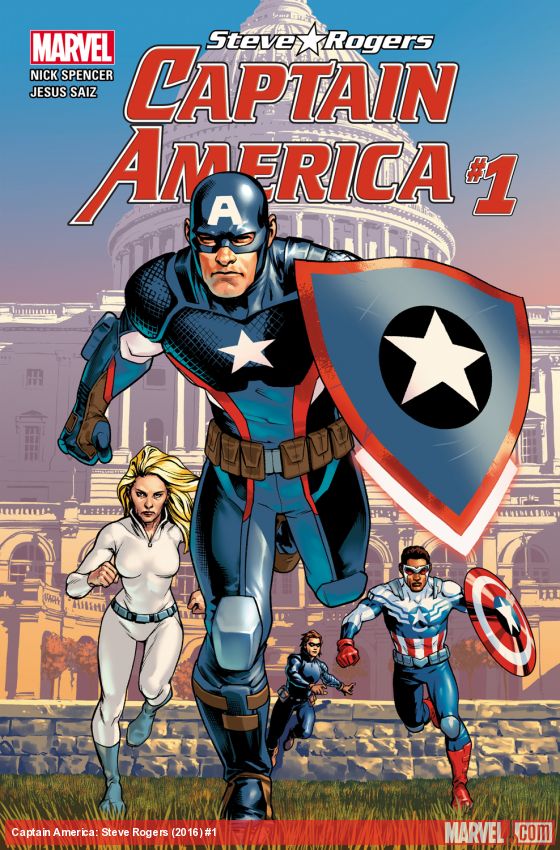
  • Cap sr 1Wow, people haven't been this angry about a Captain America book since he was killed in 2007. And understandably so, because in today's Captain America: Steve Rogers #1, something even worse happens to the Sentinel of Liberty: he is revealed at the end of the comic to be a Hydra agent, and apparently has been so for some time.

    Before I give my feelings on that, let me say the rest of the comic was fantastic. Steve back in action, Sharon Carter and Rick Jones guiding him from afar, Free Spirit and Jack Flag back at Cap's side… just wonderful. Steve back in action, being the hero, taking too many risks, and especially Steve and Sharon's loving and mutually admiring relationship, all depicted wonderfully in both Nick Spencer's dialogue and Jesus Saiz's artwork.

    But, of course, that's not what the furor is about. In flashbacks, we see young Steve and his mother Sarah befriend a mysterious woman who lures them into a Hydra meeting, a seed which bears fruit in the final page reveal: Steve saying "Hail Hydra."

    Shocking. Disturbing. Revolting. Antithetical to the character. An insult to his Jewish creators.

    All this is true.

    So why aren't I more upset?

    Because I'm confident this WTF ending is setting up a storyline for the ages. Let me explain…

    I read a lot about writing fiction—definitely more than I actually write fiction—and one of the most frequent tips to motivate your story is "torture your babies." In other words, imagine the worst thing you can do to your beloved main character and then make him or her face it.

    One of my Twitter friends said Cap's main virtue is his integrity, without which he's nothing. I would agree: that's basically chapter 4 of my book.

    So what's the worst thing you can do to Cap? Worse than killing him (which has been done… ahem… to death), worse perhaps than even killing his loved ones? Make him compromise his integrity. Make him into the opposite of what he is, an agent of tyranny instead of its tireless opponent.

    That's how you really hurt him. Whoever did this to him in the story—the Red Skull, Baron Zemo, Doctor Faustus, Kobik the Cutest Cosmic Cube Evah, take your pick—knows that. And Nick Spencer, Jesus Saiz, and their editors Tom Breevort and Alanna Smith know that too. They're making Cap face his greatest internal threat yet: a danger to his own identity. The fact that this goes against everything Captain America stands for isn't a problem—it's the point.

    And that's how you set up an epic redemption story, which is what I hope Spencer and Saiz are going to give us. And when Steve recovers from the brainwashing, false memories, hypnosis, or Cosmic Cube shenanigans, even though he shouldn't hold himself responsible, he will. He tortures himself much more than anyone else could when he is forced to compromise his principles, even if he could not control it, because he feels he should have been able to control it.

    I'm not upset by this comic because I see it as Steve Rogers' greatest test ever, a test I'm confident he'll pass, but not without going through hell first. And that could be a truly amazing story.