Mark D. White

Writer, editor, teacher

  • FF movie posterWhy do I feel inspired to write about only the movies I'm disappointed in? Maybe I worry I'll be too fanboy-ish about the movies I love and will fail to say anything insightful about them, sounding like Chris Farley meeting his idols on Saturday Night Live ("You know that movie you were in? … That was cooool.") Hence, I've written nothing on Captain America: The Winter Soldier, Avengers: Age of Ultron, or Ant-Man (just to name a few), but plenty about Man of Steel… and now its aesthetic cousin, Fantastic Four.

    [UPDATE: As has been pointed out to me, I did in fact write about Avengers: Age of Ultron. But it is rather fanboy-ish, isn't it?]

    As you may know, I love the Fantastic Four; if you don't, I gushed about them recently over at the Cultural Gutter. Even though I avoided actual reviews of this movie, there was more than enough doubt in the air to dispel any hopes I had that I would be happy with it. I had the worst of expectations. As I told a friend yesterday, I couldn't not see it; I just had to know.

    As I watched last night, in a local theater with about a dozen teenagers with nothing better to do on a Thursday evening—what a difference from early showings of other recent superhero flicks, which were packed with diehard fans—I couldn't help but think about Man of Steel. If it had been about any other superpowered person, Man of Steel would have been an interesting and entertaining movie—my problem with it was that the Superman it showed bore little resemblance to the Superman I believe in.

    Fantastic Four, on the other hand, did no particular disservice to its characters, if only because they had very little character at all, and faced no tragic dilemma that would have revealed something about their heroic dispositions. This is no fault of the four lead actors, all of whom did the best they could with what they were given. What a horrible waste of talent this was, especially that of Miles Teller and Michael B. Jordan, who have both shone in other work. (And the less said about Doctor Doom, the better. At least he wasn't a blogger, as widely reported earlier.)

    My issue with Fantastic Four wasn't the portrayal of the lead characters. It was simply a bad movie. Utterly lifeless, it had no discernible plot, and no drama or suspense—only when the denouement came did you know that the climax had passed. The dialogue was bland and cliched (and not even based on comic book cliches, beyond the awkward insertion of several beloved catchphrases, one introduced in a particularly depressing way).

    Visually, it made Man of Steel look like Pee Wee's Playhouse—I don't think the color blue appeared once, much less any other primary colors. Even the other dimension they travel to was disappointing, a slight improvement on the alien sets from the original Star Trek series. (On a brighter note, the flame effect on Johnny Storm was very well done, and the Thing's appearance works better than I imagined, and for the first time in a movie you can see how he would inspire true fear and not just disgust or discomfort.)

    As a concept, the Fantastic Four is supposed to be about wonder, adventure, and exploration, but there was none of that in this movie. It's also supposed to be about the relationships between the four members, but there was very little of that in this movie. And it is supposed to be fantastic—and there was definitely none of that in this movie.

    Ff 2005P.S. Maybe this will lead people to reconsider the first two Fantastic Four movies, which were far from perfect but captured very well the playful and optimistic spirit of the comic (as well as simply being more entertaining.)

  • It's two thirds of the way through summer 2015—so far, it's been an intense but good summer, with significant work done almost every day (except Saturdays, which are for the kids, and two short trips that nicely broke up the work).

    Most of the work was on the book manuscript that I submitted to my editor yesterday morning. Having worked with me many times in the past, when she received my submission email she said, "I had a sneaking suspicion that not only would you hit your contractual delivery date, but you'd beat it." She knows me too well.

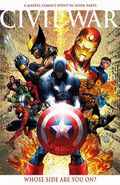
    Civil warI was going to hold on to the subject and title for a while yet, but seeing as it's already available for pre-order on Amazon, the cat seems out of the bag. The book is titled Captain America and Iron Man: Fighting a Civil War of Principles, to be published by Sterling in early 2016, and it looks at the ethical decision-making and behavior of Iron Man, Captain America, and Spider-Man, during Marvel Comics' Civil War storyline (soon to be the basis of the film Captain America: Civil War). [UPDATE: Plans have changed—see here for more.] I decided to focus on the main characters rather than the political content of the storyline itself, which is well handled by the contributors to a forthcoming book edited by Kevin Michael Scott titled Marvel Comics' Civil War and the Age of Terror: Critical Essays on the Comic Saga, to be published by McFarland (and to which I contributed a chapter). Much more on this to come…

    As I said, that was how I used most all of my time this summer, with the rest devoted in some minor paper revisions and departmental business. I did get a couple three-day breaks, one to see my parents in Chicago and the other to go to the 15th World Congress of Social Economics in St. Catharines, Ontario (near Niagara Falls). It was great to spend time with old friends in the Association for Social Economics and make some new ones, hear some fantastic presentations, and speak to the publishers in attendance about some exciting new projects.

    With the book behind me (for the time being), it's time to turn to all of the things I all but ignored in the meantime, including writing and revising several papers, returning to some editing (including production work on Economics and the Virtues: Building a New Moral Foundation), and thinking about new projects. One month to go—I'll try to make it a good one!


    By the way, my presidential address to the Association for Social Economics in January, "Judgment: Balancing Principle and Policy," is now available online (and, for the time being, is open access).

    Also, I did manage to post a few times at Psychology Today in a small surge of activity at the end of June:

    "Same-Sex Marriage Needed to Be Decided by the Supreme Court" (June 26, 2015)

    "Marvel Comics' Daredevil Shows the Experience of Depression" (June 28, 2015)

    "How John Steinbeck Convinced Me to Start a Writing Diary" (June 29, 2015)

    (By the way, in reference to the last post, I did keep a writing diary in July, and I do think it helped me focus on the big picture and not on the temporary setbacks and disappointing days.)

    Finally, I highlighted a New York Times interview with philosopher Dan Hausman (and added a little of my own thinking) at Economics and Ethics. (Otherwise, my intrepid co-blogger Jonathan Wight has done the bulk of the heavy lifting over there.)

  • Mark D. White

    HausmanIn today's installment of The Stone in The New York Times, Gary Gutting interviewed philosopher of economics Daniel Hausman about the role of economics in public policy and the media. Hausman usefully points out the limitations of economics in predicting the outcome of real-life crises (such as the current Greek crisis):

    Speaking of the predictive power can be misleading. Scientists (and I include economists) are not fortunetellers. Their theories only allow them to predict what will happen if initial conditions are satisfied. Elementary physics enables us to predict how long it will take an object to fall to the ground, provided that gravity is the only force acting on the object. Predicting how long it will take a leaf falling from a tree to reach the ground or where it will land is a much harder problem.

    The problems that we want economists to help us solve are more like predicting how leaves will fall on a windy day than predicting how objects will fall in a vacuum. Economic phenomena are affected by a very large number of causal factors of many different kinds. The Greek economic crisis is extraordinarily complex, and it has as many political causes as economic ones. Standard economic theory provides useful tools, but it focuses on a very limited range of causal factors — mainly the choices of millions of consumers, investors and firms — which it simplifies and assumes to be governed entirely by self-interested pursuit of goods or financial gain. When one recognizes all the other factors that affect economic outcomes, from government policies to the whims of nature, it is easy to see that economists cannot predict the economic future with any precision.

    When Gutting asks what help economists can provide in debates over public policy, Hausman's answer places economics much closer to philosophy than physics: "They tell us which are the right questions to ask… Knowing what to ask is enlightening even when it is hard to find the answers." In other words, economics provides focus to help policymakers choose the means that will best further their ends, wherein both means and ends are ethically loaded concepts as well as economic ones.

    (Hausman also highlights the biases of economists as well as the journalists that write about them, and deftly resists Gutting's attempts at the end to goad him into going political or condemn some economic theories as having "no scientific support.")

    Hausman ends by saying:

    There are cognitive limits to what can be learned about such a complicated system as a modern market economy, and there are practical and political limits to our ability to make use of what can be learned. Within these limits, economics can be of use. I fear this is faint praise.

    I don't think that's faint praise at all; rather, it reflects appropriate humility toward a realm of study that is often called upon to decide issues that are outside its purview. And it leaves tremendous room for economics to contribute to—but not determine—the choices of policymakers

    As Hausman recognizes, economics can be of invaluable use to policymakers in terms of analyzing aspects of a problem that relate to prices, output, and simple measures of well-being, and it can often predict many significant outcomes of alternative policies to inform policymakers. But economics cannot dictate policy choices that are, by their nature, inherently moral or political choices as long as it refuses to acknowledge and either embrace or question its moral and political foundations.

  • Mark D. White

    Ssm flagsToday the Supreme Court of the United States—now, thanks to Justice Scalia's dissent in yesterday's King v Burwell dissent, "officially" known as SCOTUS—declared marriage to be a right for all, covering both same-sex and opposite-sex couples. In his majority opinion, Justice Kennedy affirms same-sex marriage to be a matter of rights and dignity; Chief Justice Roberts, in his dissent, regards it as a matter of policy best left to the voters.

    I agree with Kennedy, as I explain at Psychology Today. For more details on the opinions themselves (found here), I recommend Orin Kerr's summary at The Volokh Conspiracy.

  • Laptop thingThe school year is over, commencement was enjoyed by all, and now the summer begins, which means only one thing for an academic—writing! (To the right You can see my writing coach, the ever-lovin' blue-eyed Thing, inspiring me from the background of my laptop.)

    But before I settle into work on a new book, let's see what I managed to accomplish since my last update back in mid-February.

    • My latest edited book, Law and Social Economics: Essays in Ethical Values for Theory, Practice, and Policy, was published by Palgrave Macmillan in March, with a blog post adapted from my introduction published at the Association for Social Economics blog in April.   
    • Speaking of the ASE, my presidential address "Judgment: Balancing Principle and Policy," was accepted by the Review of Social Economy and should appear later this year (and online sooner).
    • And speaking of that paper, it will also be included in Social Economics: Major Works, a four-volume collection of social economics literature edited by Wilfred Dolfsma, Robert McMaster, Deb Figart, Ellen Mutari, and myself, forthcoming from Routledge in 2016, for which we are wrapping up final details now. (I was responsible for editing Volume 1: Philosophy.)
    • I drafted a chapter on nudge for a edited volume on the topic to be published by Mercatus, on which I am awaiting comments.
    • I finished my paper “The Crucial Importance of Interests in Libertarian Paternalism,” which will be published in the volume Nudging: Theory and Applications, edited by Klaus Mathis, forthcoming from Springer Verlag in 2016, based on a conference in Lucerne, Switzerland, in April that I was honored to attend and participate in.
    • I wrote my response to formal comments on my paper "On the Justification of Antitrust: A Matter of Rights and Wrongs," all of which will be published in a symposium in The Antitrust Bulletin.
    • Finally, Jennifer Baker and I finished work on Economics and the Virtues: Building a New Moral Dimension, which will be published by Oxford University Press near the end of 2015, and which will include my chapter "The Virtues of a Kantian Economics."

    My blogging activity since February was even lighter than last time, with just one new Psychology Today post, "Where's the Line Between Acceptance and Narcissism?" (March 29), and one post at this very blog on "Why I Edit Books" (March 6).

    Now that summer is upon me, I begin writing a new book on superheroes and philosophy and working on several academic papers and projects, with a couple short trips to break up the work. (And maybe blogging a little more? We'll see.)

    See you on other side, and I hope you enjoy your summer, however you choose to spend it!

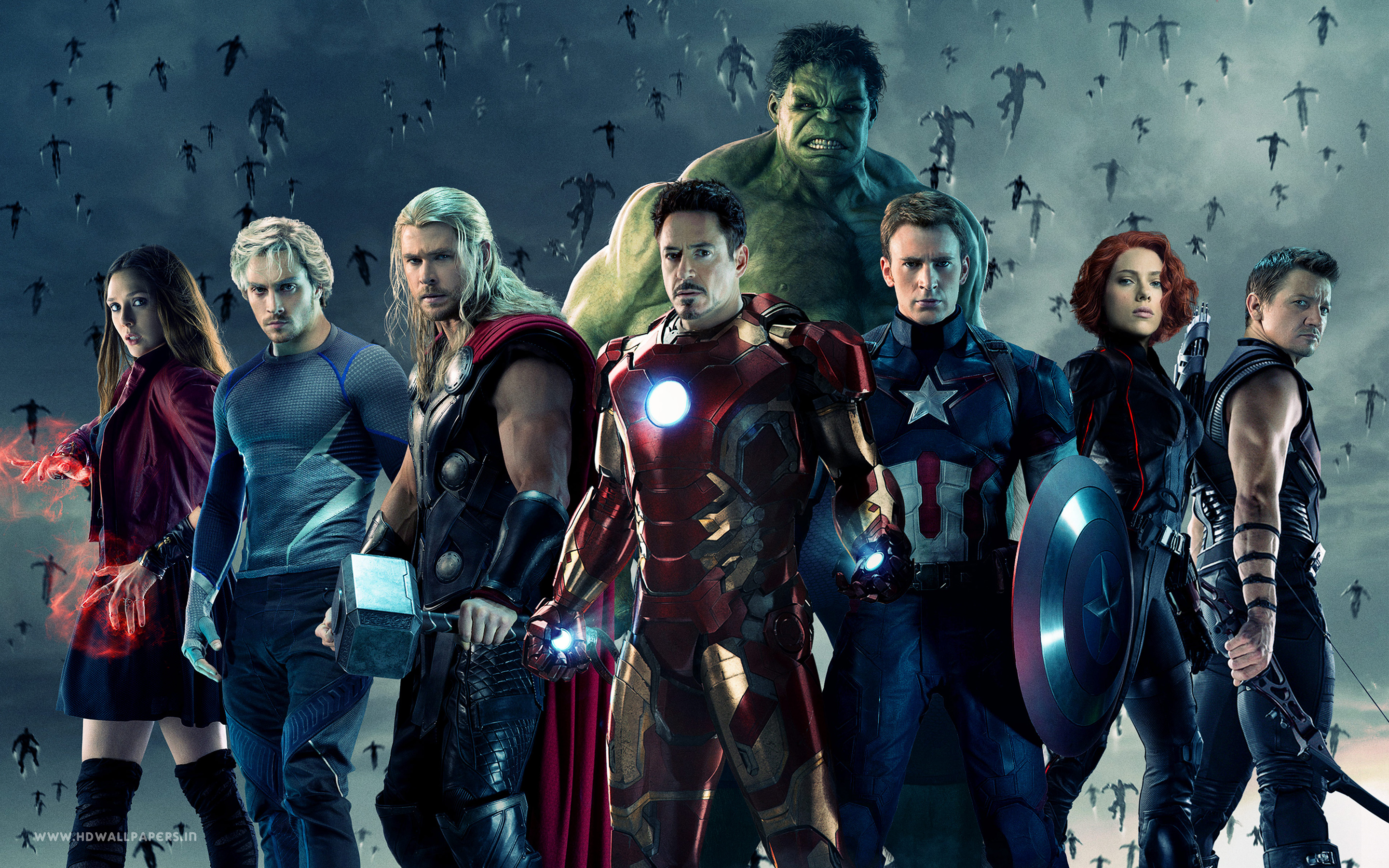
  • Avengers age of ultronNot a review, per se, but just some collected thoughts…

    MAJOR SPOILERS BELOW—BE WARNED!

    1. Loved it. It started like a Bond film with an intense action sequence, expertly shot in a similar fashion to the Battle of New York in the first film, with the focus flowing seamlessly from one character to the next, then calmed down as we saw the threat of Ultron building. Then it was off to the races again, only to be followed by setback, then regrouping for the final battle…

    2. …which was focused on SAVING ALL THE PEOPLE.

    3. They SAVED ALL THE PEOPLE.

    4. ALL OF THEM.

    5. Ok, where was I… oh, right.

    6. The focus on the six main Avengers seemed much more even this time, with Black Widow and Hawkeye getting more attention (especially with the surprise revelation that Hawkeye has been married to Velma all this time—no womanizing cad this Clint Barton).

    7. I wish Black Widow hadn't been made the captured Avenger that had to be rescued, but that role was played by Hawkeye in the last film, and the others are too powerful. But still.

    8. The humor was fantastic—I tried to remember all of my favorite lines but last track twenty minutes into the film. And they weren't all one-off gags: the running joke about Cap's early comment about "language" was fantastic. Even the scene from the preview with the Avengers trying to lift Mjolnir set up Vision's validation in the face of his new friends.

    9. The new characters were integrated extremely well. The early antipathy of Quicksilver and the Scarlet Witch Pietro and Wanda towards Stark and the Avengers was easily motivated and then dispelled gradually. I was surprised not to see Pietro healing at the end of the film; Wanda was the more longstanding Avenger of the two in the comics, but nonetheless I liked their relationship in the film. And the Vision, wow…

    10. The Vision was simply magnificent. One advantage of attending the first showing of the film was the number of diehard fans in the audience, all of whom applauded when Vision rose from his "cocoon." (Not to mention the gasps the first time Wakanda was mentioned.) Paul Bettany played Vision with the quiet dignity he deserved, and I can't wait to see him again.

    11. I was a bit put off by Ultron's sense of humor, which is a distinct departure from the comics, but it grew on me, and made excellent use of James Spader's voice talents. And visually, he looked amazing.

    12. Similar to Guardians of the Galaxy, teamwork was the focus of this film. The Avengers never really disassembled (even after Wanda's mindgames), so there was no need to rally at the end. I'm talking about the subtle, small types of cooperation, such as the one-two fight moves that Cap and Thor had obviously worked out in practice, and the way Clint and Natasha had each other's back throughout the film.

    13. The cameos… well, I won't spoil those. There was Stan Lee, of course, but other MCU players made welcome appearances as well.

    14. While the mid-credits bonus scene wasn't spectacular, it was gratifying to see the names of all the heroes—Avengers old, new, and "see ya next time"—in the main credits preceding it.

    15. Tony, Tony, Tony… when will you learn? (What am I talking about? See my new post at the And Philosophy blog.) Also nice to see the continuing ideological differences between Tony and Cap referenced but not stressed (there's time for that in Captain America: Civil War).

    16. I can't stress this enough: the last quarter of the movie was as much about getting all the people off of the floating city as it was about defeating Ultron. That's what the Avengers risked their necks to do. That's what Fury and Hill brought the helicarrier back for. That's what Clint almost died for—and Pietro did. It's sad that this kind of heroism is notable in a superhero movie, but in a Zack Snyder world, it is.

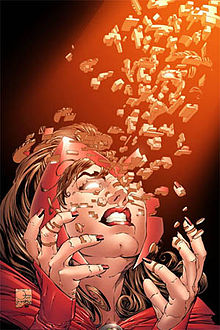
    Wanda cubes17. And did anyone fear for reality a little bit when Wanda lost it after Pietro died? I half-expected to see little Tetris pieces flying around.

    18. And finally… Natasha and Bruce. I like it because it felt organic, and the scene in which she shares some of her Red Room background with him justified it even more. And of course, Bruce's "I can't be with you, I'm a monster" speech was well appreciated by this Thing.

    P.S. It's Natasha Romanova. It's not too late to correct a grievous wrong. Respect.

    To sum up, Avengers: Age of Ultron took advantage of the fact that it started with a team already assembled to jump head-first into the action and then spared no time in bringing the main threat to the stage. It was extremely well paced, with excitement, humor, and pathos throughout, and terrific performances by everyone involved. If this is Joss Whedon's farewell to the MCU, he couldn't have done a better job—this was a love letter to the Avengers, Marvel Comics, and to Marvel Zombies everywhere.

  • My friend Terry Clague at Routledge recently contributed a fantastic blog post to LSE’s The Impact Blog on the value of edited books. In his post he also points to a post at Pat Thomson’s excellent blog patter, where she discusses several good reasons for academics to edit books. Since I’ve edited my share of books, I thought I’d offer my own impressions on the practice, which I rather like and encourage people to think about doing.

    To date I’ve edited 14 books, half of them academic and the other half in the Blackwell Philosophy and Pop Culture series; the latter are a distinctly different breed of animal, so I’ll set those aside for now and focus on the academic ones. I’m also working on two edited books at the current time and planning a third. Three of my published edited books, and one of the two in progress, are co-edited, and the rest were edited solely by me.

    First, let me piggyback a bit on Thomson's post, because I agree with all of her points In support of editing books; here’s my personal take on each of them.

    1. Connections. This one was essential to me. I didn’t have many contacts or a “network” when I came out of graduate school, especially because I decided to work in fields I didn’t focus on when working on my Ph.D., so I had to reach out to people I wanted to work with. I did this first by organizing conference sessions, and later by putting together edited books. Thomson is correct that the connections you make when editing books will continue to bloom: one of the contributors to my first edited book became a co-editor on a later one, a contributor to that book became a later co-editor as well, and many contributors (and co-editors) become friends and collaborators on future projects. To the extent I can be considered well-connected now, it’s because of my work in putting together conference sessions and edited books over my career, so these activities are been invaluable for that aspect alone.

    2. Contribution. There are many ways to contribute to a field: certainly writing articles and books is the most obvious, but the contribution from editing books is often underestimated. I think the latter is better, in fact, if you have a very general idea of what needs to be done in a field but you don’t have the expertise to do it yourself. This is how The Thief of Time, my co-edited book on procrastination, came about: during a casual conversation with Chrisoula Andreou, a contributor to a previous book, I asked her what she was working on, and she said she was working on a theory of procrastination. Fascinated and intrigued, I asked her to point me to some background literature, and she said there wasn’t much. As Gru from Despicable Me would say, “light bulb!”: Here was an area of general and philosophical interest that hadn’t yet been explored to any length or depth. But at the same time it was a frontier that was too large for me and my friend to mine thoroughly on our own. So we decided to edit a book on the topic, bringing together a group of excellent scholars to write about on the topic of procrastination. (And we got it done early!)

    3. Profile. Again, you can build a scholarly profile by writing your own work—this is obviously the most direct way to do it, provided people know about what you write—but edited books are also a great way to do it, particularly if you have a broad interest in an area but feel that you can only make a narrow original contribution to it yourself. (The same applies to editing a book series, which simply broadens the focus to an entire field or subfield rather than one topic or area within it.) Even if you don’t contribute a chapter to a book you edit, you’ll be recognized as knowledgeable in the area due to your ability to gather expert scholars and craft a book that synthesizes their work and presents it to a world as a unified statement in the field.

    On that note, I think of editing books as a valuable aspect of scholarship in general, one that complements authored books and articles in helping to shape the discussion in the area. (Whether departments or universities see them this way is a different matter, of course.) Thomson emphasizes the scholarly contribution made by designing and overseeing an edited collection; I think of this as similar to curating an exhibit of multiple artists and crafting a cohesive whole that is greater than the sum of the parts. When I edit a book, I take care to make sure each chapter makes an important and unique contribution to the book, so in the end, the book stands as a unified contribution to the field that at the same time presents different viewpoints and perspectives on it. I think of it as similar to a thoughtfully assembled movie soundtrack, a compilation of songs that holds together than an album in the same way that a single artist’s album does, but provides a different kind of variety to the listener.

    Recognizing the value of edited books does not mean that everyone should do it, however. Another editor/friend of mine told me once that most people are either authors or editors, but rarely both. To me, the two roles are complementary also in terms of my working life. There are times I feel more “writerly,” able to focus on my own thoughts and how to get them down on paper, and there are other times I feel more “editorly,” when I feel I can better work with someone else’s words. Maybe I spend time on an authored book in the morning, then after lunch I copy-edit a contributed chapter or work on an index for an edited book. They are equally important but very different tasks that use different “muscles,” and balancing these two types of work can help squeeze the most productivity out of a workday.

    Of course, editing a book does take a different set of skills from authoring one. For one, you have to deal with a lot of people, which I regard as an upside but others may not. Contributors will be late, they’ll want to change their approach (or even their topic), or they will resist your editorial suggestions: all of which demand a certain ability to negotiate and persuade, as well as the resolve to put your foot down when the quality and integrity of the volume is at stake. Also, you must be a detail-oriented person, able to keep track of where the various contributors are in the pipeline and to coordinate with the publisher throughout the process both before and after you submit the manuscript. A co-editor can be a blessing in this, especially if you work with a friend, but a precise delineation of tasks is essential: if you and your co-editor don’t make clear from the start who is responsible for what, you’ll end up either duplicating effort or wasting time waiting for each other to do something no one agreed to do!

    There’s a lot to do when editing a book, and the work involved is not to everyone’s liking. But if you like to do the work, and are able to balance these tasks with the rest of your work life, editing collected volumes can be a profoundly enriching process with many professional and personal benefits. Personally, I do it because I get to bring together a group of bright, innovative people to write on a topic that I want to see more work on—and at the end, you get to see a book with your name on it. (And that’s very cool.)

  • Just a little speculation about Brian Michal Bendis and Chris Bachalo's Uncanny X-Men #31

    Before the spoilers, a general observation: I've been enjoying Bendis' X-Men books tremendously since he launched them following the Avengers vs. X-Men event. His talent at writing character moments and witty banter serves this property well, especially with the each of the two books focusing on a younger subset of the group (the Original Five in New X-Men and the new students in Uncanny X-Men). While I think he overstayed his welcome a bit on Avengers, he seems to leaving X-Men on a high note, for that I salute him (along with his uncanny artistic collaborators).

    (more…)

  • WinterThe snow gently falls as my long Presidents' Day weekend ends, and with a few new things out or coming soon, it felt like a good time for another personal update. (And no, that's not my house—a fella can dream, though!)

    I've had a fairly productive time since ASSA, especially in January before the spring semester started:

    • I finished revising my chapter “Bad Medicine: Does the Unique Nature of Health Care Decisions Justify Nudges?”, which will appear in Nudging Health: Health Law and Behavioral Economics, edited by I. Glenn Cohen, Holly F. Lynch, and Christopher T. Robertson, from John Hopkins University Press.
    • I revised my paper “On the Justification of Antitrust: A Matter of Rights and Wrongs,” presented as a conference in Philadelphia last fall, slated to appear in The Antitrust Bulletin with contributed commentary.
    • I revised my paper “A Kantian-Economic Approach to Altruism in the Household,” which will be published in Palgrave Communications, a new general-interest, open-access journal.
    • I reviewed the proofs and constructed the index for Law and Social Economics: Essays in Ethical Values for Theory, Practice, and Policy, my latest edited book, coming out from Palgrave in March.
    • I submitted a revised version of my ASE presidential address, "Judgment: Balancing Principle and Policy," for possible publication.
    • My four co-editors and I submitted our table of contents for the four-volume Major Works collection of seminal work in social economics to Taylor and Francis.
    • Finally, I presented a version of my inequality talk from ASSA at the Institute for New Economic Thinking, which was a fantastic and enlightening experience.

    Work continues now on a paper on nudge for a conference in Switzerland in April, the book on economics and virtue I'm co-editing with Jennifer Baker for Oxford, and other ongoing projects I've discussed before (and which can be seen here).

    Finally, I had a bit of online activity that may be of interest:

    My goal of more frequent and widespread blogging goes largely unfulfilled, I'm sad to say, although I remain hopeful. For now, however, you're spared!

  • Reed sue magicHard to believe this is my first post here in 2015… sad but true…

    Nonetheless, just a quick post to point your swiping or clicking finger toward several items of potential interest:

    1. I have a guest post at The Cultural Gutter, one of my favorite websites, recounting my experiences and impressions reading the entire run of Fantastic Four over the last year or so, along with some of my favorite panels from over 50 years of their comics (most of them seen on my Twitter feed over the past year—occasionally with snarky commentary, although mostly at Reed's expense).
    2. Speaking of the Fantastic Four and Sue in particular, my latest post at Psychology Today deals with invisibility—mostly in a social, metaphorical sense, but I draw ties to the Invisible Woman, as well as a little-known hero with a modest cult following in some parts, Batman.
    3. Finally, I want to recommend Jason Aaron and Jorge Medina's Thor #5 to anyone not currently following the adventures of the latest person worthy to wield the mighty Mjolnir. This is a quick one-shot between longer arcs that both refreshes the status quo for new readers, as well as, for longtime readers, establishes the various other characters' opinions regarding the new Thor, including Odin, Freyja, and, most entertainingly, the Absorbing Man and Titania, with whom Aaron and Medina indulge in a bit of metacommentary about fan reaction to our new Goddess of Thunder, both positive and negative. (See below.) Buy this issue now, or thou wilst be sorry –  I promise thee that.

    Thor 5 1

    Thor 5 2